The 21st-century metropolis is a marvel of hyper-efficiency, logistical precision, and dense economic activity. However, this rigorous optimisation has birthed a hidden vulnerability. Modern cities are entirely dependent on highly complex, heavily globalised, and astonishingly fragile supply chains to feed their populations. When these just-in-time logistical networks face shocks – whether from geopolitical friction, transport failures, extreme weather events, or global pandemics – the vulnerabilities of the urban food system are immediately exposed. Supermarket shelves empty in a matter of days, and municipal leaders are left scrambling to secure basic caloric requirements for millions of residents.
To address this systemic weakness, urban planners, agritech innovators, and architects are looking toward localising food production. But simply moving standard monoculture farming into city boundaries is not enough. The future of municipal robustness lies in biological complexity. This raises a critical question for the future of urban design: does integrating high levels of crop diversity into our urban landscapes genuinely increase a city’s resilience and, even further, its antifragility?
To understand this, we must critically examine the mechanics of urban agriculture, the economic and biological realities of polyculture, and how biological variance translates into systemic strength.
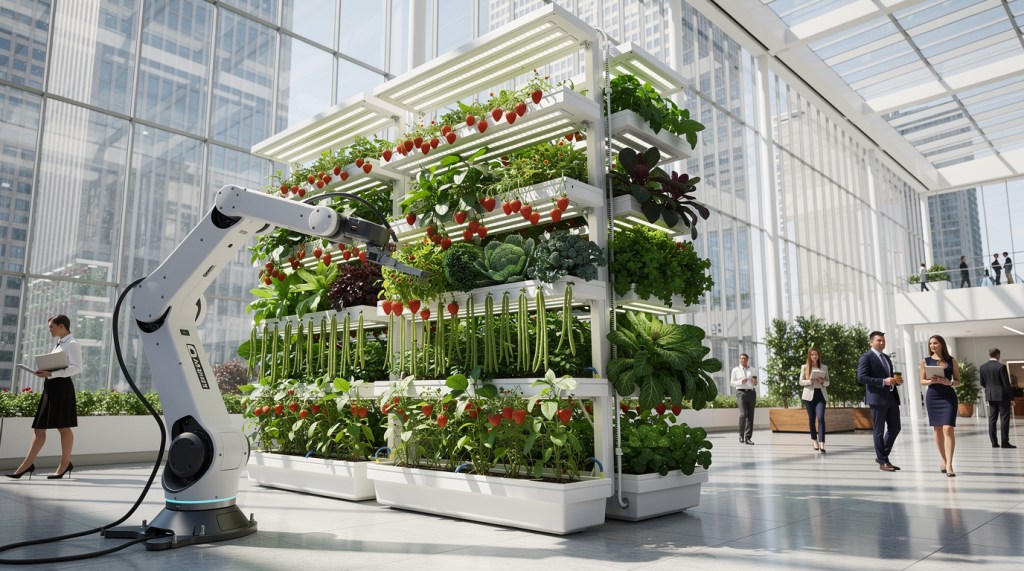
Understanding what crop diversity means in a concrete ecosystem
In traditional rural agriculture, crop diversity – or polyculture – refers to the practice of growing multiple crop species in the same space, simultaneously or in rotation, to mimic the biological complexity of natural ecosystems. It is the direct opposite of monoculture, where vast tracts of land are devoted to a single high-yield crop like maize, wheat, or soy.
When translated to the urban context, crop diversity takes on a more multifaceted definition. It is not merely about planting different types of vegetables in a community garden. Urban crop diversity encompasses genetic variance, species variance, and functional variance integrated directly into the built environment.
At the genetic level, it means cultivating multiple heirloom and adapted varieties of a single plant, ensuring that a single pest or disease cannot wipe out the entire municipal yield. At the species level, it involves moving beyond the standard fast-growing leafy greens – such as lettuce and kale, which currently dominate indoor vertical farming – to include root vegetables, legumes, fruiting vines, medicinal herbs, and dwarf fruit trees. Finally, at the functional level, urban crop diversity means integrating plants that serve different roles within the urban ecosystem. Some crops might fix nitrogen in shared soil beds, others might attract predatory insects to manage pests naturally, while others might be specifically selected for their high caloric density or their ability to regulate humidity within a closed-loop building system.
In short, urban crop diversity means transforming the city from a sterile consumer of agricultural products into a complex, heterogeneous biological producer.
Kamogelo Thumankve, founder and CEO of Tsarona, talked about the urban food footprint and crop diversification in episode 454I of the What is The Future for Cities? podcast:
The intersection of resilience and antifragility
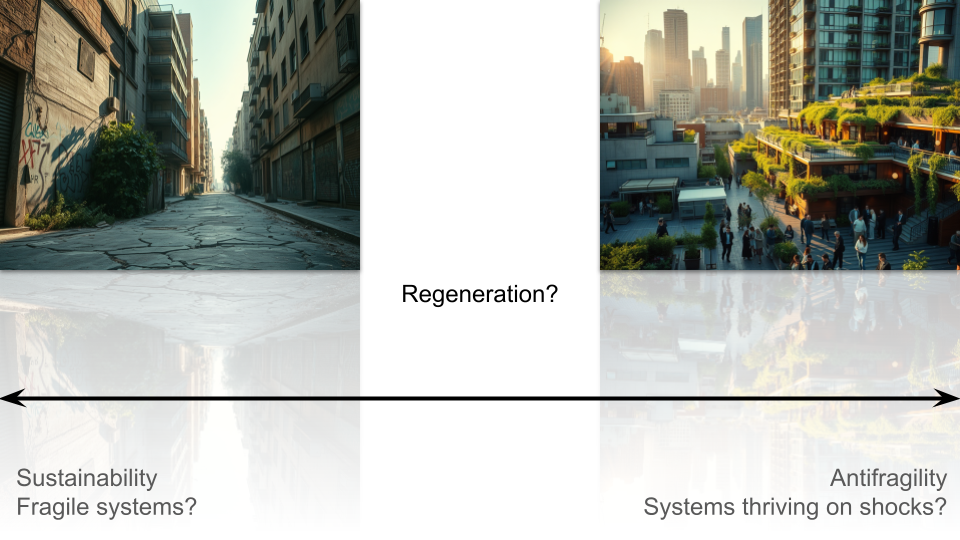
Before examining the mechanisms of this transition, it is vital to distinguish between resilience and antifragility. Resilience is the ability of a system to absorb a shock and eventually return to its baseline state. A resilient city might experience a severe disruption to its food supply, suffer temporary shortages, but manage to bounce back once supply lines are restored.
Antifragility, a concept popularised by risk analyst Nassim Nicholas Taleb, goes a step further. An antifragile system does not just survive shocks; it actually thrives, improves, and grows stronger because of them. Muscle tissue is antifragile; it tears under the stress of weightlifting and rebuilds denser and stronger.
In the context of urban food systems, diverse agriculture introduces both concepts. A city with a diverse range of crops is resilient because it has a buffer against external supply failures. But it becomes antifragile because the inherent disorder and complexity of diverse biological systems allow for rapid adaptation. If a specific climatic shock destroys one type of crop, the failure opens up resources (water, light, space, and market demand) for other, better-adapted crops to thrive. The stress on the system forces local markets, chefs, and consumers to adapt to new ingredients, thereby driving culinary innovation and expanding the economic viability of alternative crops. The shock improves the overall biological and economic adaptability of the city.
For more information on antifragility and regeneration, check out this blogpost:
Emerging forms and solutions for urban agriculture
The integration of complex polycultures into dense urban environments requires immense technological and architectural innovation. The spatial constraints of the modern metropolis dictate that we cannot simply recreate rural farms on city streets. Instead, novel solutions are rapidly emerging globally.
Advanced polyculture vertical farming
Vertical farming has traditionally relied on hydroponic monocultures due to the ease of automating the nutrient delivery for a single plant species. However, a new wave of controlled environment agriculture (CEA) is emerging, utilising sophisticated AI and machine learning algorithms to manage complex polycultures within a single facility. These systems use dynamic dosing technology to deliver distinct nutrient profiles to different zones of a vertical farm, allowing nightshades, legumes, and brassicas to grow in close proximity. AI sensors monitor the microclimates created by the varied foliage, optimising LED light spectrums in real-time to suit the specific needs of diverse plant canopies.
Building-integrated agriculture (BIA)
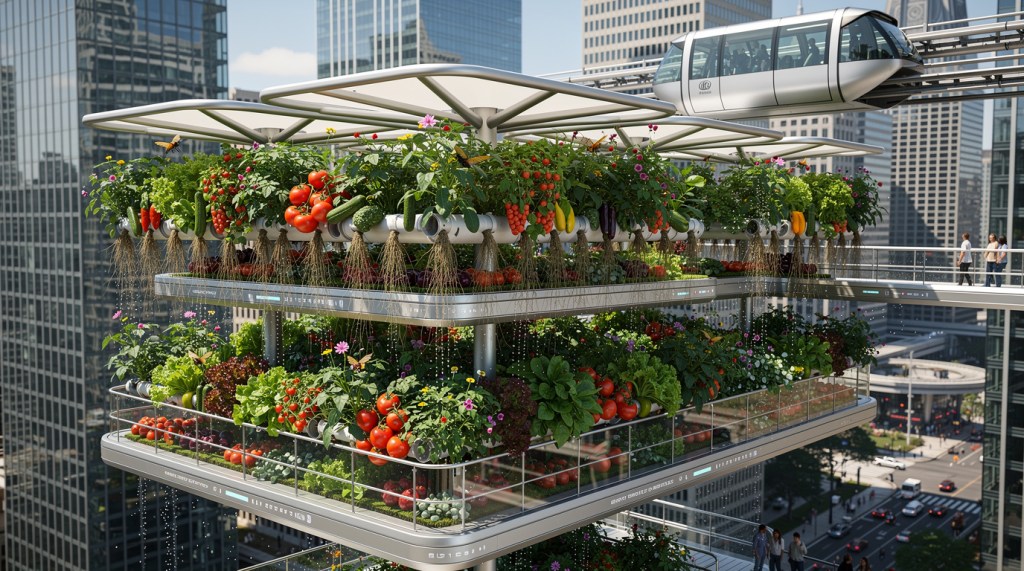
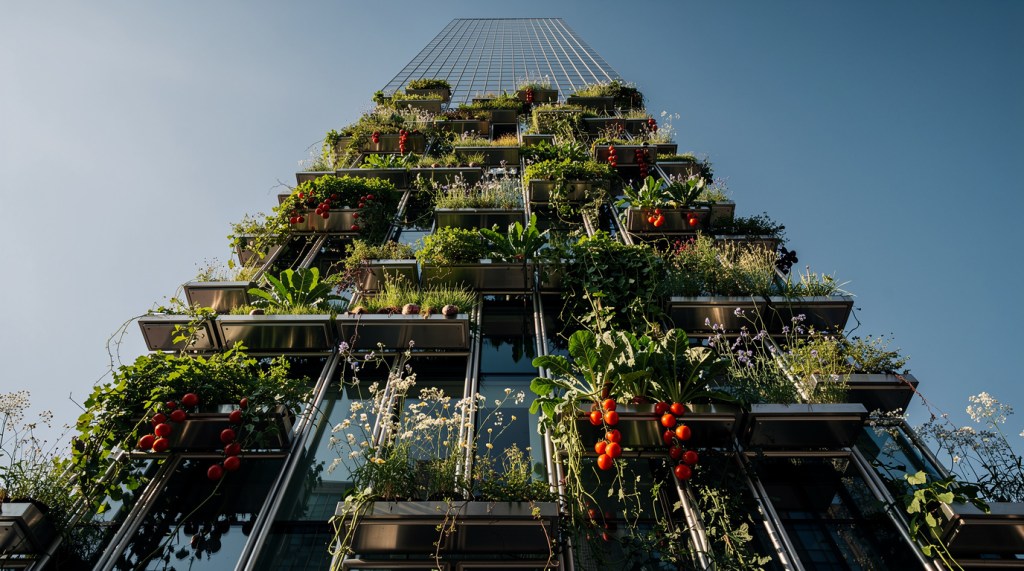
Architects are beginning to design buildings where agriculture is not an afterthought, but a core component of the structure’s mechanical functioning. Building-integrated agriculture involves embedding diverse plant life into the facades, rooftops, and internal atriums of commercial and residential towers. Beyond providing food, these diverse plant systems are engineered to filter greywater, capture heat exhaust from HVAC systems, and regulate indoor air quality. By using a diverse range of plants, architects can ensure that the biological filtration system remains robust year-round, as different species peak at different temperatures and humidity levels.
Decentralised urban food webs and micro-farming
Instead of massive, centralised urban farms, cities are seeing the rise of digitally connected micro-farms. These are small, automated growing units placed in restaurants, basements, abandoned shipping containers, and residential balconies. When networked together through a municipal data grid, these thousands of small nodes create a highly diverse, decentralised food web. If one node experiences a crop failure or equipment malfunction, the broader network remains entirely unaffected.
Aeroponic rooftop food forests
Moving away from soil-heavy rooftop gardens, which pose significant structural load challenges for older buildings, innovators are deploying ultra-lightweight aeroponic systems. These systems suspend plant roots in the air and nourish them with a nutrient-dense mist. This dramatic reduction in weight allows for the cultivation of larger, more diverse plant varieties on rooftops, including sprawling vines and deeper-rooted vegetables, effectively creating elevated food forests that contribute significantly to the urban caloric output.
In the Urban Food Production episode (300P), the panelists – Adam Dorr, Nadun Hennayaka, and Simon Burt – discussed many additional emerging elements of urban food production on the What is The Future for Cities? podcast:
The advantages of biological complexity in cities
The push towards crop diversity in urban environments offers a myriad of distinct advantages that directly contribute to municipal robustness and systemic strength.
Supply chain shock absorption
The most immediate advantage is the buffering effect against global logistics failures. When a city produces a wide variety of nutrient-dense crops within its own borders, it dramatically reduces its reliance on distant agricultural hubs. If a major shipping route is blocked, or a geopolitical crisis halts the import of staple foods, an urban environment with a diverse, hyper-local food output can mitigate the immediate caloric and nutritional deficit. The variety ensures that even if local weather conditions stunt one crop, others will yield, ensuring a continuous food supply.
Pest and disease mitigation
Monocultures are biologically fragile. A single pathogen or pest that targets a specific crop can decimate an entire facility in days. In contrast, crop diversity creates physical and biological barriers to contagion. In a diverse urban farming setup, different plant species host different microbiomes. Certain plants naturally repel pests that threaten their neighbours. This complex biological web acts as a natural defence mechanism, reducing the need for chemical interventions and ensuring that a localized outbreak does not result in a total system failure.
Microclimate regulation and energy efficiency
Cities are notorious for the urban heat island effect, where concrete and asphalt absorb and trap thermal energy. Integrating diverse, multi-layered plant canopies into the urban fabric – through green roofs, vertical gardens, and integrated facades – drastically alters the city’s thermodynamics. Diverse plant species transpire water at different rates and provide varying levels of shade. This biological cooling effect reduces the reliance on mechanical air conditioning, lowering the city’s overall energy grid load during peak summer months. A diverse canopy is far more effective at thermal regulation than a uniform layer of sedum or grass.
Nutritional security and economic diversification
A resilient city must not only provide calories but comprehensive nutrition. A diverse urban agricultural sector ensures access to a wide spectrum of vitamins, minerals, and macronutrients, improving baseline public health. Furthermore, this diversity spawns a robust micro-economy. Urban farmers growing specialised, high-value, and varied crops can supply local restaurants, specialty markets, and biotechnology firms. This creates a dense web of local economic activity that is highly resistant to global market fluctuations.
Another addition can be the implementation of food forests into the urban green infrastructure, as Louis de Jaeger, award-winning filmmaker, author, and landscape designer, described in episode 412I on the What is The Future for Cities? podcast, where he also talked about their complementing advantages, like creating a community:
Disadvantages and friction points of diverse urban farming
Despite the compelling advantages, transitioning to highly diverse urban agricultural systems introduces significant friction and operational challenges that must be critically analysed.
High initial capital expenditure and operating costs
The technology required to successfully manage polycultures in an urban setting is exceptionally expensive. Advanced AI monitoring, multi-zone climate control, and dynamic hydroponic dosing systems require massive upfront capital investment. Furthermore, the real estate in dense global cities is priced at a premium. Securing enough square metreage to make diverse urban farming impactful requires significant financial backing, which can limit the proliferation of these systems to high-end commercial ventures rather than broad municipal infrastructure.
Operational complexity and automation hurdles
The agricultural revolution was built on standardisation. Monocultures are highly profitable because they allow for complete mechanisation of planting, maintenance, and harvesting. Crop diversity destroys this standardisation. A robotic arm can easily harvest thousands of identical heads of lettuce on a conveyor belt. However, programming automated systems to identify, assess the ripeness of, and delicately harvest a diverse mix of tomatoes, basil, strawberries, and beans in the same facility is a monumental engineering challenge. This reliance on human labour to manage biological complexity significantly increases operational costs and reduces overall yield efficiency compared to standard monoculture operations.
Yield density and caloric limitations
While a diverse urban farm provides excellent nutritional variety, it often struggles to match the sheer caloric density of traditional farming. Grains, which form the caloric baseline of the human diet, require vast amounts of horizontal space and are highly inefficient to grow in vertical or urban environments. Therefore, while urban crop diversity can provide vital micronutrients and fresh produce, it cannot, in its current technological state, fully replace the caloric bulk provided by rural, broadacre farming. It is a supplementary system, not an absolute replacement.
Regulatory and zoning barriers
Modern cities are governed by strict zoning laws designed to separate industrial, commercial, and residential activities. Intensive urban agriculture often straddles these categories. Farming involves water usage, organic waste, artificial lighting, and logistics for distribution, which frequently conflict with municipal regulations regarding noise, commercial activity in residential zones, and building codes. Overcoming these bureaucratic hurdles requires a fundamental rewrite of city planning frameworks.
The challenges and opportunities are discussed in detail of crop diversity in episode 453R on the What is The Future for Cities? podcast:
Outlook for the future of urban food systems
Looking ahead, the integration of crop diversity into the urban fabric will likely accelerate, driven by both necessity and technological breakthroughs. As the impacts of climatic volatility disrupt traditional agricultural breadbaskets, cities will be forced to internalize more of their food production to maintain stability.
We are moving towards an era of bio-integrated urbanism. Future architectural paradigms will not view buildings merely as inert shelters, but as living, breathing nodes of biological production. We can expect to see the development of algorithmic food grids, where a city’s central data network analyses local consumption patterns, nutritional deficits, and upcoming weather anomalies, and subsequently directs decentralised urban farms to adjust their crop diversity in real-time to meet predicted demands.
Advances in robotics and computer vision will eventually solve the operational complexities of harvesting diverse polycultures, driving down the costs of operation. Ultimately, cities that successfully harness biological complexity will transition from being fragile endpoints of a global supply chain to becoming autonomous, antifragile bio-hubs capable of weathering the turbulent decades to come.
The fragility of modern urban food networks necessitates a radical reimagining of how cities function. Introducing crop diversity into urban agriculture is not merely a nostalgic return to nature; it is a calculated strategy to increase systemic robustness. By embracing genetic, species, and functional variance through vertical polycultures, building-integrated agriculture, and decentralised micro-farms, cities can buffer against global supply chain shocks and mitigate local biological threats. While significant challenges remain regarding capital expenditure, automation limits, and regulatory friction, the advantages of enhanced shock absorption, microclimate regulation, and nutritional security make diverse urban farming a critical component of future municipal design. It is a pathway from systemic fragility to true antifragility.
The mandate is clear: start designing cities that do not just consume, but cultivate.
Next week, we are investigating how urban health and living locally are connected!
Ready to build a better tomorrow for our cities? I’d love to hear your thoughts, ideas, or even explore ways we can collaborate. Connect with me at info@fannimelles.com or find me on Twitter/X at @fannimelles – let’s make urban innovation a reality together!


Leave a comment