As the global population continues its rapid migration into metropolitan centres, the physical landscape of human existence is fundamentally changing. We are building taller, expanding wider, and pouring more concrete than at any other point in human history. Amidst this rapid urbanisation, the stark grey of steel, glass, and asphalt can easily overwhelm the senses. Yet, if you look closely at many of the world’s most forward-thinking metropolises – from Tokyo to Toronto, and Melbourne to Madrid – you will notice a prominent streak of green. This is not accidental. It is the result of a highly deliberate, scientifically backed discipline known as urban forestry.
To understand the future of our cities, we must look beyond autonomous vehicles, glass skyscrapers, and digital infrastructure. While technological advancements will undoubtedly play a massive role, the biological infrastructure of a city holds incredible potential to improve how we live. This article explores exactly what urban forestry entails, the fundamental rules that govern its practice, the distinct advantages and disadvantages it brings to our built environments, and how it can be a vital part of shaping the future of urban living across the globe.
Understanding exactly what urban forestry is
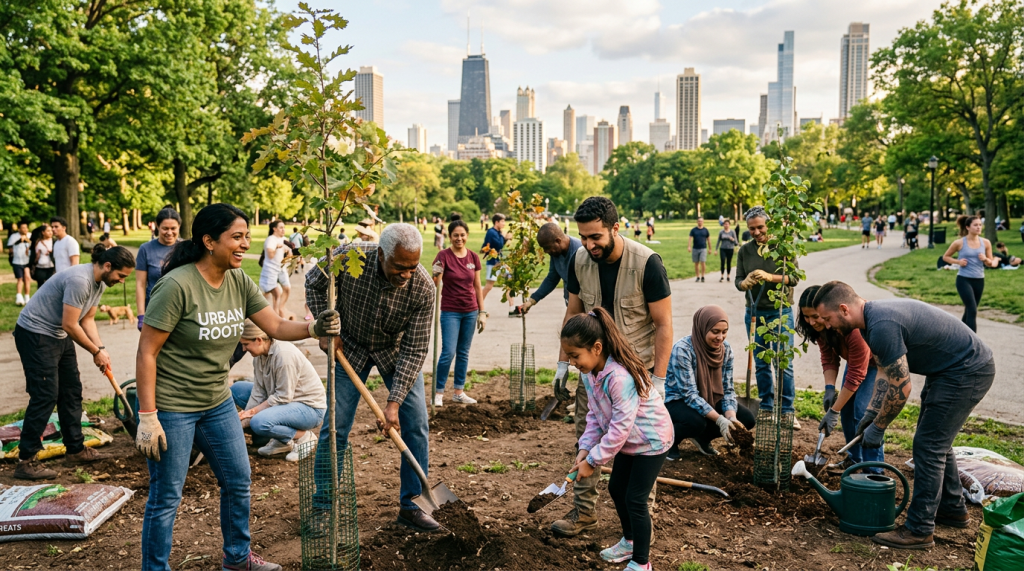
At its most fundamental level, urban forestry is the care and management of single trees and tree populations in urban settings for the purpose of improving the urban environment. However, this definition barely scratches the surface of what the discipline actually entails in practice. It is a complex blend of arboriculture, civil engineering, landscape architecture, and municipal planning.
Unlike traditional forestry, which is primarily concerned with cultivating trees for timber yield and resource extraction in remote, rural areas, urban forestry focuses on the environmental, economic, and social services that trees provide to densely populated areas. It is the careful integration of nature into the harsh, unforgiving environment of the modern city.
An urban forest does not just mean a large park in the centre of a city. It encompasses every single tree on public and private land. It includes the grand oaks lining historic boulevards, the small ornamental trees planted in kerb outbuilds, the rooftop gardens on commercial skyscrapers, the native vegetation along urban river corridors, and the shade trees in suburban backyards. Urban forestry treats this entire collection of greenery as a single, cohesive infrastructure system. Just as city planners map out water pipes, electrical grids, and public transport networks, urban foresters map out the tree canopy, analysing soil volumes, tree health, species distribution, and overall canopy cover to ensure the network functions as a whole.
The major rules governing urban canopies
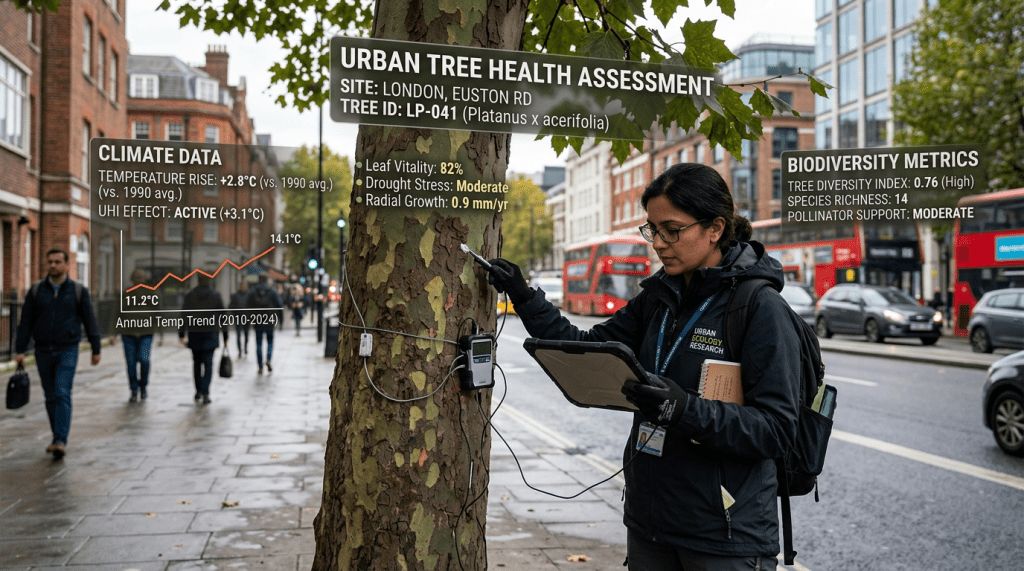
Managing a living, breathing ecosystem within a concrete jungle is a highly complex logistical challenge. Because trees are living organisms operating on decades-long timelines, urban foresters must adhere to several rigorous rules and scientific guidelines to ensure success.
The right tree, right place principle
This is the golden rule of urban forestry. In a natural forest, a tree will simply grow where the conditions suit it. In a city, placing the wrong tree in the wrong location can lead to disastrous consequences. Urban foresters must meticulously analyse the constraints of a planting site. They must consider the mature height of the tree to ensure it does not tangle with overhead power lines. They must calculate the available soil volume beneath the pavement to ensure the root system has enough room to anchor the tree without destroying underground plumbing or lifting the kerb. They must also consider the microclimate – whether the building casts a permanent shadow, or if the glass facades will reflect intense, scorching heat onto the leaves.
The rule of species diversity
A fundamental vulnerability of urban environments is the tendency to plant just one type of tree because of its aesthetic appeal. This is known as a monoculture. When a city plants entirely one species, a single pest or disease can wipe out the entire canopy in a matter of months. To combat this, urban foresters strictly adhere to diversity guidelines, the most famous being the 10-20-30 rule developed by the late researcher Frank Santamour. This rule states that an urban tree population should include no more than 10 per cent of any one species, 20 per cent of any one genus, and 30 per cent of any one family. This genetic diversity ensures that the broader urban forest can withstand outbreaks of disease or pest infestations.
Proactive lifecycle and structural management
Urban trees do not have the luxury of failing naturally. In a wild forest, a dead branch falling is part of the natural decay cycle. In a bustling financial district, a falling branch is a severe liability. Therefore, urban forestry dictates a rule of strict, proactive maintenance. Trees must be structurally pruned while young to encourage a strong central leader trunk, preventing them from developing weak branch unions that could split in a storm. Their health must be monitored continually, and they must be safely removed and replaced as they reach the end of their natural lifespan.
The 3-30-300 model
As the discipline has evolved, new guidelines have emerged that focus on human well-being and access to nature. One of the most highly regarded modern frameworks is the 3-30-300 model, developed by Professor Cecil Konijnendijk. This rule provides a clear, measurable target for urban planners around the globe:
- 3: Every citizen should be able to see at least three decent-sized trees from their home, school, or place of work.
- 30: Every neighbourhood should aim for a minimum of 30 per cent tree canopy cover to provide adequate shade and microclimate benefits.
- 300: Every resident should live within 300 metres of a high-quality public green space or park.
By applying this model, cities can systematically plan their urban forests to maximise physical and mental health benefits for residents, ensuring that greenery is woven directly into the fabric of daily life.
Jasen Johns, an urban forester and municipal arborist, described urban forestry and the 3-30-300 model in episode 448I of the What is The Future for Cities? podcast:
The hidden disadvantages and management challenges
Despite the overwhelming benefits, embedding a biological system into an engineered environment brings significant challenges. It is vital to acknowledge the disadvantages and the sheer operational friction associated with urban forestry.
Infrastructure conflict and structural damage
Trees are incredibly powerful biological machines, and their roots will aggressively seek out moisture and oxygen. In a city environment, this often puts them into direct conflict with civil engineering. Expanding root systems can easily crack concrete pavements, creating trip hazards that lead to costly municipal lawsuits. Roots frequently invade underground water and sewer pipes, causing blockages and requiring expensive plumbing excavations. If the wrong species is planted too close to a building, the roots can even compromise the structural integrity of the foundation.
The immense financial burden of maintenance
An urban forest is not a “plant and forget” asset. It requires an enormous, ongoing financial investment from local governments. Cities must employ legions of certified arborists, tree climbers, and ground crews to handle regular pruning, disease treatment, and risk assessment. Following a severe storm, the cost of clearing fallen trees and repairing damaged power lines can cripple a municipal budget. Additionally, the daily management of leaf litter, fallen fruit, and organic debris requires constant street sweeping to prevent blocked drains and slippery roads.
Health risks, allergies, and safety hazards
While trees generally improve health, they can also trigger negative reactions. Many popular urban tree species produce massive amounts of wind-borne pollen, exacerbating asthma and hay fever for millions of city dwellers during the spring months. Furthermore, despite the best risk-management strategies, healthy trees can occasionally fail unexpectedly. Sudden branch drop syndrome during extreme heat waves, or trees uprooted during cyclonic winds, pose a severe threat to vehicles, property, and human life.
Resource consumption in arid climates
In regions prone to severe drought, maintaining a lush urban canopy requires significant water resources. Pumping millions of litres of municipal water to keep street trees alive during a dry summer can place immense strain on a city’s water reservoirs, forcing planners to make difficult choices between domestic water supply and the survival of the urban forest.
Tree selection and upkeep
Choosing the right urban trees carries notable risks. Native species support local biodiversity but can be difficult and costly to maintain as climate change increases their vulnerability to drought, pests, and shifting conditions. Easy-to-tend invasive species establish quickly with lower upkeep, yet they often outcompete natives, reduce biodiversity, and trigger expensive eradication efforts. Meanwhile, planting climate-migrating or resilient species may improve long-term survival, but risks disrupting established ecosystems through new competitive pressures, hybridisation, or introduced pests and diseases.
This specific risk is discussed in episode 447R of the What is The Future for Cities? podcast based on a major 2019 study of 125 tree species in the eastern United States:
The distinct advantages of a forested city
The integration of urban forestry into city planning offers a staggering array of benefits that directly combat some of the harshest realities of urbanisation.
Mitigating the urban heat island effect
Cities are significantly hotter than their surrounding rural areas. Asphalt, concrete, and brick absorb solar radiation throughout the day and radiate it back into the air at night, creating an “urban heat island.” Trees act as powerful, natural air conditioners. Their broad canopies provide direct shade, preventing the pavement from absorbing heat in the first place. Furthermore, trees release water vapour through their leaves in a process called evapotranspiration, which actively cools the surrounding air. In dense urban corridors, a robust tree canopy can lower ambient temperatures by several degrees, drastically reducing the reliance on electrical air conditioning.
Improving air quality and managing stormwater
Urban centres are notorious for producing vast amounts of atmospheric pollutants and particulate matter from vehicle exhausts and industrial activities. The leaves of urban trees act as physical filters, trapping harmful particulates on their surfaces and absorbing gaseous pollutants like ozone, nitrogen dioxide, and sulphur dioxide. Additionally, urban forests play a crucial role in managing heavy rainfall. In a city dominated by impermeable surfaces like roads and pavements, rain quickly turns into flash flooding. A mature tree canopy intercepts a vast amount of rainfall, slowing its descent to the ground, while the root systems encourage water to infiltrate the soil, taking pressure off municipal drainage systems.
Economic revitalisation and property value
Beyond the environmental benefits, urban forestry provides a massive economic boost. Studies consistently demonstrate that retail districts with healthy, mature tree canopies experience higher foot traffic. Shoppers linger longer and are willing to spend more money in commercial areas that feel green, shaded, and welcoming, compared to stark, barren streets. Furthermore, residential properties situated on tree-lined streets command significantly higher market prices than equivalent homes in neighbourhoods lacking a mature canopy.
Enhancing public health and well-being
The psychological and physiological benefits of urban greenery are profound. Access to green spaces and tree-lined streets is directly linked to lower stress levels, reduced blood pressure, and better overall mental health. Hospitals with views of trees have recorded faster patient recovery times. A well-managed urban forest provides essential recreational spaces that encourage walking, cycling, and active lifestyles, which in turn reduces the burden on metropolitan healthcare systems.
Louis de Jaeger, award-winning filmmaker, author, and landscape designer, in episode 412 of the What is The Future for Cities? podcast talks about the benefits of urban (food) forests, among others:
Connecting urban forestry to the future of our cities
As we look toward the horizon, the relationship between our cities and their urban forests is becoming increasingly symbiotic. The metropolises of the future will likely not view trees as mere decoration, but as critical municipal infrastructure, integrated seamlessly with cutting-edge technology. While technology like smart grids and advanced transit will dictate much of how a city operates, urban forestry will shape how a city feels to live in.
The future of urban forestry is heavily reliant on data and smart city innovation. City planners are already utilising LiDAR (Light Detection and Ranging) technology, mounted on drones and aircraft, to map the urban canopy in three-dimensional space down to the centimetre. This allows governments to pinpoint exactly which neighbourhoods are lacking shade and to predict how the canopy will grow over the next fifty years.
Furthermore, the integration of the Internet of Things (IoT) is revolutionising how we maintain these green assets. In the future, individual street trees could be equipped with subterranean soil moisture sensors. Instead of sending out watering trucks on a fixed, inefficient schedule, the trees themselves will transmit data to a centralised municipal hub, triggering automated, precise irrigation only when the soil approaches a critical dryness threshold. This will drastically reduce water consumption while ensuring the longevity of the canopy.
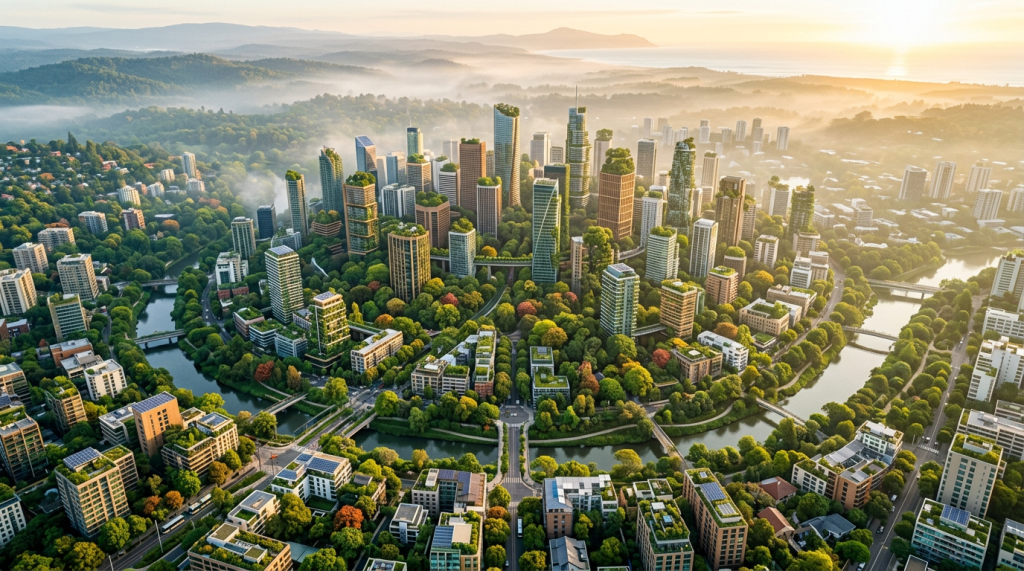
Architecturally, the line between building and forest will continue to blur. We are seeing the rise of vertical forests – skyscrapers designed with deeply reinforced balconies capable of supporting fully grown trees. Green roofs are becoming standard practice, transforming sterile tar surfaces into thriving mini-ecosystems that insulate buildings and capture rainwater.
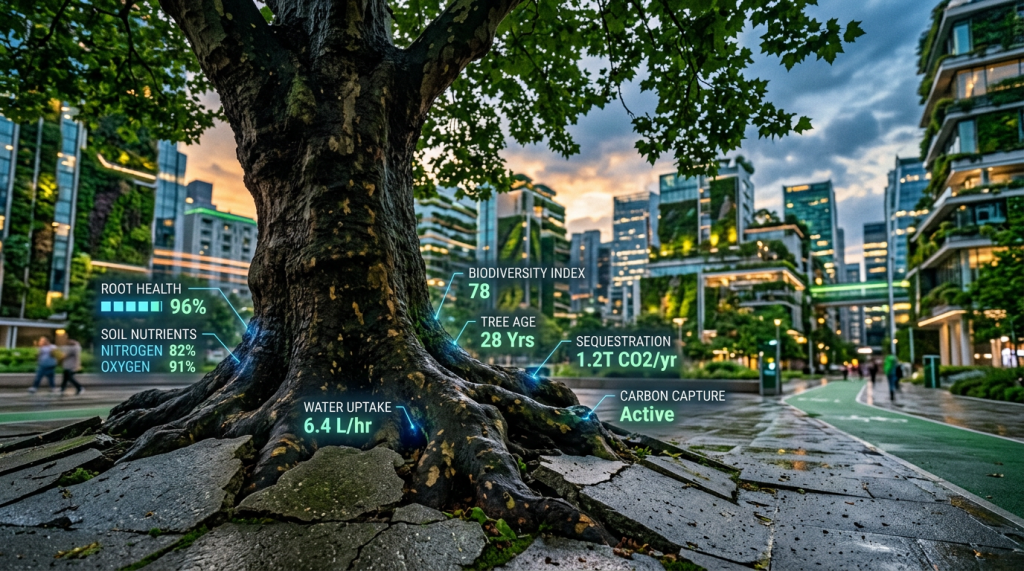
Ultimately, the cities that will thrive in the coming decades are those that recognise they cannot engineer their way out of every problem using only steel and concrete. As urban populations swell and the concrete footprint expands, the strategic application of urban forestry will be one of the primary mechanisms keeping our cities breathable, liveable, and economically vibrant. The roots planted today will not dictate the future entirely on their own, but they will form a vital part of the foundation for the cities of tomorrow.
Next week, we are investigating the future of urban governance!
Ready to build a better tomorrow for our cities? I’d love to hear your thoughts, ideas, or even explore ways we can collaborate. Connect with me at info@fannimelles.com or find me on Twitter/X at @fannimelles – let’s make urban innovation a reality together!
 Vitruvian Solutions
Leave a comment