Every city has a distinct, underlying hum. You feel it the moment you step off a train in Tokyo, navigate the sweeping avenues of Paris, or walk through the narrow, bluestone laneways of Melbourne. This intangible yet unmistakable character is what urbanists, architects, and developers refer to as the ‘DNA of a place’. It is the complex, interwoven tapestry of a location’s history, its topographical constraints, its foundational industries, its architectural vernacular, and its collective memory.
As we look towards the next century of global urbanisation, understanding and leveraging this genetic code has become an essential discipline for city builders. The stakes for urban development have never been higher, with global capital and top-tier talent travelling more freely than ever before. In this highly competitive landscape, the DNA of a city presents a profound paradox for its future. On one hand, a robust local DNA can provide a powerful, unifying vision that differentiates a city from its global competitors. On the other hand, an over-reliance on this same genetic code can become a set of intellectual and physical shackles, severely restricting growth, stifling necessary evolution, and blinding city leaders to the demands of the future.
To successfully navigate the future of urban development, we must rigorously investigate both the immense power and the inherent dangers of building upon a city’s historical and cultural genome.
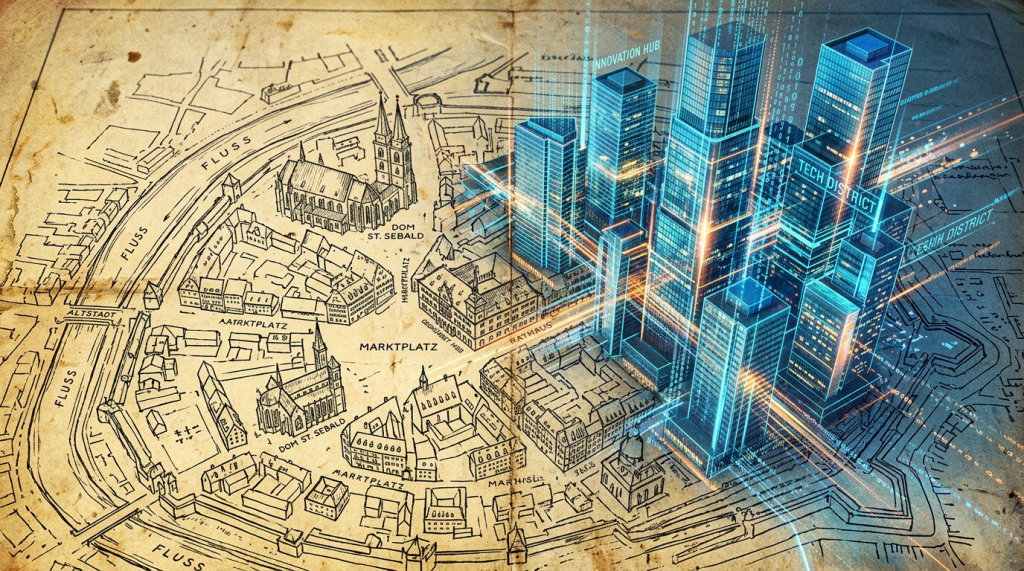
Harnessing the genetic code: How DNA shapes urban vision
When leveraged correctly, the DNA of a place acts as an unparalleled strategic asset. It provides a foundation of authenticity that simply cannot be manufactured from scratch, offering a clear framework for future growth.
Anchoring identity against the threat of the anywhere city
Over the last few decades, globalisation and the rapid expansion of international architecture firms have led to the proliferation of the ‘anywhere city’. These are urban centres characterised by anonymous glass towers, identical retail precincts, and standardised public plazas. A central business district in North America can often look indistinguishable from a newly developed commercial hub in Asia or Europe.
In this sea of global sameness, a city’s unique DNA is its greatest commercial and cultural differentiator. By drawing upon historical materials, local typologies, and regional spatial arrangements, developers can create precincts that feel deeply rooted in their location. When new developments reflect the historical scale of a neighbourhood, or utilise local sandstone, brickwork, or specific rooflines, they instantly possess an authenticity that attracts high-value tenants, tourism, and investment. The DNA provides the vision for a city that is fiercely itself, resisting the homogenisation of modern real estate.
Economic magnetism and the premium of character
The modern knowledge economy relies heavily on attracting highly skilled professionals, and this demographic consistently shows a preference for environments rich in character and history. We see this manifested in the immense commercial success of adaptive reuse projects globally.
When developers take an abandoned industrial warehouse – a remnant of a city’s manufacturing DNA – and transform it into a high-technology commercial hub, they are commanding a premium in the market. The raw concrete, exposed steel beams, and cavernous layouts tell a story of the city’s past, while the fibre-optic infrastructure and modern amenities serve its future. This synthesis of old and new creates an economic magnetism. The DNA of the place dictates a vision of commercial revitalisation that celebrates the industrial labour of previous generations while housing the intellectual labour of the next.
Masterplanning with deep contextual intelligence
At a macro level, understanding the DNA of a place allows for far superior masterplanning. A city’s original layout – often dictated by old trade routes, ancient riverbeds, or historical property boundaries – creates a specific rhythm to the streets.
When urban planners use these historical footprints as the foundation for modern expansion, the new districts seamlessly integrate into the old. Rather than dropping a rigid, geometric grid onto an area with a historically meandering, organic streetscape, planners can use the existing DNA to guide the massing of new buildings, the sightlines toward historical landmarks, and the flow of pedestrian traffic. The DNA acts as a structural compass, ensuring that even the most hyper-modern developments feel like a natural extension of the city’s timeline. The DNA of a place is not just about aesthetics; it is the embedded logic of how a city has historically solved the problems of commerce, density, and geography.
Andy Roberts, the Urban Design Director of Planit, described the essential nature of a place’s DNA for creating its future in episode 446 of the What is The Future for Cities? podcast:
The dark side of heritage: When DNA shackles the future
Despite its value, an obsession with the DNA of a place can quickly become a pathological barrier to progress. When the desire to preserve character outweighs the necessity for adaptation, a city’s genetic code transforms from a guiding vision into a cage.
The nostalgia trap and the museum city
The most obvious danger of clinging too tightly to urban DNA is the creation of the ‘museum city’. These are locations that have become so infatuated with their historical aesthetic that they effectively freeze themselves in time, resisting any architectural or infrastructural evolution.
Venice and central Paris often grapple with this exact tension. In an attempt to preserve their globally renowned DNA, severe restrictions are placed on new development, modern architecture, and commercial expansion. While this preserves the visual identity of the city for tourism, it frequently chokes the city’s ability to function as a modern, dynamic economic engine. When the vision for the future is simply a mandate to perfectly maintain the past, cities lose their commercial vitality. They become beautiful facades that fail to meet the technological and spatial requirements of modern enterprises.
Economic path dependency and industrial hangovers
A city’s DNA is not just architectural; it is also deeply economic. Sometimes, a region is so historically dominant in a specific industry – such as automotive manufacturing in Detroit, or heavy resource extraction in various regional centres – that its entire infrastructure, spatial layout, and political mindset are heavily calibrated to that single pursuit.
This creates a dangerous phenomenon known as path dependency. The physical DNA of the city (sprawling factories, vast freight rail networks, low-density worker housing) becomes a massive structural barrier to economic pivoting. When global markets shift and those foundational industries decline, the city struggles to articulate a new vision. The leadership and the built environment are so heavily shackled to their historical identity that they reject the integration of new economies, such as biotechnology, software development, or advanced financial services. The DNA of the place dictates a return to a bygone era of industrial glory, blinding the city to the realities of a shifting global market.
Weaponised character and the resistance to density
Perhaps the most common way urban DNA shackles the future is through its weaponisation by local interest groups to resist necessary changes in urban morphology. As cities grow in population and economic output, they must mathematically increase their density. This requires the construction of taller commercial towers, the implementation of heavy rail infrastructure, and the densification of suburban corridors.
However, the “character of the neighbourhood” is frequently invoked as an absolute barrier to this growth. The local DNA is used as a highly effective political tool to block the rezoning of low-density areas, preventing the city from evolving to meet the demands of its current population. When the historical typology of single-family homes or low-rise commercial strips is treated as sacred, the city is forced to sprawl outward rather than build upward. This stifles agglomeration economies, increases the cost of doing business, and ultimately degrades the city’s global competitiveness. Here, the DNA is not a compass; it is a strict limitation that refuses to acknowledge the mathematical realities of urban success.
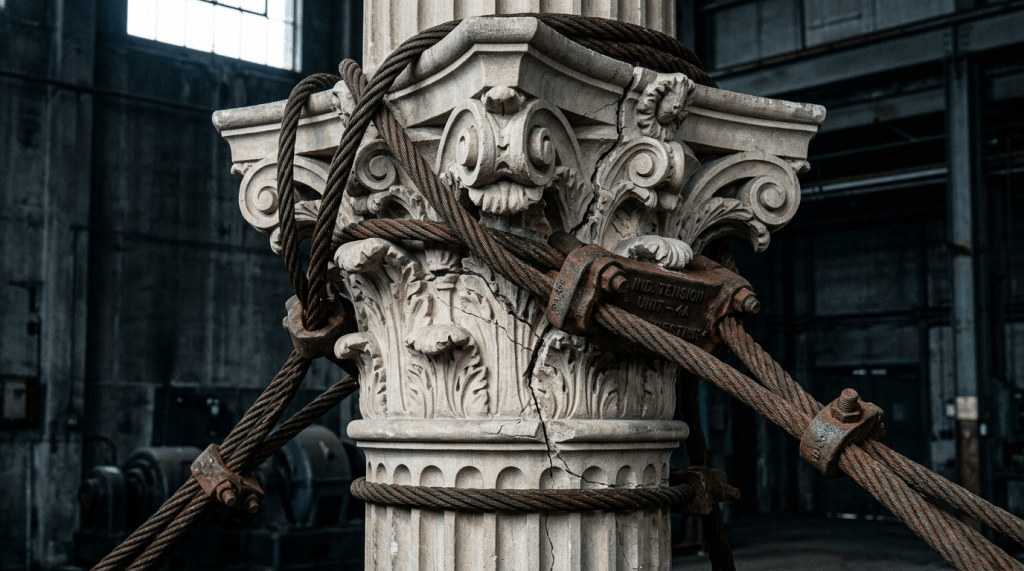
Mutating the code: A strategy for future-focused urbanism
The future of successful urban development lies in mastering the tension between these two extremes. Cities are not static artefacts; they are complex, living organisms. For any organism to survive over a long enough timeline, its DNA must be allowed to mutate.
Extracting principles over literal aesthetics
To use the DNA of a place as a positive vision without being shackled by it, urban developers must learn to extract the underlying principles of a location rather than simply mimicking its literal aesthetics.
If a city has a proud history of maritime trade and heavy industry, the future vision of its harbourfront does not require the construction of faux-heritage warehouses or the arbitrary placement of rusted anchors as public art. Instead, the architectural response should capture the spirit of that industrial DNA: robust materials, highly functional public realms, vast open structures, and an atmosphere of vigorous commercial exchange. By translating historical DNA into modern typologies, developers honour the past while aggressively building for the future.
The courage for selective erasure
Finally, future-proofing a city requires the administrative and architectural courage to engage in selective erasure. Not every aspect of a city’s DNA is worth carrying into the next century. Just as genetic mutations involve discarding obsolete traits, cities must be willing to bulldoze outdated infrastructure, rewrite archaic zoning laws, and aggressively modify historical precincts when they actively hinder economic progress.

True urban antifragility for the future comes from knowing which parts of the local DNA represent the core identity of the city, and which parts are merely historical baggage. The cities that will dominate the coming decades are those that treat their heritage with respect, but treat their future with absolute priority.
The DNA of a place will always be the foundation upon which cities are built. But it is the responsibility of this generation of urbanists to ensure that this genetic code is used to design a launchpad for the future, rather than an anchor tying us to the past.
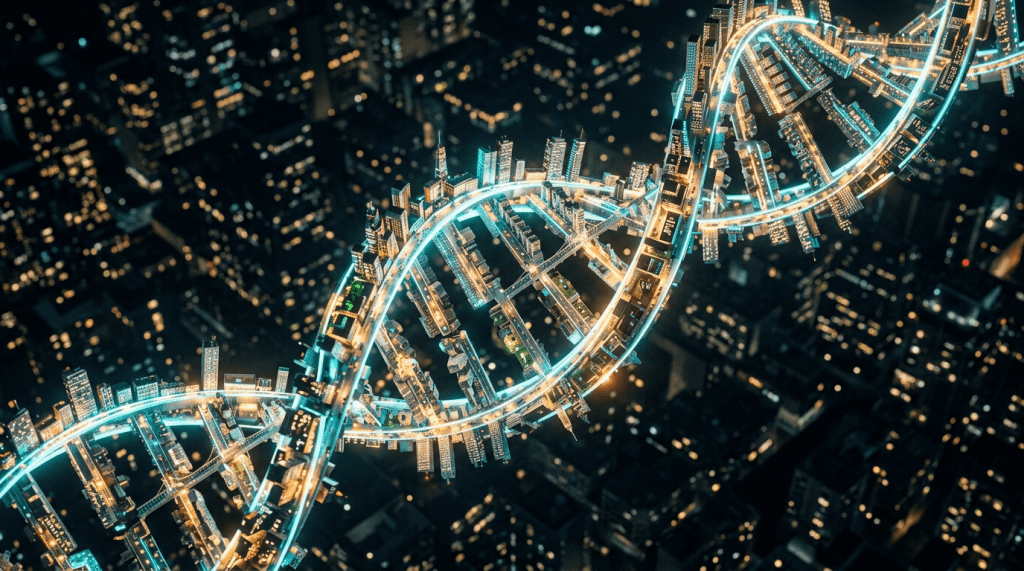
Next week, we are investigating urban forestry practices!
Ready to build a better tomorrow for our cities? I’d love to hear your thoughts, ideas, or even explore ways we can collaborate. Connect with me at info@fannimelles.com or find me on Twitter/X at @fannimelles – let’s make urban innovation a reality together!


Leave a Reply