As the global population continues to expand, our cities are facing an unprecedented spatial crisis. For centuries, urban planners and architects have relied on two primary dimensions of growth: expanding outward into sprawling suburbs, or reaching upward with towering skyscrapers. However, as metropolitan areas globally grapple with dwindling land availability, sky-high real estate prices, and the compounding pressures of climate change, these traditional avenues of expansion are reaching their natural limits. Urban sprawl devours vital agricultural land and degrades local ecosystems, while the relentless vertical race alters city skylines and creates deep, shadowed urban canyons.
To build the resilient and liveable cities of tomorrow, urban planners are increasingly looking in a third, historically underutilised direction: straight down.
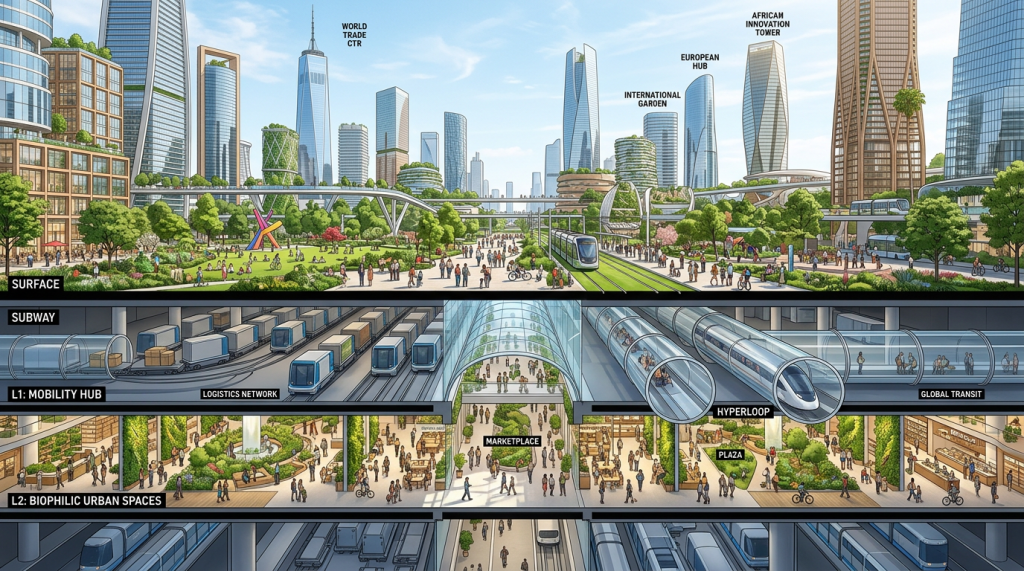
The concept of subterranean urbanism is not entirely new. From the ancient underground cities of Cappadocia in modern-day Turkey to the sprawling subway networks of London and New York, humanity has long recognised the utility of the subsurface. Yet, the modern approach to underground infrastructure goes far beyond simple transit tunnels and basements. Today, we are standing on the precipice of a new era of ‘3D cities’, where the earth beneath us could house everything from automated logistics networks and expansive retail hubs to urban farms and climate-resilient community sanctuaries.
While the prospect of digging down offers tantalising solutions to some of our most pressing urban challenges, it is not a silver bullet. The subterranean frontier is fraught with immense engineering hurdles, staggering financial costs, and complex psychological considerations. In this post, we will explore the pivotal role underground infrastructure could play in the future of our cities, weighing the distinct advantages and disadvantages, and unearthing the challenges and opportunities that lie in the dark below.
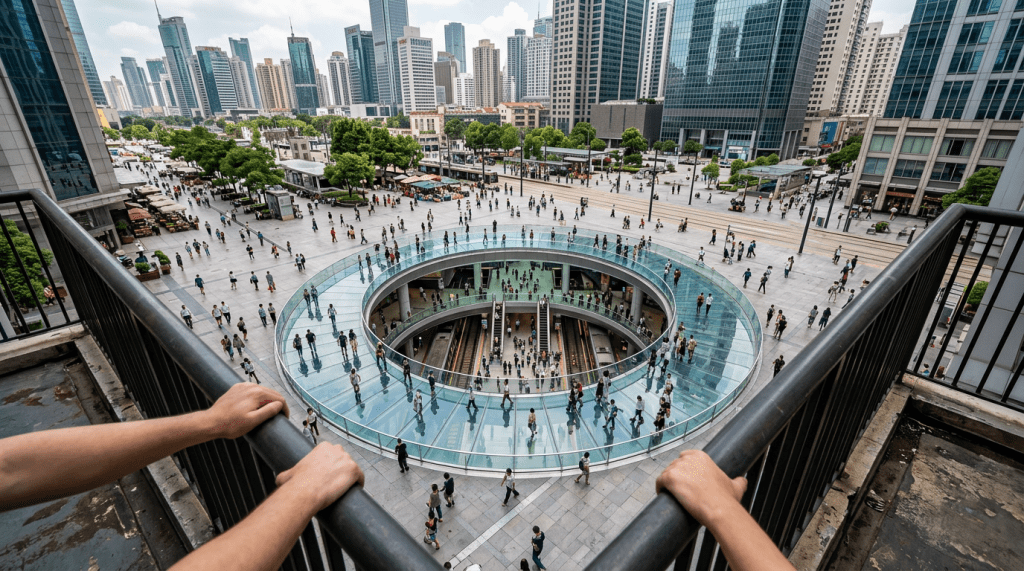
The pressing need for sub-surface solutions
Before we examine the mechanics of underground living and infrastructure, it is crucial to understand the global context driving this shift. By the year 2050, the United Nations projects that nearly 70% of the world’s population will reside in urban areas. This massive influx of people requires housing, transportation, utilities, and public spaces, all of which demand land – a resource that is inherently finite.
Furthermore, the escalating impacts of climate change are forcing a radical rethink of urban design. Surface-level infrastructure is highly vulnerable to extreme weather events, including torrential floods, cyclonic winds, and blistering heatwaves. In densely packed metropolises, the ‘urban heat island’ effect exacerbates rising temperatures, making summer months increasingly unbearable and heavily reliant on energy-intensive air conditioning.
In response to these compounding pressures, forward-thinking cities are already drafting subterranean master plans. Singapore, constrained by its island geography, has been heavily investing in underground infrastructure to house data centres, ammunition depots, and deep-tunnel sewerage systems, freeing up precious surface land for commercial and residential development. Similarly, Helsinki’s ‘Underground Master Plan’ aims to centralise essential but unsightly facilities – such as water treatment plants and district heating networks – beneath the bedrock, preserving the historic and aesthetic integrity of the city above. The need is clear: to save the surface, we must utilise the subsurface.
Echoing this exact sentiment in a recent episode (442I) of the What is the Future for Cities? podcast, Darren Flynn highlights how burying sprawling utilities – like massive train station car parks – allows us to flip urban design on its head and build vibrant community spaces directly on top:
Digging into the advantages
The benefits of relocating key elements of our urban environments underground are extensive and multifaceted, offering solutions that address both spatial and environmental dilemmas.
Unlocking surface space for human flourishing
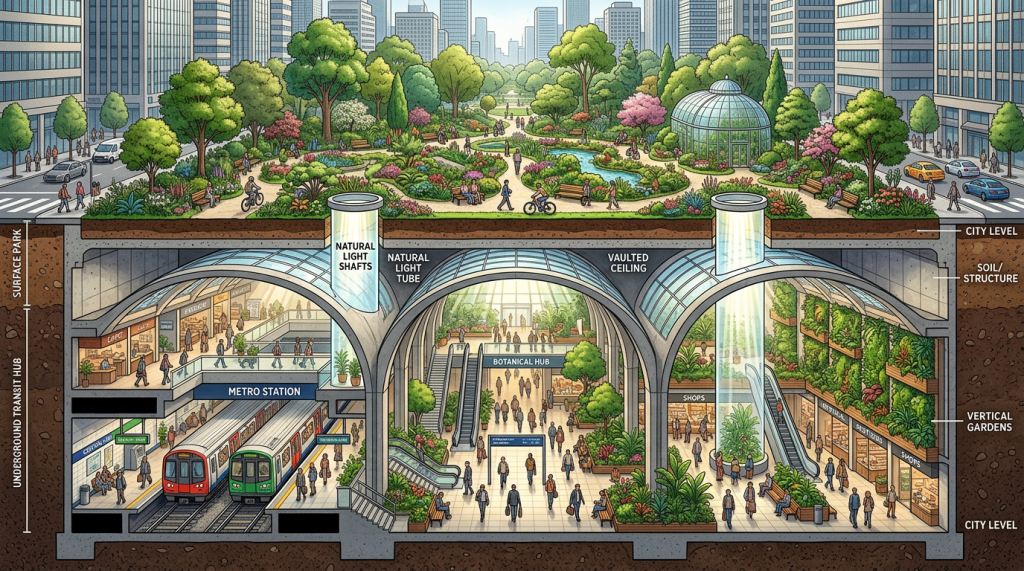
Perhaps the most immediate advantage of subterranean infrastructure is space optimisation. By burying utility networks, parking garages, logistics hubs, and major transit arteries, cities can reclaim vast swathes of surface area. This reclaimed land can be transformed into pedestrian-friendly zones, affordable housing, and, crucially, green public parks. Integrating nature back into the urban environment has proven benefits for public health, biodiversity, and community well-being. By moving the “machinery” of the city out of sight, we can dedicate the surface level to activities that genuinely enrich human life.
Climate resilience and thermal stability
The earth acts as a phenomenal natural insulator. Just a few metres below the surface, temperatures remain remarkably stable year-round, insulated from the freezing winters and scorching summers that batter the world above. This thermal inertia presents a massive advantage for energy efficiency. Underground facilities require significantly less energy to heat and cool, drastically reducing a city’s overall carbon footprint. Furthermore, sub-surface environments offer unparalleled protection against severe weather. Tokyo’s Metropolitan Area Outer Underground Discharge Channel – a colossal subterranean water management system – stands as a prime example of how underground engineering can protect millions of residents and billions of dollars in surface assets from catastrophic typhoon flooding.
Aesthetic preservation and noise reduction
Heavy traffic, rumbling freight trains, and the visual clutter of power lines and industrial facilities detract significantly from urban liveability. Relocating noisy and aesthetically unpleasing infrastructure beneath the ground can dramatically reduce urban noise pollution, creating quieter, more serene neighbourhoods. This approach is particularly valuable for historic cities looking to modernise their infrastructure without compromising their architectural heritage or cultural character.
The dark side: disadvantages and drawbacks
Despite the compelling benefits, the push towards subterranean urbanism is accompanied by significant drawbacks that planners must carefully navigate.
The psychological toll of a sunless world
The most profound disadvantage of underground development relates to human biology and psychology. Humans are inherently surface-dwelling creatures; we are biologically wired to respond to natural sunlight and the diurnal cycle. Prolonged exposure to windowless, subterranean environments can lead to a host of negative psychological effects, including claustrophobia, disorientation, and an increased risk of Seasonal Affective Disorder (SAD). While engineering can create structural marvels, simulating the psychological comfort of an open sky, a gentle breeze, and natural light is incredibly difficult. For this reason, planners generally agree that while machines, utilities, and transient activities (like shopping or commuting) belong underground, permanent human habitation does not.
Astronomical costs and high carbon footprints
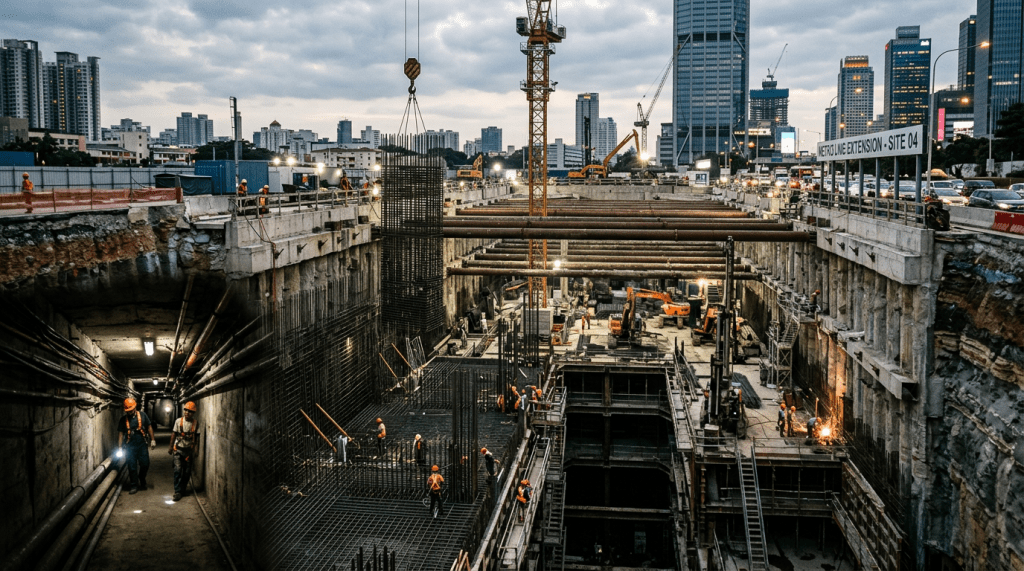
Digging is extraordinarily expensive. The cost of excavating bedrock, deploying massive Tunnel Boring Machines (TBMs), and managing the immense logistical operation of earth removal can make subterranean projects prohibitively expensive for many municipalities. Moreover, the environmental cost of construction is a major concern. Securing underground spaces requires colossal amounts of concrete and steel. The production of Portland cement (the primary ingredient in concrete) is one of the largest contributors to global carbon emissions. If the goal of moving underground is to create a greener city, the massive carbon debt incurred during construction poses a significant paradox.
Safety, ventilation, and emergency hazards
Operating safely beneath the earth requires complex, energy-intensive life-support systems. Subterranean spaces require constant, mechanical ventilation to ensure breathable air and to manage exhaust from transit or commercial activities. Furthermore, the inherent enclosed nature of underground infrastructure makes emergency situations – such as fires, floods, or structural collapses – exponentially more dangerous. Designing reliable evacuation routes, smoke extraction systems, and flood barriers adds layers of complexity and cost to any underground project.
Overcoming the engineering and logistical challenges
If cities are to successfully harness the potential of the underground, they must overcome a series of formidable challenges that stand in the way of widespread implementation.
Navigating the subterranean ‘spaghetti’
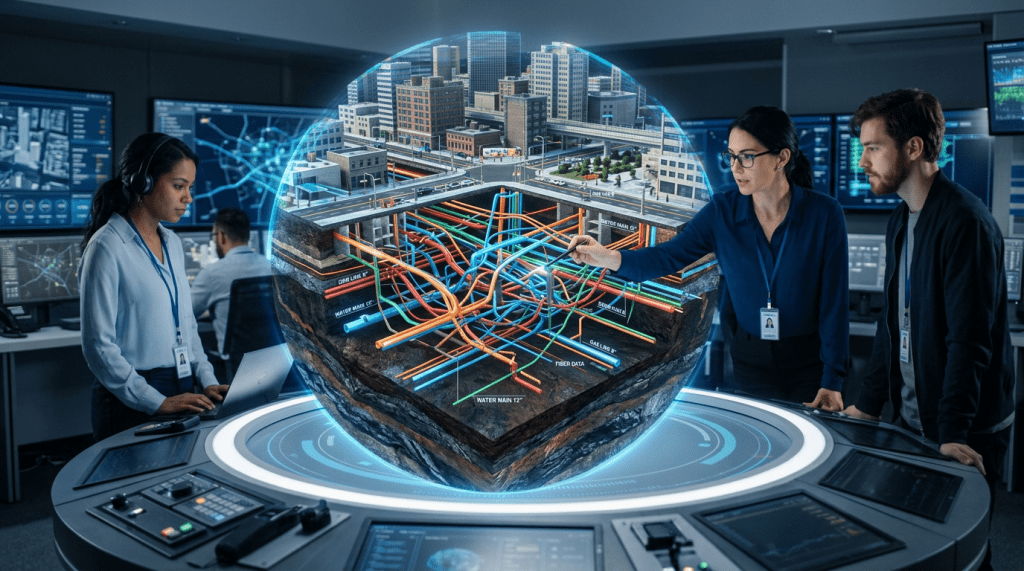
One of the greatest hurdles in developing new underground infrastructure is dealing with what is already there. Beneath the streets of cities like London, New York, or Sydney lies a chaotic, often poorly mapped tangle of water pipes, gas mains, telecommunication cables, abandoned transit tunnels, and historic foundations. Navigating this ‘spaghetti’ of existing infrastructure without causing surface disruptions or catastrophic utility failures requires highly advanced surveying technologies, such as ground-penetrating radar and 3D digital twin modelling, which are still evolving.
Unpredictable geology and hydrogeology
Unlike building into the empty air, digging into the earth means battling nature on its own terms. Planners must contend with shifting fault lines, unpredictable bedrock strength, and complex groundwater systems. Altering the subterranean landscape can inadvertently change the water table, potentially causing surface subsidence (sinkholes) or destabilising the foundations of existing surface buildings. Comprehensive geotechnical surveying is mandatory, but even the best surveys can miss subterranean surprises that lead to massive project delays and budget blowouts.
Legal and zoning complexities
Who owns the earth beneath your house? The legal frameworks governing subterranean property rights vary wildly from country to country, and even from city to city. In some jurisdictions, property ownership extends to the centre of the earth; in others, the government retains the rights to everything below a certain depth. As cities look to build sprawling, interconnected underground networks that cross beneath thousands of private properties, they will need to establish clear, updated legal frameworks and zoning laws to avoid a quagmire of endless litigation.
Unearthing future opportunities and innovations
If we can navigate the costs, mitigate the psychological impacts, and solve the engineering puzzles, the opportunities for innovation beneath our feet are truly boundless.
Subterranean agriculture and urban farming
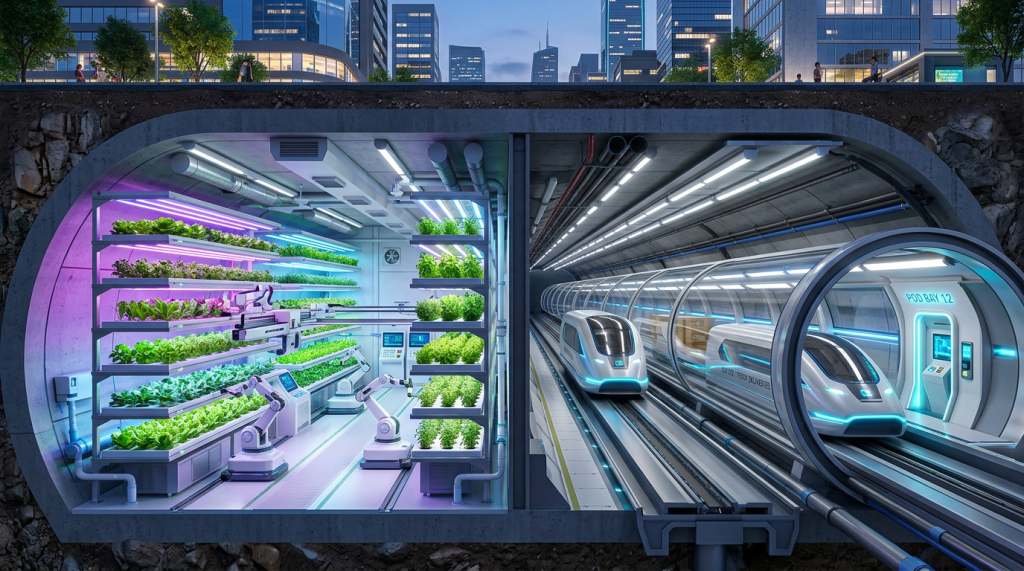
As the global population grows, so too does the need for food security within urban centres. The stable climate of underground spaces makes them ideal for controlled-environment agriculture. Abandoned mine shafts and old transit tunnels are already being repurposed in cities like London and Paris to grow high-yield crops such as mushrooms, microgreens, and hydroponic vegetables. By farming directly beneath the populations that consume the produce, cities can drastically reduce the carbon emissions associated with food transport and logistics.
Automated freight and logistics networks
The surge in e-commerce has flooded city streets with delivery vans, contributing heavily to gridlock and air pollution. The future of urban logistics could very well be underground. Planners are conceptualising dedicated, automated subterranean freight networks using maglev technology or autonomous pods. These systems could quietly and efficiently transport goods from peripheral warehouses directly to local distribution hubs or retail centres, entirely removing heavy freight traffic from surface streets.
Designing for the human experience
To combat the psychological drawbacks of underground spaces, the next generation of subterranean architecture is heavily focused on biophilic design. Architects are exploring the use of massive light tubes, strategically placed skylights, and advanced fibre-optic systems to channel natural sunlight deep underground. Developments like Montreal’s RÉSO (the Underground City) or the sprawling subterranean malls of South Korea are increasingly incorporating indoor gardens, water features, and expansive, vaulted ceilings to create airy, inviting environments that trick the brain into feeling as though it is above ground.
The future of our cities relies on a delicate and deliberate balancing act. The surface of our planet is a precious commodity, and as the pressures of population density and climate change mount, we can no longer afford to waste it on parking garages, sprawling warehouses, and industrial utilities.
Underground infrastructure offers a powerful mechanism to optimise urban land, enhance climate resilience, and restore our surface environments to people and nature. However, it is a frontier that demands immense respect. The financial, environmental, and psychological costs of digging deep mean that subterranean development must be pursued strategically, not frivolously. We must use the underground to support life, rather than forcing life to adapt to the underground.
By marrying advanced engineering with empathetic, human-centric design, cities can create multi-layered environments that are efficient and fundamentally more beautiful.
We are standing at a fascinating crossroads in the history of urban design, and the decisions we make today will shape the liveability of our cities for centuries to come.
Would you be comfortable spending a significant portion of your day – shopping, working, or commuting – in a sprawling underground complex, provided it was well-lit and spacious?
What piece of surface infrastructure in your city would you most like to see buried underground to free up space?
Next week, we are investigating mobility innovation practices!
Ready to build a better tomorrow for our cities? I’d love to hear your thoughts, ideas, or even explore ways we can collaborate. Connect with me at info@fannimelles.com or find me on Twitter/X at @fannimelles – let’s make urban innovation a reality together!


Leave a comment