Look around any major global metropolis today. It is undoubtedly a marvel of human engineering, yet beneath the glittering glass facades, the traditional modern city is too often built upon a linear, industrial model that struggles to harmonise with the natural landscape. In stark contrast, modern media frequently romanticises the isolated, off-grid eco-commune – idyllic havens where residents live in perfect, undisturbed harmony with the earth.
This dichotomy paints us into a difficult intellectual corner: the highly structured, rigid grind of the traditional urban machine versus a beautiful, but highly exclusive, utopian escape. While completely disconnecting from mainstream society is profoundly inspiring to many, it is simply not a practical or scalable solution for the vast majority of the population. The world is urbanising at an unprecedented rate, and our planetary future will ultimately be negotiated within our cities, not outside them.
The future of urban living does not lie in waiting for a perfect utopia, nor does it require abandoning the metropolis. Instead, the answer is found in embracing ‘Protopia’ – a continuous, daily practice of active interventions that bridge the gap between where our cities currently are and where they need to be. Ultimately, the goal of this protopian journey is to build cities that are not just sustainable, but deeply regenerative and remarkably antifragile.

Moving from ‘sustainable’ to ‘regenerative’ and ‘antifragile’
For decades, ‘sustainability’ has been the ultimate buzzword in urban planning, architecture, and municipal strategy. It has been the gold standard for global development. But as ecological challenges accelerate and biodiversity shifts, we have reached a critical realisation: merely aiming to be sustainable is no longer the final destination. (See more on this Regeneration on the Sustainability – Antifragility scale?)
Legacy urban systems are, by their very design, based on a linear economy. They take raw resources from the earth, transform them into infrastructure and goods, and eventually output them as waste. Furthermore, these systems are highly centralised, making them incredibly fragile to sudden shocks like extreme weather events or supply chain disruptions. When we aim solely for sustainability within this specific context, we are essentially trying to maintain a degraded baseline. We are trying to do less harm, to restrain the use of our resources, and to slow down the rate of depletion. While efficiency is crucial, slowing down the rate of impact and innovation does not actually heal the ecological systems that have already been disrupted, nor does it prepare the city for future volatility.
This is where the concepts of regeneration and antifragility become vital evolutions in our thinking.
Sustainability is treating an ailing system so it doesn’t degrade any further. Regeneration is actively helping that system heal, while antifragility ensures the system actually grows stronger from future stressors.
Regeneration is not just about minimising our footprint; it is about active intervention, repair, and mutual benefit. It is the conscious effort to leave a place fundamentally better than we found it, rebuilding ecological and social networks from the ground up so that human enterprise and nature can flourish simultaneously. Antifragility, a concept popularised by systems thinker Nassim Nicholas Taleb, takes this a step further. While a fragile system breaks under pressure, and a resilient system simply bounces back to its original state, an antifragile system actually improves when exposed to shocks, volatility, and stress. Think of the human muscular system: when exposed to the stress of lifting weights, it tears slightly, only to rebuild itself denser and stronger.
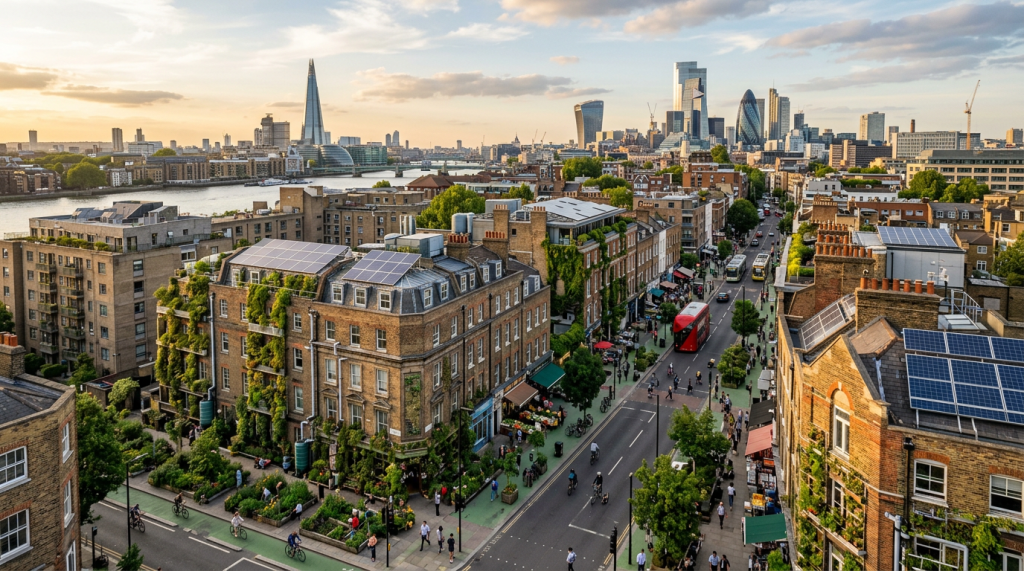
A modern city must aspire to this biological model. A regenerative and antifragile city functions much more like a complex living organism than a rigid machine. Instead of relying on a fragile, centralised power grid that can be knocked out by a single storm, it relies on a decentralised network of micro-grids where homes generate surplus clean energy and share it locally. If one node fails, the rest of the network adapts and learns, making the overall grid smarter and more secure. Instead of channelling storm water into overwhelmed concrete drains – a brittle solution that fails catastrophically during major floods – its ‘sponge city’ infrastructure utilises permeable pavements, urban wetlands, and green roofs. This not only absorbs and purifies rainwater (regeneration) but dynamically adapts to changing rainfall patterns, using excess water to cool the urban heat island effect during subsequent heatwaves (antifragility).
Transitioning to this dual model is not merely a technological challenge. We already possess much of the green technology and architectural knowledge we need. The true hurdle is a necessary cultural and psychological shift. Urban dwellers and city planners alike must stop viewing the built environment as a static, artificial grid. We must embrace volatility as a teacher rather than a threat, reimagining our cities as adaptive, shared, living habitats.
As Joris de Leeuw, regenerative designer at Protopia Studio, points out in episode 438 of the What is The Future for Cities? podcast, sustainability often fails to acknowledge the damage already done. We need a fundamental paradigm shift:
Embracing ‘protopia’ in the tension field
If a utopia is a perfect, finished, and ultimately fictional destination, a ‘protopia’ is the realistic, messy, and wonderfully ongoing journey. The term ‘Protopia‘, championed by futurists like Kevin Kelly, describes a state of continuous becoming. It is not a magical destination where all human problems are suddenly and flawlessly solved, but rather a world that is incrementally and measurably better today than it was yesterday.
Protopia is the ideal vehicle for building antifragile systems. By its very nature, protopia relies on trial, error, and iterative improvement. It asks us to focus on the daily practice of making our systems slightly better step by step. It replaces the paralysis that often accompanies the pursuit of perfection with the tangible, energising momentum of consistent progress. Because changes are made incrementally, small failures act as inoculations, teaching the broader urban system how to adapt without causing catastrophic, city-wide collapses.
Operating in a protopian mindset means working within what we can call the ‘tension field’. This is the friction-heavy, highly complex space between the legacy infrastructure that still governs our cities and the visionary, innovative ideas of ecological pioneers. It is a space of compromise, experimentation, collaboration, and constant negotiation. You cannot simply tear down an entire city and rebuild it overnight – the logistical disruption and embodied carbon cost alone would be devastating. Instead, you have to retrofit, adapt, and weave new, regenerative threads into the existing urban fabric, working alongside businesses, governments, and communities.
How does this protopian change actually happen in the real world? It occurs through small, localised experiments that push the boundaries of what is possible within the current system, proving that regenerative and antifragile models are ecologically sound, socially beneficial, and economically viable.
Imagine a city council or a corporate board trialling a programme where the local environment is considered a key stakeholder in major decision-making. This isn’t a utopian fantasy; it is a pragmatic, protopian intervention. It could look like appointing a dedicated sustainability officer or an environmental ombudsman to represent the long-term health of the local river system or the urban canopy during municipal planning meetings.
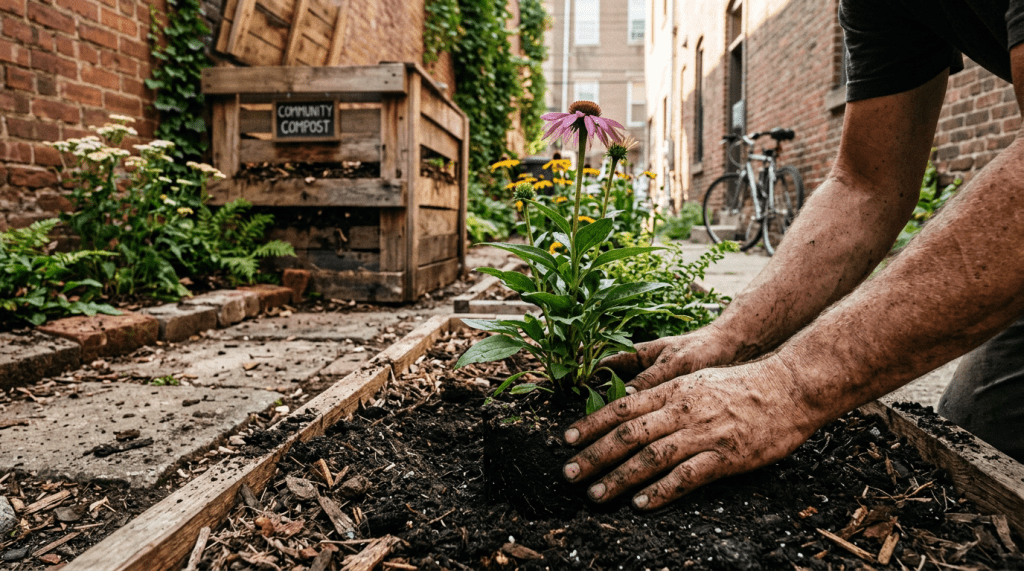
Simultaneously, local neighbourhoods might test decentralised composting and urban agriculture networks. When global supply chains experience friction, these local food networks don’t just survive; they receive more investment, more community participation, and grow more robust. This is the tension field at work: borrowing innovative frameworks that view nature as an essential partner, and adapting them into formats that a standard city council or enterprise can digest, fund, and implement. Once these micro-interventions are tested and proven effective, they can be scaled up across different sectors, integrating into broader global policies.
This exact tension is actively debated in contemporary urban planning. For example, episode 437R of the What is The Future for Cities? podcast analyses a 2019 study on regenerating ecosystem services in Wellington, New Zealand. The episode beautifully highlights the protopian tension between two distinct paths toward regenerative cities:
Investigating the approach: pros and cons
Like any framework for systemic change, the Regenerative, Antifragile, and Protopian model has its distinct advantages and inherent practical challenges. It is crucial to examine these honestly and objectively to understand how this model can be applied effectively across diverse global cities.
Pros of the model
- Radical Accessibility: The most significant advantage of this approach is its accessibility to the average citizen and the everyday business. It does not require people to drastically abandon their current lives or undertake massive, disruptive overhauls to make a meaningful impact. It meets people and organisations exactly where they are. This allows anyone to participate in regenerative practices, whether they live in a high-rise apartment in Sydney, manage a logistics company in London, or run a small cafe in North America.
- Evolutionary Strength Through Stress: By embracing antifragility, this model ensures that our cities do not remain static targets waiting for the next climate shock or economic shift. Instead, local initiatives – like neighbourhood mutual aid groups or modular green infrastructure – use everyday stressors to refine their processes. When a minor disruption occurs, the community learns, adapts, and builds better safety nets, ensuring they are vastly more prepared for larger, future crises.
- Action-Oriented Momentum: The sheer scale of global environmental challenges often induces severe eco-anxiety and decision paralysis. When the only options presented are maintaining the old ways or achieving a perfect eco-utopia, people often feel overwhelmed and ultimately do nothing. Protopia focuses on achievable, daily progress. Every small win – a community garden planted, a local waterway restored, a circular packaging initiative launched by a retailer – builds confidence, creates community bonds, and drives further positive action.
- Systemic Integration: Innovative pioneer ideas are essential for expanding our imagination, but they often struggle to survive outside of niche, isolated bubbles. The protopian model acts as a translation layer, taking brilliant ecological ideas and formatting them in ways that existing governing bodies and commercial enterprises can actually adopt, test, and integrate into their daily operations.
Cons and challenges of the model
- The Speed Dilemma: We are navigating a period of rapidly compounding, simultaneous global shifts. The most glaring challenge of the protopian approach is the factor of time. Incremental, daily changes – making things just a fraction better each day – may struggle to outpace the rate of environmental degradation and biodiversity loss. While steady progress is reliable, there is a very real concern that slow-and-steady incrementalism might not match the urgent pace required to stabilise global ecosystems before critical tipping points are reached.
- The Uneven Distribution of Shocks: Building an antifragile city requires exposing the system to small stressors so it can learn and adapt. However, in our current socio-economic landscape, the burden of these stressors is rarely shared equally. A minor supply chain disruption or a localised flood might be a valuable “learning experience” for a well-funded city planner, but it can be devastating for vulnerable, lower-income communities. If antifragility is not paired with deep social equity, the city might grow stronger as a whole while actively sacrificing its most marginalised residents.
- The Comfort Trap: Because the protopian approach does not force immediate, radical lifestyle overhauls, it is quite easy for individuals and organisations to remain slightly too comfortable in their current habits. If citizens feel that recycling their coffee cups or planting a single native shrub is ‘doing their part’, they may resist the deeper, more complex infrastructural transformations that are ultimately required. It can inadvertently breed complacency, where minor tweaks are mistaken for the necessary systemic evolution.
- Navigating the tension: Operating inside the existing systems requires constant negotiation with complex, established frameworks. There is a risk that bold regenerative initiatives get watered down as they pass through the necessary channels of bureaucratic approval, risk assessment, and budget constraints. When a transformative idea enters the tension field of municipal governance, it requires dedicated champions to ensure its core goals are not compromised by the time it is implemented.
The daily practice of the future city
Ultimately, the shift towards a regenerative and antifragile urban future relies on accepting a profound, liberating truth: our cities will never truly be ‘finished’. The utopian dream of a gleaming, flawless city of tomorrow is an illusion that distracts us from the vital work we can do today. A protopian city is not a noun; it is a verb. It is a living, breathing entity—an ongoing, dynamic collaboration between its citizens, its infrastructure, its commercial enterprises, and the natural world it sits within.
We must abandon the hope that a single technological breakthrough or sweeping legislation will act as a silver bullet. The future city is built on the mundane, daily practice of millions of people making slightly better, more mindful choices. It is the practice of choosing to repair rather than discard, to embrace necessary adaptation rather than fear volatility, and to actively regenerate rather than simply sustain.
The path to a resilient, thriving city begins with you, right where you are. Advocate for a community composting programme or a shared, decentralised solar grid in your neighbourhood. Transform a barren apartment balcony into a pollinator-friendly garden. Use your consumer power to support local businesses actively investing in circular economy principles. The utopian ideal is a beautiful dream that guides our aspirations, but the protopian reality is an urgent practice. I
It is time we roll up our sleeves, embrace the messy, beautiful reality of the tension field, and get to work building the deeply regenerative and antifragile cities of tomorrow, today.
Next week, we are investigating mobility innovation practices!
Ready to build a better tomorrow for our cities? I’d love to hear your thoughts, ideas, or even explore ways we can collaborate. Connect with me at info@fannimelles.com or find me on Twitter/X at @fannimelles – let’s make urban innovation a reality together!
 Vitruvian Solutions
Leave a comment