As the global population rapidly urbanises, the traditional model of city planning is being fundamentally tested. By the middle of the twenty-first century, a vast proportion of demographic growth will not occur in master-planned suburbs or meticulously zoned high-rise districts, but in informal settlements. Often categorised as slums, favelas, shantytowns, or kampungs, these self-constructed neighbourhoods already house over a billion people worldwide. Historically, urban authorities have viewed these areas as temporary anomalies, administrative failures, or structural blights to be aggressively eradicated through bulldozer clearance.
However, the sheer scale, economic output, and persistence of informal urbanism demand a highly pragmatic reassessment. The central question facing urban planners, economists, and engineers is no longer how to erase these settlements, but whether they can function as viable, long-term components of the future city. Examining this requires an objective look at the tangible advantages and severe deficits of informal development, alongside concrete structural strategies for their physical and economic improvement. The trajectory of the global city relies heavily on whether these organic developments can be successfully upgraded and integrated into the broader metropolitan machinery.
The economic and spatial mechanics of self-built cities
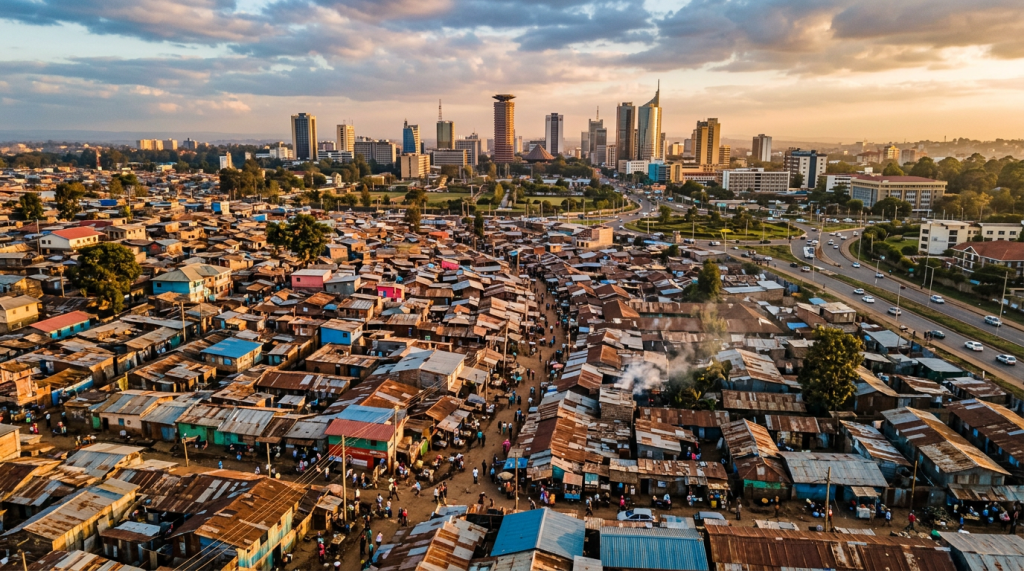
To understand why informal settlements might be part of the future city, one must first recognise the highly efficient ways in which they solve immediate urban problems. In rapidly expanding economies, formal housing markets and government construction programmes simply cannot keep pace with the influx of rural-to-urban migration. Informal settlements act as an immediate, agile market response to this bottleneck. They provide crucial shelter at a fraction of the cost and time required by formal real estate sectors.
Furthermore, these settlements are formidable economic engines. Rather than being mere residential dormitories, they operate as hyper-dense, mixed-use zones. In a typical informal neighbourhood, light manufacturing, retail, food production, and residential living occur seamlessly within the same confined geographic space. This dense amalgamation of commercial and domestic activity creates highly efficient micro-economies. Small-scale manufacturing hubs within these settlements often supply the broader formal city with essential goods, from textiles and recycled materials to processed food and artisanal crafts. The proximity of businesses to residences significantly reduces commuting times and transport costs for the local labour force, creating an organic efficiency that master-planned commercial zones often struggle to replicate.
From a spatial perspective, informal settlements represent incredibly compact urban footprints. They achieve population densities that rival or exceed the most advanced urban centres in the world. In an era where urban sprawl is placing immense pressure on agricultural land and requiring vast, expensive transportation networks, the sheer density of the informal settlement offers a counter-model of spatial efficiency. When viewed strictly through the lens of land utilisation and economic output per square metre, the self-built city demonstrates a profound capacity for adaptation and resilience that formal city plans often lack.
Structural deficits and the vulnerabilities of unplanned growth
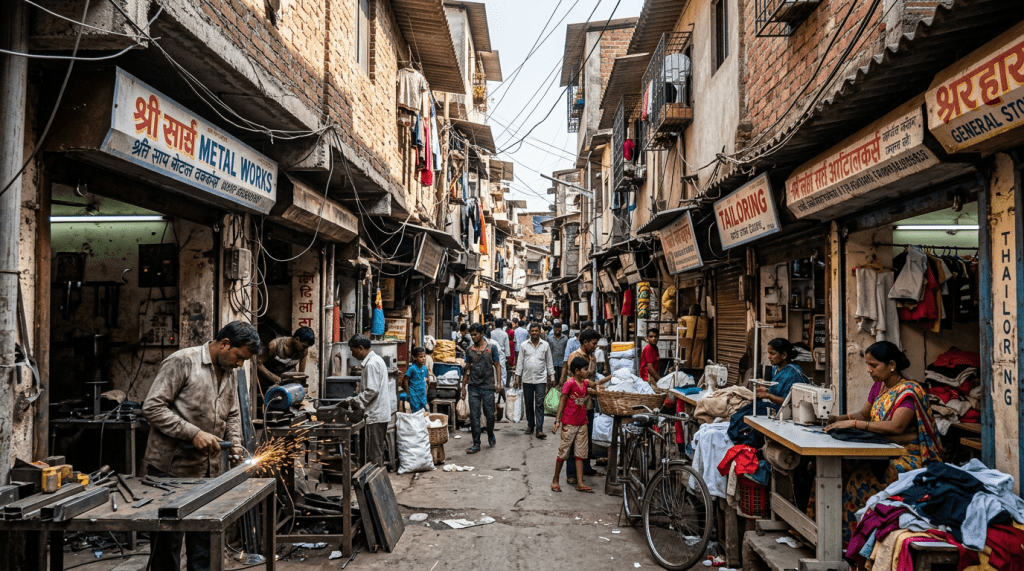
Despite their economic vitality, the disadvantages of informal settlements present severe hurdles to their long-term viability. The most critical failure of the self-built city is the chronic absence of foundational infrastructure. Because these neighbourhoods grow organically and without municipal oversight, they are constructed without subterranean networks for piped water, sewage systems, or formal electrical grids.
The public health consequences of this infrastructural vacuum are profound. The lack of standard sanitation and clean drinking water transforms high-density living into a catalyst for communicable diseases. Cholera, typhoid, and severe respiratory ailments thrive in environments where ventilation is poor and waste disposal is unmanaged. Furthermore, the chaotic, unregulated street layouts often result in narrow, winding alleyways that are entirely inaccessible to municipal services. Fire engines, ambulances, and waste collection vehicles simply cannot penetrate the core of these settlements, leaving millions of residents structurally isolated from emergency responses and basic civic maintenance.
Geographical vulnerability constitutes another major deficit. Driven by the high cost of central real estate, informal settlements frequently emerge on marginal, high-risk land that formal developers have abandoned. This includes steep, unstable hillsides prone to catastrophic landslides during heavy rains, or low-lying flood plains situated along highly polluted industrial waterways. As global weather patterns shift and severe meteorological events become more frequent, the structural integrity of these rudimentary homes is constantly tested, frequently resulting in massive property loss and physical harm.
Finally, the economic friction caused by legal ambiguity cannot be overstated. Residents of informal settlements typically lack formal property titles or land tenure. As the Peruvian economist Hernando de Soto famously argued, this traps local wealth as “dead capital.” Without a legally recognised address or a formal deed, a resident cannot use their home as collateral to secure a bank loan, finance a business expansion, or invest in structural improvements. This legal isolation prevents the micro-economies of the settlement from scaling up and integrating fully with the national financial system, effectively capping their economic potential.
Exploring the complex governance of these self-built neighbourhoods, Episode 435R of the What is The Future For Cities? podcast highlights that with 51.3% of Africa’s urban population living in informal settlements, solving severe infrastructural deficits requires moving beyond the debate between top-down state interventions and bottom-up community networks toward a collaborative hybrid model:
Strategies for improvement: the shift toward in situ upgrading
Given the immense populations housed within these areas, the traditional response of wholesale demolition and forced relocation has proven both logistically impossible and economically destructive. Relocating a million people from a central, economically active informal settlement to a sterile, master-planned housing project on the city’s periphery destroys the established economic networks and severs the labour force from their employment hubs. Consequently, contemporary urban planning has largely pivoted toward the concept of in situ upgrading.
In situ upgrading operates on the premise that the existing urban fabric of the settlement should be preserved and improved upon, rather than erased. The primary objective is the retroactive installation of core infrastructure. Engineering solutions in these environments require significant innovation. Instead of relying on massive, disruptive trenching to lay traditional sewer pipes, planners are increasingly utilising shallow-trench sewerage and decentralised wastewater treatment facilities that can be integrated into the existing narrow streetscapes. Paving the main arterial routes through the settlement is another priority, establishing crucial lifelines for emergency vehicles and commercial transport without demanding the demolition of entire blocks.
Simultaneously, the formalisation of property rights acts as a necessary catalyst for long-term improvement. Establishing a cadastral registry and distributing land titles transforms precarious shelters into legally protected assets. Once residents are granted secure tenure, they are historically far more likely to invest their own capital into upgrading their dwellings—replacing corrugated iron with concrete, reinforcing foundations, and expanding vertically. This legal recognition also brings the neighbourhood into the municipal tax base, generating the public revenue required to maintain the newly installed infrastructure.
Highlighting the practicalities of municipal engagement, spatial practitioner Carina Tenewaa Kanbi noted in episode 436I on the What is The Future for Cities? podcast that establishing a tangible proof of concept is often the most effective mechanism to compel hesitant urban governments to adopt and scale these structural upgrades:
Technological interventions for decentralised infrastructure
The future integration of informal settlements will be heavily accelerated by the deployment of decentralised technologies, which bypass the need to connect to overburdened or non-existent central municipal grids. Traditional city planning assumes a centralised model: a massive power plant or a central reservoir feeding out into the metropolis. In the complex topography of an informal settlement, this centralised model is often prohibitively expensive to retrofit.
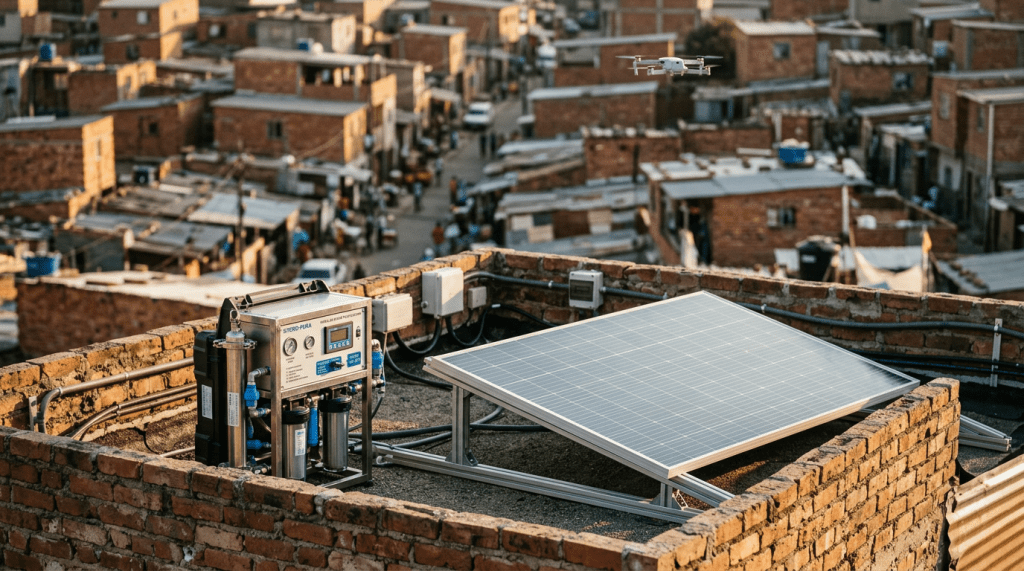
Instead, technological advancements are enabling off-grid autonomy. Solar microgrids can be installed at the neighbourhood level, providing reliable electricity to local businesses and homes without the need to connect to the national grid. These microgrids can be managed via mobile payment systems, ensuring a steady stream of revenue for maintenance while providing essential power for lighting, refrigeration, and light manufacturing.
Similarly, advancements in point-of-use water purification and modular sanitation units are revolutionising public health in areas without subterranean plumbing. Technologies such as biodigesters can process human waste locally, converting it into safe agricultural fertiliser or biogas for cooking, entirely circumventing the need for a municipal sewer connection.
Furthermore, modern spatial mapping technologies are solving the historical problem of legal ambiguity. The convoluted, undocumented layouts of these settlements previously made them impossible to survey using traditional tools. Today, high-resolution satellite imagery and low-altitude drone mapping allow municipal authorities to create highly accurate digital twins of the most complex informal neighbourhoods. This digital cartography provides the precise spatial data required to allocate property lines, assign formal addresses, and plan precise infrastructural interventions without unnecessary demolition.
Integrating the informal architecture
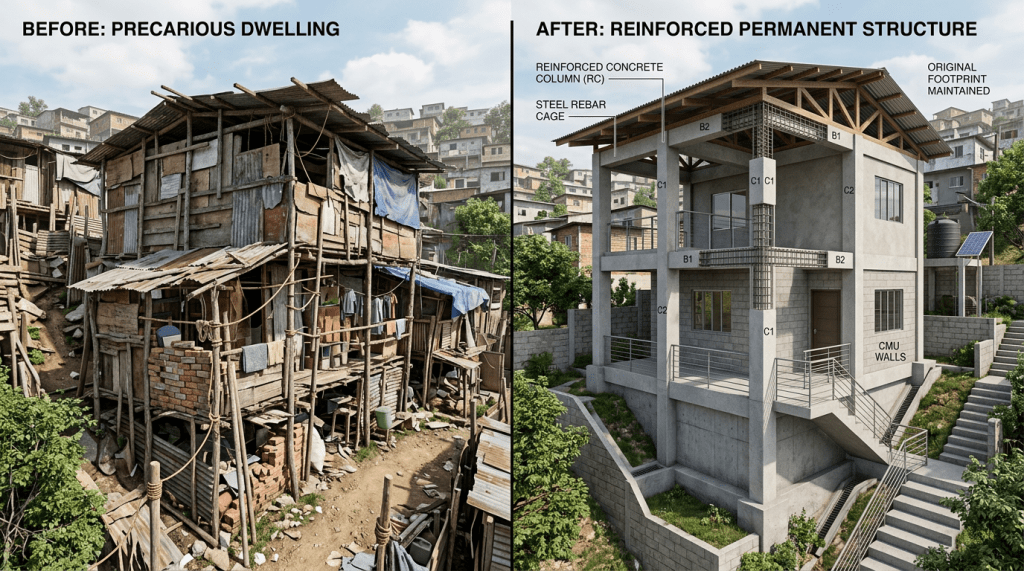
Beyond utilities, the physical structures themselves require systematic improvement to ensure long-term safety. The typical self-built home relies on salvaged materials and intuitive construction methods that often fail to meet basic engineering standards. Upgrading the future city involves the introduction of modular, low-cost architectural interventions that strengthen existing structures rather than replacing them.
Micro-financing tailored specifically for incremental housing construction allows families to purchase high-quality building materials, such as standardised steel rebar, structural concrete, and weather-resistant roofing. Governments and private enterprises are increasingly developing prefabricated structural frames that can be easily assembled within the narrow confines of an informal plot. These frames provide a structurally sound skeleton that guarantees stability against seismic activity and extreme weather, while still allowing the resident to fill in the walls and design the interior using locally available materials.
By providing access to standardised architectural knowledge and high-quality materials, the state can guide the organic growth of the settlement toward safer outcomes. The goal is to transition the built environment from temporary, precarious shelters to durable, permanent housing stock, preserving the unique character and density of the neighbourhood while entirely mitigating the risk of structural collapse.
The informal settlement is not an aberration of the modern city; it is a fundamental characteristic of global urbanisation. As cities continue to expand over the coming decades, pretending that high-density, self-built neighbourhoods will simply disappear is an analytical failure. They will remain a permanent fixture of the urban landscape, serving as crucial economic incubators and providing essential housing solutions where formal markets systematically fail.
The future of these settlements relies entirely on a shift in administrative perspective. By abandoning the hostile policies of eradication and embracing the mechanics of in situ upgrading, cities can harness the immense economic energy contained within these areas. Through the retroactive installation of decentralised infrastructure, the provision of legal land tenure, and the distribution of robust architectural materials, the profound disadvantages of the informal sector can be systematically eliminated. Ultimately, the successful metropolis of the future will be one that seamlessly integrates its master-planned districts with the organic, adaptable, and highly efficient engines of its self-built neighbourhoods.
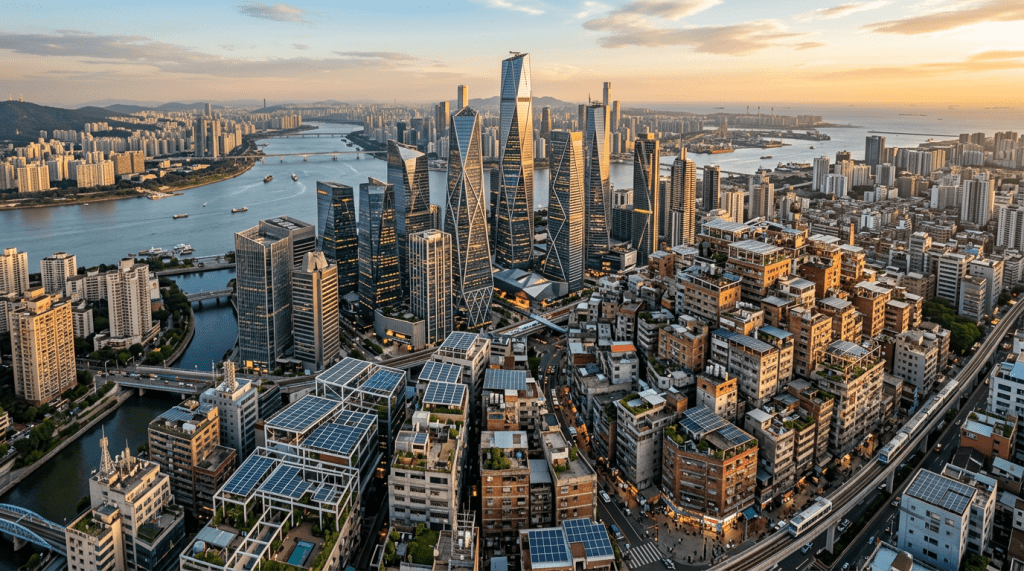
Next week, we are investigating regenerative practices!
Ready to build a better tomorrow for our cities? I’d love to hear your thoughts, ideas, or even explore ways we can collaborate. Connect with me at info@fannimelles.com or find me on Twitter/X at @fannimelles – let’s make urban innovation a reality together!
 Vitruvian Solutions
Leave a comment