By the year 2050, the United Nations projects that nearly seventy per cent of the global population will live in urban areas. This unprecedented wave of urbanisation presents a staggering challenge: how do we house, employ, and transport billions of people while improving standards of liveability? For decades, the dominant answer has been heavily centralised, top-down urban planning. While government oversight remains essential, an increasingly complex world requires a more agile, responsive approach. Market-driven development – where the forces of supply, demand, and private investment guide the evolution of urban spaces – is emerging as a powerful engine for the future of cities worldwide.
Rather than viewing the private sector merely as a builder of government blueprints, global cities are beginning to recognise the market as a vital partner in urban problem-solving. By harnessing the efficiency, capital, and innovative capacity of private enterprise, market-driven development offers a dynamic pathway to creating the resilient, adaptable cities of tomorrow.
Understanding market-driven development
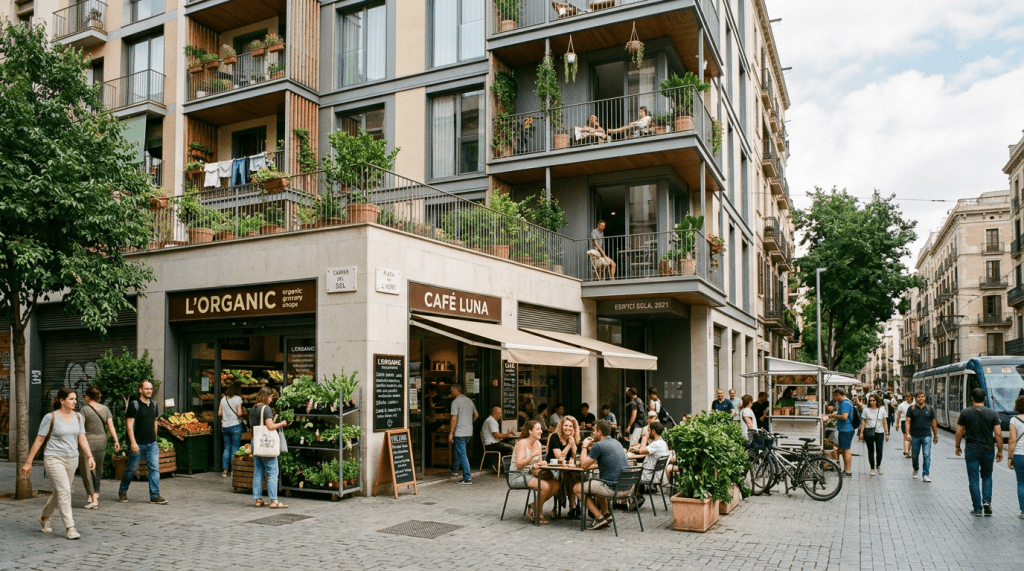
At its core, market-driven development relies on the price mechanism and consumer demand to dictate what gets built, where it gets built, and for whom. In a traditional, heavily regulated planning model, civic authorities attempt to predict future needs, often drawing up rigid zoning maps that dictate strict separations of residential, commercial, and industrial lands. The flaw in this approach is that cities are not static machines; they are living, breathing ecosystems.
Market-driven urbanism acknowledges that millions of individual choices – where people want to live, how businesses choose to operate, and what amenities communities value – provide the most accurate data for city building. When developers respond to these price signals, they are fundamentally responding to human desires. If a massive influx of young professionals moves into a specific district, rents and property values rise, signalling to developers that more housing is needed there. This organic responsiveness prevents the creation of “white elephant” infrastructure projects and artificially engineered neighbourhoods that look good on a master plan but fail to attract actual human engagement.
The dangers of top-down planning extend far beyond physical buildings; they stifle human innovation. Alain Bertaud compares this to the Soviet labour market in episode 430I on the What is The Future for Cities? podcast, where everyone was assigned a job with zero mobility. While they could build complex satellites, they struggled to build a functioning washing machine because the workforce lacked the dynamic freedom to innovate. Similarly, when a city’s zoning is entirely dictated by a central authority rather than the dynamic choices of its residents, it loses the organic innovation required to build truly liveable neighbourhoods.
Agility in the face of rapid change
Perhaps the greatest advantage of market-driven development is its agility. Bureaucracies, by their very nature, are slow. The process of rezoning a neighbourhood, conducting endless feasibility studies, and navigating political cycles can take a decade or more. In that time, the needs of the population can shift dramatically.
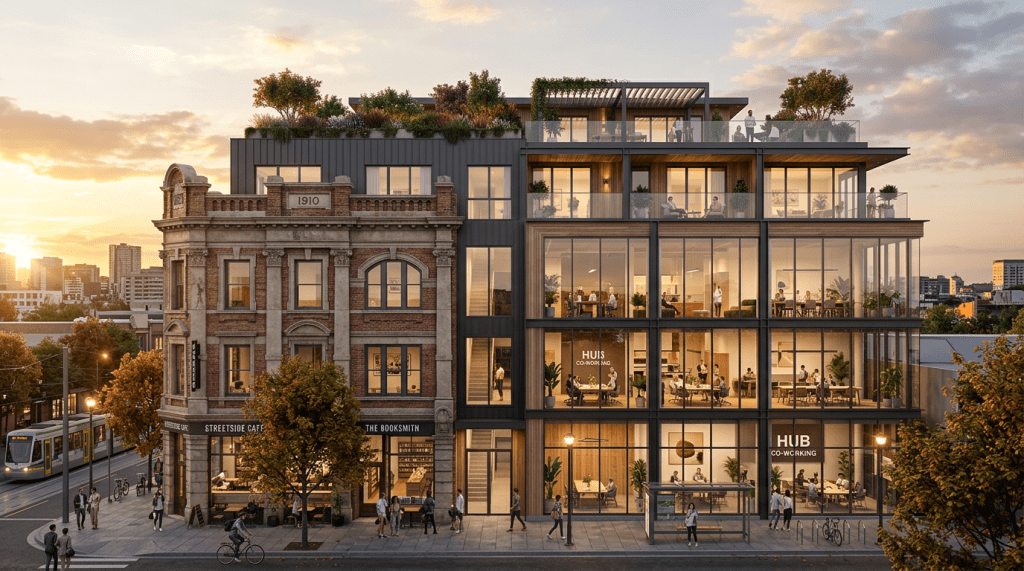
The global response to the COVID-19 pandemic perfectly illustrated this disparity. As the world embraced remote and hybrid work, central business districts (CBDs) globally were left with vast amounts of empty commercial office space. At the same time, a severe housing shortage plagued many of these very same cities. A market-driven approach instinctively seeks to resolve this inefficiency. Driven by the financial imperative to repurpose underutilised assets, private developers quickly began exploring adaptive reuse – converting empty commercial towers into residential apartments, co-working spaces, and vertical urban farms.
Where local governments have relaxed rigid zoning laws to allow the market to function, this transition is already revitalising dead urban zones. Market forces do not wait for the next ten-year municipal plan; they respond to immediate demographic and economic shifts, ensuring that the physical landscape of the city evolves in real-time with the people who inhabit it.
Fostering innovation and green technologies
There is a persistent, outdated assumption that market forces are inherently opposed to green innovation. In the modern era of global real estate and urban development, the exact opposite is proving true. Green innovation has transitioned from a regulatory burden to a primary market demand.
Today, institutional investors, sovereign wealth funds, and private equity firms are bound by strict Environmental, Social, and Governance (ESG) criteria (though whether that is for the better is a question). Capital flows preferentially toward green projects. Furthermore, corporate tenants are demanding energy-efficient, net-zero buildings to meet their own climate targets, while modern residents are willing to pay a “green premium” for homes with lower utility costs and a reduced carbon footprint. Not to mention that the new green solutions are not just better for the planet, but economically more viable.
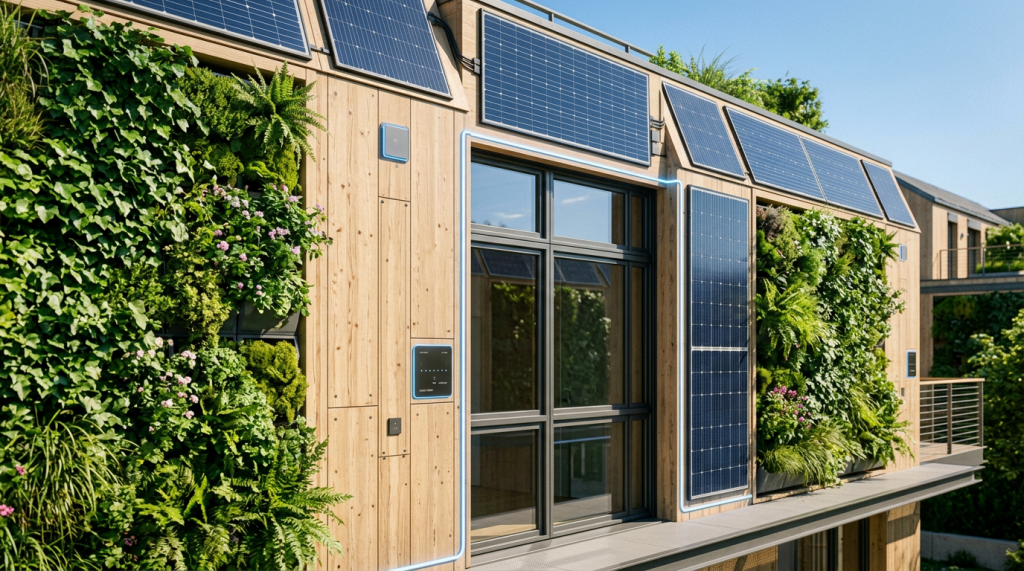
Consequently, the private market has become the most aggressive driver of green building innovation. Market-driven development incentivises the creation of smart buildings that use artificial intelligence to optimise heating and cooling, the integration of advanced solar and battery storage systems into residential complexes, and the use of low-carbon building materials like cross-laminated timber. Because developers are competing for eco-conscious tenants and green-mandated capital, they are pushed to innovate faster than building codes can mandate. The profit motive, when aligned with environmental awareness, becomes a phenomenal catalyst for upgraded urbanism.
The rise of mixed-use neighbourhoods
For much of the twentieth century, top-down planning was obsessed with Euclidean zoning – the strict separation of land uses. This philosophy gave us sprawling, car-dependent suburbs in one direction and sterile commercial hubs in the other. It forced citizens to commute vast distances, increasing carbon emissions, traffic congestion, and social isolation.
Market-driven development naturally resists this artificial separation. Developers and investors know that the most valuable, resilient, and popular urban spaces are those that combine living, working, and playing. By analysing consumer behaviour, the market has recognised the overwhelming global demand for the “15-minute city” concept, where essential amenities are within a short walk or cycle from home.
When developers are allowed to follow market demand rather than prescriptive zoning, they naturally gravitate towards mixed-use precincts. These developments combine ground-floor retail and hospitality with commercial offices in the middle and residential apartments on top. This diversification makes economic sense for the developer by spreading financial risk across different asset classes, but it also creates vibrant, 24-hour neighbourhoods. The market builds these dynamic spaces not out of pure altruism, but because high-amenity, walkable neighbourhoods generate the highest demand and the most sustained economic value.
Exploring the limitations of artificially engineered communities, a recent analysis of Alain Bertaud’s work illustrates that top-down attempts to create self-sufficient “urban villages” frequently fail because residents naturally prioritise access to a unified, metropolitan-wide labour market over forced localised convenience in the episode 429R on the What is The Future for Cities? podcast:
Unlocking private capital for public good
The financial reality of the twenty-first century is that governments simply do not have the capital required to single-handedly fund the massive infrastructure needed for future cities. Expanding public transit networks, upgrading aging utility grids, and building new public parks require hundreds of billions of dollars. Relying solely on the taxpayer is neither feasible nor equitable.
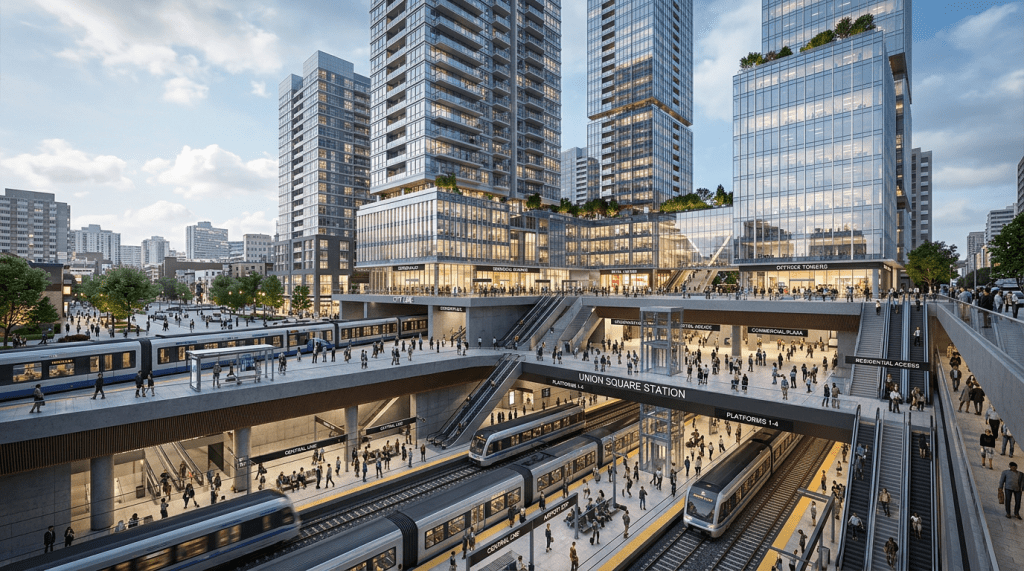
Market-driven development provides a mechanism to unlock private capital for public benefit through value capture and public-private partnerships (PPPs). When a new transport hub is proposed, the surrounding land immediately increases in value. Through transit-oriented development (TOD), governments can partner with private developers, granting them the rights to build high-density housing and commercial spaces above or adjacent to the new station.
In return, the developer funds a significant portion of the public infrastructure. This symbiotic relationship ensures that essential public services are built faster and to a higher standard, without crippling the public purse. The market gains valuable real estate in high-traffic areas, and the city gains essential infrastructure. This model of capital recycling is crucial for developing nations facing explosive urban growth, as well as for established global cities needing to modernise crumbling infrastructure.
Addressing the housing affordability crisis
One of the most pressing challenges facing global cities today is the critical shortage of affordable housing. Critics of market-driven development often blame private developers for this crisis, pointing to luxury apartment booms and rising rents. However, a deeper economic analysis reveals that the affordability crisis is frequently a symptom of constrained markets, not free ones.
When local governments impose draconian zoning restrictions, excessive height limits, and convoluted, multi-year approval processes, they artificially restrict the supply of housing. When supply cannot expand to meet growing demand, prices inevitably skyrocket. Furthermore, the immense cost and time associated with navigating red tape mean that only large developers building high-margin luxury units can afford to play the game.
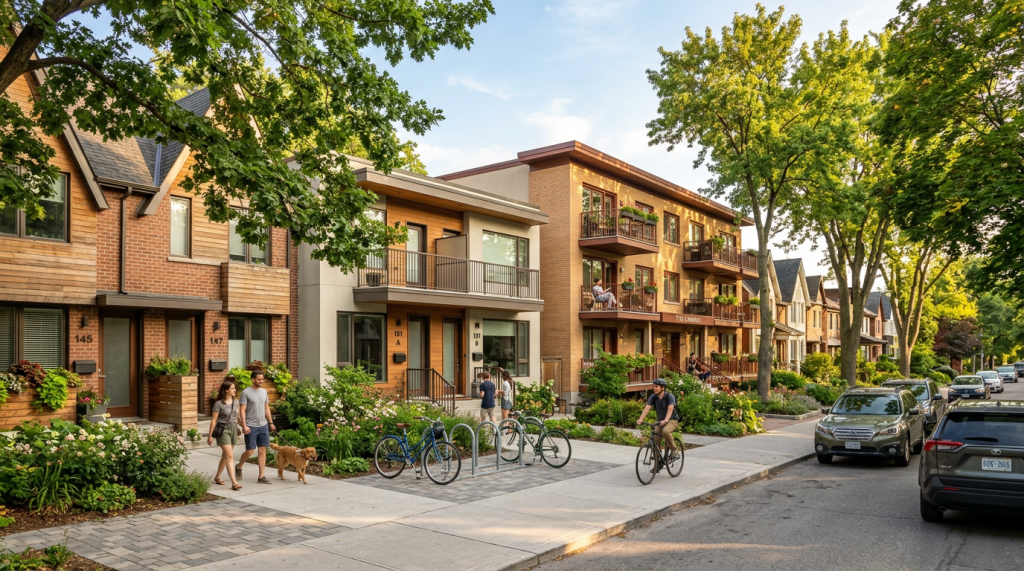
A truly market-driven approach to housing would involve broad upzoning – allowing “missing middle” housing like townhouses, duplexes, and mid-rise apartment blocks to be built by-right across vast swathes of the city. By deregulating land use and allowing the market to flood the city with diverse housing typologies, supply can finally catch up with demand. While new builds may command market rates, the process of “filtering” occurs, where older housing stock becomes cheaper and more accessible as wealthier residents move into newer developments. Unleashing market forces to dramatically increase supply is the most effective structural remedy to urban housing shortages.
Balancing the scales: The role of smart governance
To advocate for market-driven development is not to argue for a wild, unregulated free-for-all. Markets are powerful engines, but engines require steering. Left entirely to their own devices, markets can fail to account for negative externalities and can underserve the most vulnerable populations. The future of cities relies on a delicate balance: maximising the creative and financial power of the market while utilising smart governance to protect the public interest.
The role of the government must shift from being a micromanager of urban form to setting the broader “rules of the game.” This means intervening where the market falls short. For instance, implementing inclusionary zoning policies that require developers to designate a percentage of new builds as affordable housing ensures that the benefits of urban renewal are shared equitably. It means establishing robust environmental baselines that developers must meet, and protecting vital public goods like heritage sites and green space.
Smart governance involves providing clear, transparent, and predictable regulatory frameworks. When developers know exactly what the community expects and what the environmental thresholds are, they can price these factors into their models and innovate within those boundaries. It is a shift from prescriptive planning (telling developers exactly what to build) to performance-based planning (setting desired outcomes and letting the market figure out the best way to achieve them).
As Alain Bertaud points out in the episode 430I on the What is The Future for Cities? podcast, a planner’s primary job isn’t to tell the market what to build, but to establish the public realm. If left entirely to the market, a developer would happily build expensive villas on top of a hill in Canberra or fence off a beach. Smart governance means surveying and protecting these public assets so that the market builds around them, ensuring they remain accessible to everyone.
The cities of the future will be defined by their ability to adapt to demographic shifts, climate change, and technological revolutions. Rigid, centrally planned models lack the speed and capital required to meet these compounding challenges. By embracing market-driven development, cities can tap into the unparalleled efficiency of supply and demand, unlocking private capital to build the infrastructure of tomorrow.
When aligned with smart, outcome-focused governance, the private market ceases to be just an economic actor and becomes a vital partner in civic creation. From the adaptive reuse of empty offices to the financing of green infrastructure and the organic creation of vibrant, mixed-use neighbourhoods, market forces provide the agility and innovation that governments alone cannot. The future of global liveability does not lie in fighting the market, but in harnessing its immense power to build cities that are resilient and fundamentally responsive to human needs.
How do you think your own local community might respond to a shift toward less regulated, more market-driven zoning, particularly regarding the introduction of high-density housing?
Next week, we are investigating startup societies as governance innovation!
Ready to build a better tomorrow for our cities? I’d love to hear your thoughts, ideas, or even explore ways we can collaborate. Connect with me at info@fannimelles.com or find me on Twitter/X at @fannimelles – let’s make urban innovation a reality together!


Leave a Reply