We are living in the century of the city. Today, more than half of the global population resides in urban areas, and by the year 2050, it is projected that nearly seven in ten people will call a city home. From the sprawling suburbs of Australian capitals to the dense, bustling metropolises of Asia and Europe, this rapid urbanisation has inadvertently created systems that are highly fragile. Historically, our cities were designed around massive, centralised infrastructure – single massive power plants, lengthy and complex global supply chains, and rigid transport networks. While these systems fuelled rapid economic expansion, their centralisation means that a single profound shock, such as an extreme weather event, a global pandemic, or a sudden energy shortage, can cascade into a catastrophic failure that paralyses millions.
We can no longer afford to build cities that desperately need to be sustained simply because they are inherently fragile systems – a glaring flaw in the traditional pursuit of ‘sustainability’. Nor can we settle for environments that merely bounce back to their baseline under optimal conditions. We must design urban spaces that can withstand immense pressure. The goal is to move beyond mere robustness, or resilience, towards true ‘antifragility‘ – a concept where systems actually learn, adapt, and grow stronger when subjected to volatility, shocks, and stress. A profound transformation is currently underway to achieve this, driven by the relentless pace of green technology and innovation. By harnessing cutting-edge tools, we are fundamentally reimagining how our urban spaces operate. Green tech is proving to be the essential mechanism for transitioning our brittle, legacy cities into highly adaptable and antifragile powerhouses of human progress.
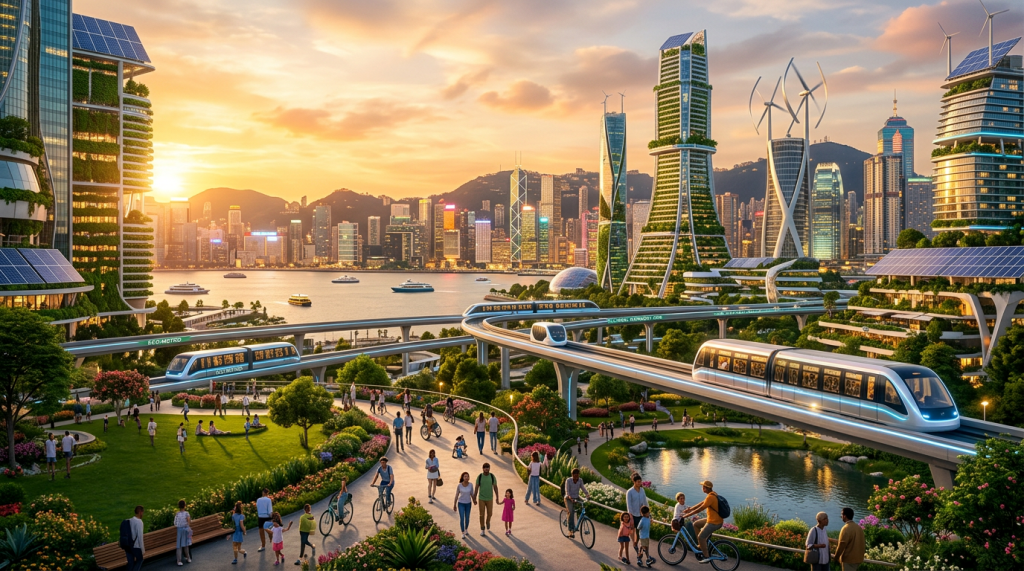
Rewiring the metropolis with responsive technology
At the heart of this urban evolution is the integration of highly responsive technology into the very fabric of our cities. The Internet of Things (IoT), artificial intelligence, and advanced data analytics are the primary instruments we are using to construct nervous systems for our urban environments. In an antifragile city, millions of connected sensors are deployed across critical infrastructure to monitor everything from water pressure and grid loads to traffic flow and structural integrity in real time.
This continuous stream of data allows automated systems to make split-second decisions that drastically improve a city’s capacity to absorb disruptions and actually improve its response protocols for the next event. For example, during a severe storm, connected drainage systems can anticipate heavy rainfall using predictive weather data, automatically adjusting water levels in reservoirs and rerouting stormwater to prevent sudden, catastrophic flooding. Over time, the system learns which pathways handle overflow best and optimises future responses. Similarly, dynamic traffic management networks can detect collisions or road closures instantly, automatically adjusting traffic light phasing across an entire grid to disperse congestion before gridlock sets in. By digitising the urban landscape with technology, we are creating cities that can detect stress points and rapidly reconfigure themselves, ensuring that life continues smoothly even when external pressures mount.
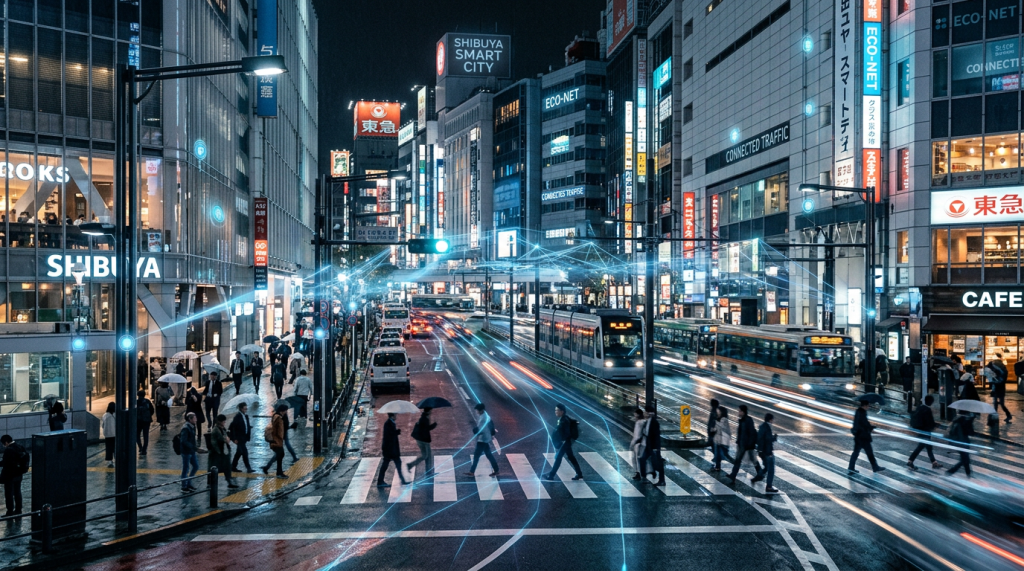
Revolutionising urban mobility for robust transit networks
Nowhere is the vulnerability of traditional city planning more evident than in our transport networks. For decades, the private, petrol-powered car and rigid, centralised public transit routes dictated urban mobility, leaving commuters highly vulnerable to fluctuating fuel prices, bridge closures, or train network failures. Trying to merely sustain these outdated modes is a losing battle. Today, green technology is creating a much more robust and adaptable web of urban movement.
The transition to electric vehicles (EVs) and hydrogen fuel cell buses is removing our reliance on volatile international fossil fuel markets. However, the true antifragility comes from the sheer diversity of new transit options. We are seeing the rise of vast, decentralised networks of micro-mobility, including shared e-bikes and e-scooters, alongside autonomous electric shuttles that can alter their routes based on real-time demand. If a major train line experiences a sudden failure, an antifragile mobility network instantly compensates by surging shared transport options to the affected stations. By creating redundant, overlapping, and highly flexible layers of transit, green technology ensures that a failure in one node does not bring the entire city to a standstill, but rather highlights areas for immediate infrastructural adaptation.
Lior Steinberg, urban planner and co-founder of Humankind, advocated for car-free cities and active transport as revolutionising urban mobility with examples in episode 396 on the What is The Future for Cities? podcast:
Powering our neighbourhoods with decentralised energy
The traditional model of urban energy supply – relying on massive, distant power stations pumping electricity in one direction to consumers – is the epitome of fragility. When a primary transmission line goes down, entire regions plunge into darkness. Green innovation is dismantling this outdated model in favour of decentralised, renewable energy grids that empower individual buildings and entire neighbourhoods to become robust energy islands.
Australia currently leads the world in rooftop solar uptake, which is the first step towards this energy independence. The next frontier involves integrating community batteries, bidirectional EV charging, and sophisticated peer-to-peer energy trading platforms. Through blockchain technology and advanced microgrids, a local neighbourhood can generate, store, and share its own power. If a severe heatwave causes the main city grid to overload and fail, these decentralised microgrids can instantly isolate themselves from the broader network, seamlessly keeping the lights on, the hospitals running, and the homes cool. This transition to a decentralised model makes our cities immensely more capable of not just surviving systemic grid failures, but actually using those stress events to refine load-balancing algorithms for the future.
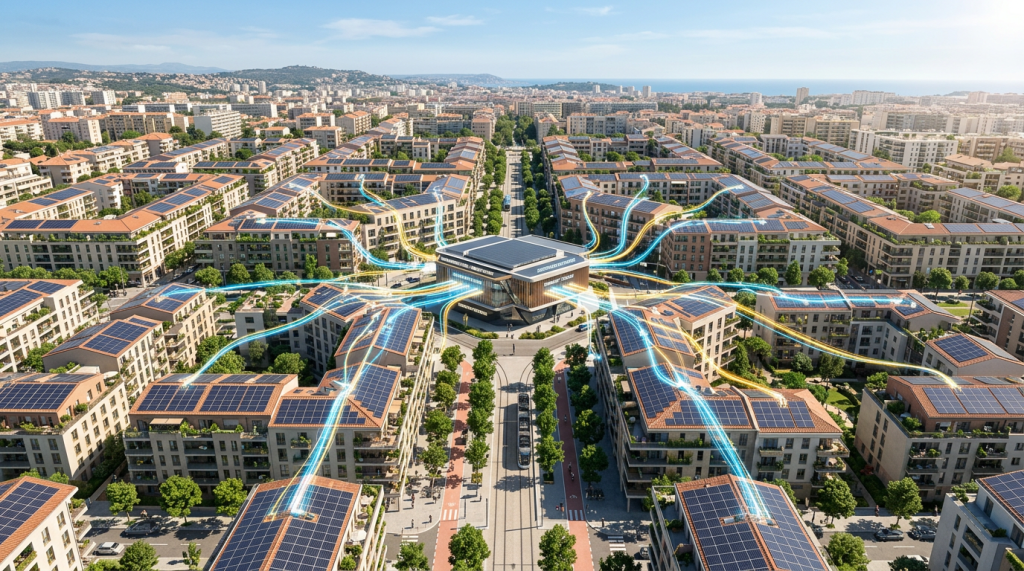
Fortifying the concrete jungle to absorb environmental shocks
For too long, cities were built in direct opposition to nature. The urban landscape was characterised by impermeable concrete and asphalt, leading to severe urban heat island effects and devastating flash floods because the water simply had nowhere to go. Trying to sustain this type of planning through endless maintenance is an exercise in futility. Green approaches are now facilitating a profound integration of nature-based solutions to absorb and mitigate these environmental stresses, making the city materially tougher.
Through advanced architectural and engineering innovations, we are seeing the widespread implementation of green roofs, vertical gardens, and permeable pavements. These technologies act as massive urban sponges and thermal shields. During unprecedented heatwaves, green infrastructure drastically lowers ambient neighbourhood temperatures, reducing the strain on power grids. During torrential downpours, permeable materials and urban wetlands absorb and safely redirect floodwaters, nourishing urban ecology in the process. Additionally, agricultural technology (agtech) is bringing food production into the heart of the city. Automated, hydroponic vertical farms housed in commercial basements can grow fresh produce regardless of the extreme weather ravaging traditional farming regions. This ensures that the city maintains a secure, local food supply even when global agricultural supply chains are severely compromised.
Louis de Jaeger, award-winning filmmaker, author, and landscape designer, talked about how regenerative green infrastructure can create value not just for the current but the upcoming generations in episode 412 on the What is The Future for Cities? podcast:
Building supply chain immunity through a circular urban economy
The traditional urban economic model has been strictly linear: take resources, manufacture products, consume them, and dispose of the waste in sprawling landfills. This reliance on a constant influx of raw materials from thousands of kilometres away makes cities incredibly vulnerable to global supply chain disruptions. Green innovation is now the primary catalyst for transitioning cities towards a circular economy, drastically improving their resource resilience and moving them towards antifragility.
Advanced robotics and AI are revolutionising material recovery, allowing for hyper-efficient recycling facilities that can meticulously separate mixed waste at speeds impossible for human workers. Innovations in chemical recycling are breaking down previously unrecyclable plastics into their base components, ready to be deployed into local manufacturing. Even organic waste is being harnessed; high-tech anaerobic digesters are turning city food scraps and sewage into biogas to power municipal fleets, while simultaneously producing local fertilisers. By treating urban waste as a captive, infinitely renewable resource mine, cities reduce their reliance on fragile external supply chains. Every supply shock becomes an incentive to further innovate and tighten the local circular economy.
Jasper Steinhausen, founder of Business with Impact, discussed how current business operations could be optimised with circular approaches to reduce waste and increase monetary value at the same time (among others) in episode 408 on the What is The Future for Cities? podcast:
Why progress demands innovation, not degrowth
As global challenges become more complex and urgent, a philosophical movement known as ‘degrowth’ has gained traction in some academic circles. The core tenet of this ideology is the belief that infinite economic and technological expansion is inherently destructive, and the only way to protect our future is to intentionally shrink our economies, drastically reduce consumption, and scale back technological advancement. While the underlying concern for the planet is valid, the degrowth ideology is fundamentally flawed and incredibly dangerous as a prescription for our urban futures. Instead of retreating, we need to allow innovation to happen.
Firstly, without innovation, we simply cannot solve the colossal urban challenges we currently face. We already have billions of people living in dense cities, relying on legacy infrastructure that is fragile and inefficient. We cannot wish these populations away, nor can we dismantle the cities that house them. The only viable path forward is to innovate our way out of the problem – upgrading, retrofitting, and fundamentally redesigning our urban systems using advanced (green) technology. Trying to freeze these fragile systems in place through enforced stagnation is a recipe for collapse.
Casey Handmer, founder of Terraform Industries, advocated for continuous innovation and urban regeneration/renewal in order to evolve and solve the upcoming challenges in episode 410 on the What is The Future for Cities? podcast:
Secondly, with degrowth, we are artificially restricting ourselves instead of evolving. Human history is defined by our ability to adapt and overcome seemingly insurmountable challenges through ingenuity. To mandate a halt to economic and technological development is to stifle the very mechanisms that allow human society to progress and build antifragility. Evolution demands forward momentum. If we enforce a shrinking of our capacities, we severely limit our ability to research, develop, and deploy the next generation of life-saving technologies, from advanced materials that can withstand extreme weather to next-generation energy generation. A degrowth society lacks the surplus capital, the tools, and the scientific momentum required to adapt to sudden global shocks; it becomes ultimately more fragile.
Furthermore, we must acknowledge that innovation generally brings in vastly more prosperity for humanity than suffering. Throughout history, technological leaps have consistently lifted billions out of poverty, vastly improved life expectancies, and democratised access to information, healthcare, and education. A thriving, innovative economy generates the immense resources required to fund massive infrastructure upgrades and transition entire continents to clean energy. Degrowth, conversely, risks inducing severe economic stagnation, which historically hits the poorest and most vulnerable populations the hardest, stripping away their ability to adapt to crises.
Ultimately, technology itself is morally neutral; all technology is simply a tool to solve problems. How we use it depends entirely on us. The vulnerabilities built into our cities over the past century were not caused by innovation itself, but by a specific, narrow application of it that ignored long-term consequences. Today, we are pointing our most brilliant minds and most advanced tools squarely at the problem of global resilience and adaptation. Therefore, technology and innovation should not be feared or restricted; they should be aggressively encouraged, heavily funded, and wisely directed. By embracing the power of human ingenuity, we can design tools that protect our cities against the unknown while simultaneously elevating the global standard of living.
Josh Dorfman, co-founder of Plantd and CEO and host of the Supercool podcast, expressed his hope and optimism which is founded on his work with climate solutions making life better for everyone without cutting back in episode 420 on the What is The Future for Cities? podcast:
The development of better, more adaptable urban futures is not a passive event; it is an active endeavour that requires vision, significant investment, and, above all, relentless innovation. The challenges of urbanisation, resource scarcity, and global volatility are undoubtedly daunting, but they are not insurmountable.
As we look to the decades ahead, the integration of advanced green technology into our urban spaces offers a profoundly optimistic vision. By rewiring our grids with responsive technology, creating adaptable transport networks, embracing decentralised energy, and fortifying our infrastructure to absorb environmental shocks, we are laying the foundations for cities that thrive under pressure. We do not need to shrink our ambitions, artificially sustain fragile systems, or cap our economies to protect our future. Instead, by fully unleashing human creativity and championing green innovation, we can build prosperous, antifragile urban environments where humanity can confidently weather any storm and emerge stronger for it.
Next week, we are investigating the scaling of cities and its effects on urban futures!
Ready to build a better tomorrow for our cities? I’d love to hear your thoughts, ideas, or even explore ways we can collaborate. Connect with me at info@fannimelles.com or find me on Twitter/X at @fannimelles – let’s make urban innovation a reality together!


Leave a Reply