As cities grow denser and energy demands soar, finding reliable, high-capacity power sources is critical to fostering thriving urban centres. Nuclear energy, harnessed through the controlled splitting of atomic nuclei, offers a potent solution. Its ability to deliver consistent, low-cost power with minimal land use makes it uniquely suited for building vibrant and antifragile cities—communities that not only withstand shocks like natural disasters or economic shifts but grow stronger from them. This blog post explores what nuclear energy is, the types of reactors powering it, and how it can shape the future of cities by driving down costs and unlocking opportunities, while addressing concerns like safety and waste.
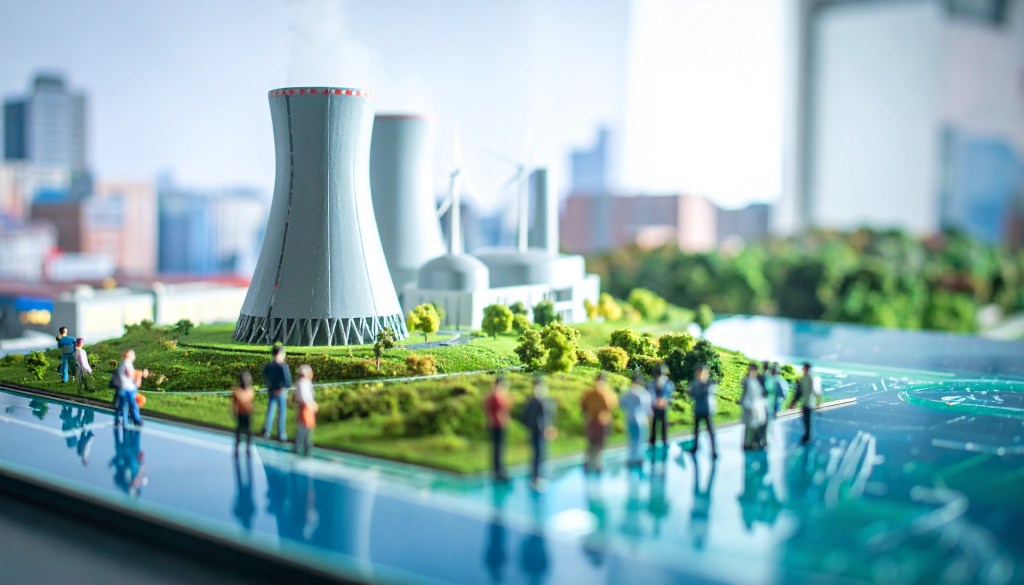
What is nuclear energy?
Nuclear energy is produced by fission, the process of splitting heavy atomic nuclei, such as uranium-235, to release energy as heat. This heat generates steam, which drives turbine generators to produce electricity. Unlike wind or solar, nuclear plants operate continuously, unaffected by weather, with capacity factors often exceeding 90%. A single ton of uranium can yield as much energy as millions of tons of coal, requiring just 1-2 square kilometers for a 1,000 MW plant compared to hundreds for renewables.
The core components of a nuclear plant include the reactor, where fission occurs; a coolant system, typically water, to transfer heat; a containment structure to prevent radiation leaks; and turbines to convert steam into electricity. While fission dominates today, fusion—combining light nuclei like hydrogen—promises even greater energy yields but remains experimental. Nuclear’s high energy density and reliability position it as a cornerstone for meeting the intense power needs of modern cities, from skyscrapers to electric transit systems.
A recent podcast episode from What is The Future for Cities? explores nuclear energy’s role in decarbonization, emphasizing its potential to complement renewables with stable, low-emission power:
[While we are waiting for the fusion reactors on pins and needles, now let’s focus on the already existing technologies, to see that what we already have can influence us in a big way.]
Types of nuclear reactors
Nuclear reactors vary in design and application, each offering unique benefits for urban energy needs. Here are the primary types:
- Pressurized water reactors (PWRs): The most common, accounting for over 60% of global nuclear plants, PWRs use pressurized water as both coolant and moderator to sustain fission. With outputs up to 1,600 MW, they’re ideal for large cities.
- Boiling water reactors (BWRs): These generate steam directly in the core, offering efficiency for medium-sized cities but requiring robust containment due to radioactive steam.
- Gas-cooled reactors (GCRs): Using carbon dioxide or helium as coolant and graphite as a moderator, GCRs operate at high temperatures for efficiency and safety, suitable for compact urban plants.
- Small modular reactors (SMRs): Compact (10-300 MW) and factory-built, SMRs are flexible, cost-effective, and perfect for smaller cities or industrial zones. They can be deployed in clusters to scale with demand.
- Fast breeder reactors (FBRs): These use fast neutrons to produce more fuel than they consume, maximizing resource use, though their complexity limits widespread adoption.
SMRs, in particular, are gaining traction for urban applications due to their adaptability and lower upfront costs, while PWRs remain the backbone for large-scale grids.
In episode 313R on the What is The Future for Cities?, Nuclear for Australia’s fact sheets highlight the versatility of nuclear reactors, including advanced designs like the Natrium reactor, and their potential to support clean energy goals:
Nuclear energy’s role in vibrant and antifragile cities
The most transformative benefit of nuclear energy is its ability to provide low-cost power, which drives down costs across all facets of urban life. Research shows that affordable energy is a key driver of economic growth, reducing expenses for businesses and households. When energy is cheaper, manufacturing costs drop, making goods more affordable and attracting industries to cities. Transportation, including electric vehicles and public transit, becomes more economical, easing urban congestion. Housing benefits as energy-efficient buildings lower utility bills, improving affordability, as seen in cities like Paris, supported by France’s nuclear-heavy grid. Services, from retail to tech, can reinvest savings into innovation, fostering dynamic urban economies.
Financial expert Andrew Vass, in a What is The Future for Cities? podcast interview, underscores nuclear energy’s value in providing stable, low-cost power to drive urban economic opportunity and vibrancy:
This cost advantage makes cities more competitive globally, drawing talent and investment. For example, reliable, low-cost energy has been linked to increased productivity and urban economic output. Beyond cheaper energy, nuclear power offers additional benefits:
- Reliable power backbone: Nuclear’s near-constant output ensures uninterrupted power for hospitals, data centers, and transit, critical for urban resilience.
- Minimal land use: Its small footprint frees urban land for housing or parks, enhancing liveability.
- Economic growth: Nuclear projects create high-skill jobs, contributing billions to local economies through taxes and employment.
- Innovation catalyst: Nuclear can power emerging technologies like desalination for water-scarce cities or hydrogen production for clean transport.
These attributes make nuclear energy a linchpin for antifragile cities, capable of thriving amid population growth, climate challenges, or technological shifts.
In episode 332 of the What is The Future for Cities? podcast, Kirsty Braybon, nuclear lawyer describes the long-term benefits for the communities around a nuclear power plant based on the real-world examples:
Addressing concerns about nuclear energy
While nuclear energy holds immense potential, concerns about safety, waste, costs, public perception, and proliferation must be addressed to ensure its role in urban futures.
- Safety: Nuclear is among the safest energy sources, with a death rate of 0.04 per terawatt-hour, far below coal’s 24.44. The industry has learned from past incidents like Chernobyl (1986) and Fukushima (2011), with modern reactors featuring passive cooling systems that operate without power, preventing Fukushima-like events. Rigorous oversight by bodies like the U.S. Nuclear Regulatory Commission further ensures safety.
- Waste: Up to 96% of spent nuclear fuel can be recycled using existing technologies, reducing waste volume significantly. France, for instance, recycles fuel to generate 80% of its electricity, minimizing raw uranium needs. Remaining waste is safely stored in deep geological repositories, like Finland’s Onkalo facility.
- Initial cost: Building a 1,000 MW nuclear plant costs $6-12 billion, but its 60-year (and now we are even talking about 80-100 years) lifespan and low operational costs make it cost-effective long-term. Subsequent plants are cheaper due to learned expertise, as seen in South Korea’s standardized builds. Nuclear’s dispatchable nature also eliminates the need for backup generators, unlike renewables.
- Andrew Vass, a nuclear financial expert, in a What is The Future for Cities? podcast interview, underscores nuclear energy’s value in providing stable, low-cost power to drive urban economic opportunity and vibrancy:
- Public perception: Communities near nuclear plants often embrace them for jobs, safety, and economic benefits. A study found 53% of people near Idaho National Laboratory viewed nuclear positively due to these factors. Education is key, as nuclear plants emit less radiation than natural sources like bananas. Transparent communication can shift attitudes, especially among younger generations, similar to what Nuclear for Australia is doing.
- Proliferation: Nuclear power plant fuel, enriched to 3-5% U-235, is unsuitable for weapons, which require 90% enrichment. International safeguards by the IAEA prevent material diversion, and advanced reactor designs further reduce risks.
Nuclear lawyer Kirsty Braybon, featured in the What is The Future for Cities? podcast, highlights the importance of education in building public trust for nuclear energy, noting increased acceptance in communities post-Fukushima due to greater awareness:
Nuclear energy stands as a transformative force for building vibrant and antifragile cities. Its ability to deliver low-cost, reliable power reduces costs across manufacturing, transportation, housing, and services, making urban economies more competitive and livable. Innovations like small modular reactors and robust solutions to safety, waste, and proliferation concerns ensure nuclear’s viability as a long-term urban power source. By embracing this proven technology, cities can thrive amid challenges, powering a future where urban communities not only endure but grow stronger.
As it currently stands, nuclear energy offers a clear path to prosperous, resilient urban landscapes as part of the urban energy matrix.
How can cities balance the upfront costs of nuclear energy with its long-term benefits, like cheaper energy and economic resilience, to create thriving urban hubs that adapt to future challenges?
Next week, we will explore placemaking more in detail as the creation of streetscapes that include everything from the street starting from the building facade, road, public infrastructure, and more!
Ready to build a better tomorrow for our cities? I’d love to hear your thoughts, ideas, or even explore ways we can collaborate. Connect with me at info@fannimelles.com or find me on Twitter/X at @fannimelles – let’s make urban innovation a reality together!
 Vitruvian Solutions
Leave a comment