Cities are the vibrant pulse of humanity—dynamic hubs where history, innovation, and ambition intertwine. From the carefully planned streets of ancient Uruk to the smart, sustainable megacities of tomorrow, urban evolution is a captivating tale of adaptation and vision. In this post, we’ll trace the arc of cities through time, examine their current landscape, and envision the exciting possibilities ahead. Whether you’re an urban design enthusiast or simply curious about the places we call home, join us on a journey through the past, present, and future of urban life.
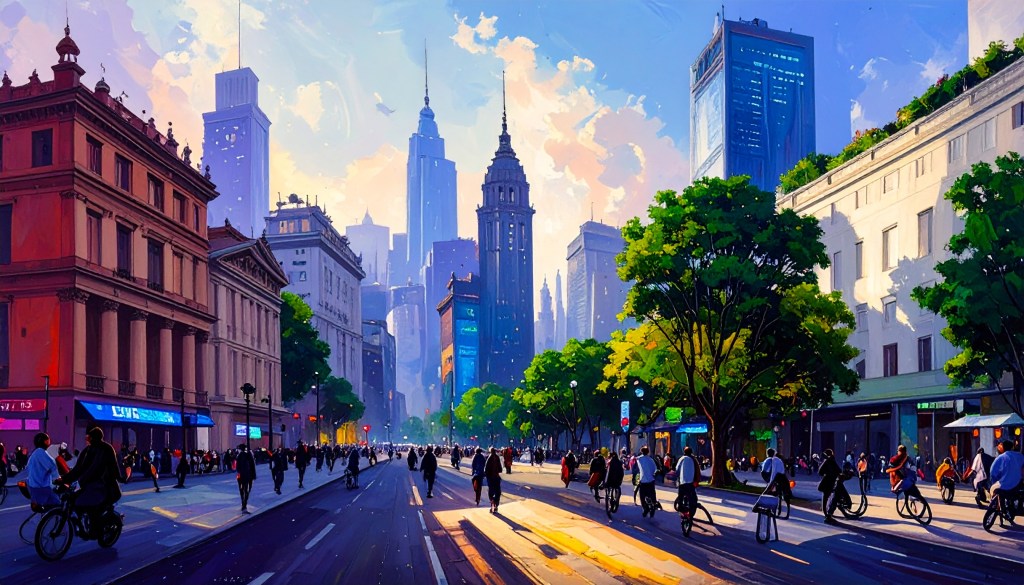
The dawn of urban life: Ancient cities and early planning
The story of cities begins around the third millennium BC, when humans started crafting planned settlements in regions like Mesopotamia, Egypt, and the Indus Valley. Imagine Uruk, a thriving Mesopotamian centre with towering ziggurats and bustling streets, or Mohenjo-daro, with its grid layout and advanced drainage systems that could rival modern plumbing. These early cities were designed to support trade, governance, and community, showing that urban planning is as ancient as civilization itself.
In the Greco-Roman era, urban design grew more sophisticated. The Greek planner Hippodamus, celebrated as the “father of city planning,” introduced orthogonal grids that influenced Roman cities with their central forums and orderly streets. In East Asia, cities like Nara in Japan adopted Chinese planning principles, blending functionality with cultural ideals. These ancient foundations laid the groundwork for the cities we know today, proving that thoughtful design has always been central to urban life.
Medieval to modern: Cities through the ages
As history progressed, cities evolved to meet new needs and ideas. In medieval Europe (500–1400), towns like Lübeck and Elburg emerged, often built for defense or trade, with symmetrical layouts and canals. The Renaissance brought a focus on aesthetics, seen in Florence’s star-shaped walls and Rome’s grand boulevards under Pope Sixtus V. By the Enlightenment, urban planning embraced science and symmetry—Edinburgh’s New Town, with its elegant grid and garden squares, is a prime example.
The Industrial Revolution (1760–1840) transformed cities dramatically. Places like Manchester and Paris swelled as workers flocked to factories, but rapid growth led to overcrowding and poor conditions. Visionaries like Baron Haussmann reshaped Paris with wide boulevards, parks, and sewers, setting a new standard for urban health and beauty. The 20th century introduced modernism, with Le Corbusier’s high-rise visions, but also suburban sprawl and car-centric designs. By the century’s end, movements like New Urbanism advocated for walkable, human-scale communities, redefining urban priorities.

Where we are now: Cities of the 21st century
Today’s cities are complex systems navigating growth, sustainability, and technology. Sustainability is a key focus, with cities like Singapore leading the charge. Its Gardens by the Bay, a stunning blend of nature and architecture, shows how urban green spaces can improve air quality and well-being. Copenhagen’s extensive cycling infrastructure makes sustainable transport a way of life for residents. (A consideration for cities of the 21st century: let’s move beyond sustainability towards antifragility – read about it in this blogpost.)
Smart cities are redefining urban management with technology. Using AI, the Internet of Things (IoT), and big data, cities like Barcelona optimize parking systems, while Seoul manages traffic with real-time analytics. Digital twins—virtual models of cities—enable planners to test scenarios, from flood risks to urban expansion. Mobility is evolving too, with electric vehicles, bike lanes, and public transit reducing car reliance. London’s congestion charge and Amsterdam’s cycling network highlight innovative approaches to urban movement.
These trends reflect a shift toward cities that are efficient, livable, and ready for modern challenges. From green rooftops to smart traffic systems, today’s innovations are laying the foundation for the future.
Howard Bloom, in episode 328 of the What is The Future for Cities? podcast, describes how cities are helping us in our evolution, making them evolve along the way, among others:
Looking ahead: The cities of tomorrow
What will cities look like in the coming decades? The future promises a fusion of cutting-edge technology, climate resilience, and creative design. Here are some possibilities on the horizon:
Tech-driven cities: Envision autonomous vehicles navigating streets, guided by AI-powered traffic systems. Smart grids could optimize energy use, while digital twins help planners address urban challenges proactively. The “15-minute city” concept, where all essential services are within a short walk or bike ride, could transform daily life, making cities more convenient and connected.
Climate-resilient design: As climate change intensifies, cities must adapt. Rotterdam, a leader in water management, is building flood-resistant infrastructure. Floating neighbourhoods, proposed for flood-prone areas, could become reality. Green roofs, permeable pavements, and urban forests will help cities stay cool and manage water, creating more resilient urban environments.
Adapting to demographic shifts: Aging populations and migration will shape urban planning. Cities may prioritize accessible public spaces and healthcare hubs to support older residents. The rise of remote work and gig economies could lead to co-living spaces and flexible work hubs, blending home, work, and leisure in new ways.
Glocal cities: As globalization connects the world, cities will balance global influence with local identity. Tokyo and New York already do this, offering world-class opportunities while preserving cultural uniqueness. This “glocalization” will create cities that feel both universal and distinctly local, fostering pride and belonging.
Space cities: As humanity reaches beyond Earth, space cities could redefine urban evolution. Envisioned as self-sustaining habitats on the Moon or Mars, these cities would rely on advanced technologies like 3D-printed structures and closed-loop ecosystems, as explored in visionary urban trends. Space cities could inspire Earth-based urban resilience, pushing the boundaries of what cities can be. Howard Bloom’s perspective on humanity’s cosmic journey underscores their potential as next-generation urban frontiers, a natural next step.
Public transport as a cornerstone: Efficient, sustainable transport will be vital. High-speed rail, electric buses, and integrated transit systems could make cities less car-dependent, reducing emissions and improving access. Cities like Tokyo, with their seamless transit networks, offer a glimpse of this future.
Sarah Bridges, in episode 326 of the What is The Future for Cities? podcast, explores how public transport innovations can shape sustainable urban futures, echoing the potential of integrated transit systems:
Challenges and opportunities
The journey to future cities is filled with both obstacles and opportunities, each demanding creative solutions and bold action. Let’s explore these in depth:
Climate change and environmental pressures: Climate change is perhaps the greatest challenge facing cities. Rising sea levels threaten coastal hubs like Miami and Jakarta, while extreme weather events—heatwaves, hurricanes, and floods—test urban infrastructure. For instance, the 2021 floods in Germany highlighted the need for resilient urban design. Cities must invest in adaptive measures, such as elevated buildings, flood barriers, and green infrastructure like urban wetlands. The opportunity lies in innovation: Rotterdam’s water management strategies, including floating homes and water plazas, show how cities can turn vulnerabilities into strengths. Similarly, urban forests in Melbourne are reducing heat island effects, proving that nature-based solutions can enhance resilience while improving livability.
Technological integration and privacy concerns: The rise of smart cities brings immense potential but also risks. AI, IoT, and digital twins can optimize urban systems, but they rely on vast data collection, raising privacy and security concerns. Cities like Toronto faced pushback over Sidewalk Labs’ smart city project due to fears of surveillance. The opportunity lies in balancing innovation with trust. Transparent data governance, as seen in Amsterdam’s open-data initiatives, can ensure technology serves residents without compromising privacy. Moreover, technologies like blockchain could enable secure, decentralized urban systems, fostering public confidence.
Howard Bloom argues that AI (and space exploration) is the natural next step in our evolution in episode 328 of the What is The Future for Cities? podcast:
Rapid urbanization: The world’s urban population is projected to reach 68% by 2050, with much of this growth in developing regions like Africa and South Asia (UN, 2018). This rapid urbanization strains resources, leading to informal settlements, traffic congestion, and inadequate infrastructure. Cities like Lagos face challenges in providing housing and services for growing populations. Yet, this growth presents opportunities for leapfrogging traditional development. For example, African cities like Kigali are adopting smart technologies, such as digital payment systems for public transport, to bypass outdated systems. Planned urban expansions, like Saudi Arabia’s NEOM, aim to create sustainable, tech-driven cities from scratch, offering models for managing growth.
Economic and resource constraints: Building future cities requires significant investment, but many municipalities face budget limitations. Retrofitting aging infrastructure—such as bridges, roads, and water systems—is costly, especially in older cities like New York or London. Developing nations often lack funds for basic services, let alone futuristic projects. However, public-private partnerships (PPPs) offer a solution. Singapore’s use of PPPs for transport infrastructure shows how collaboration can bridge funding gaps. Additionally, circular economy models, like Copenhagen’s waste-to-energy plants, can turn resource constraints into opportunities for sustainability.
Sally Capp, previous Lord Mayor of Melbourne, highlighted the value of public-private partnerships in urban recovery in episode 296 of the What is The Future for Cities? podcast:
Social and cultural dynamics: Rapid urbanization and globalization can erode local cultures and create homogenized urban landscapes. Cities risk losing their unique identities as global chains and generic skyscrapers dominate. Yet, this challenge sparks opportunities for “glocal” design. Cities like Kyoto preserve traditional architecture while embracing modernity, creating a distinct identity. Community-led initiatives, such as participatory budgeting in Porto Alegre, Brazil, empower residents to shape their cities, ensuring cultural and social needs are met.
Health and well-being: Urban density can exacerbate health challenges, from air pollution to mental health issues. The COVID-19 pandemic exposed vulnerabilities in crowded cities, highlighting the need for better public health infrastructure. However, cities can become healthier through design. Green spaces, like New York’s High Line, improve mental and physical health, while pedestrian-friendly designs encourage active lifestyles. The 15-minute city model, pioneered in Paris, ensures access to healthcare, parks, and services, enhancing well-being.
Junaid Islam, though a technology enthusiast, highlighted the importance of urban quality of life and the need to keep in mind the well-being of the citizens, among others, in episode 286 of the What is The Future for Cities? podcast:
Governance and collaboration: Urban challenges are complex, requiring coordination across governments, industries, and communities. Siloed governance can hinder progress, as seen in fragmented transport systems in some megacities. The opportunity lies in integrated planning. Cities like Barcelona use cross-sector partnerships to implement smart city initiatives, showing how collaboration can drive success. Engaging citizens through platforms like participatory planning apps ensures diverse voices shape urban futures.
These challenges and opportunities underscore the need for forward-thinking urban planning. By addressing risks with innovative solutions, cities can become resilient, sustainable, and vibrant hubs for generations to come.

Cities are where most of us live, work, and dream. They’re engines of innovation, culture, and progress, but also testing grounds for tackling global challenges like climate change and urbanization. Understanding urban evolution helps us appreciate how far we’ve come and envision where we’re headed. Whether it’s a floating neighbourhood in Rotterdam or a 15-minute city in Paris, the future of urban life is brimming with potential—if we plan with vision and care.
What do you see for the cities of tomorrow?
Are you excited about smart technology, or do you envision greener, more walkable neighbourhoods? How can we combine the two?
Let’s shape cities that don’t just survive but thrive for generations to come.
Ready to build a better tomorrow for our cities? I’d love to hear your thoughts, ideas, or even explore ways we can collaborate. Connect with me at info@fannimelles.com or find me on Twitter/X at @fannimelles—let’s make urban innovation a reality together!
 Vitruvian Solutions
Leave a comment