Cities around the world are changing faster than ever. With populations growing and climates shifting, public spaces must do more than simply look good – they need to work harder, adapt quicker, and support the people who use them every day. Urban adaptive furniture offers one practical and exciting way to meet these demands. From modular benches that reconfigure for events to smart seating that cools the air or captures rainwater, this type of furniture is helping cities become more flexible, sustainable, and inclusive. In this post, we explore what urban adaptive furniture really means, why it matters for the cities of tomorrow, and how real-world examples are already making a difference. Whether you are a planner, designer, resident, or simply someone who cares about liveable urban spaces, you will see how small design choices can deliver big results.
What is urban adaptive furniture?
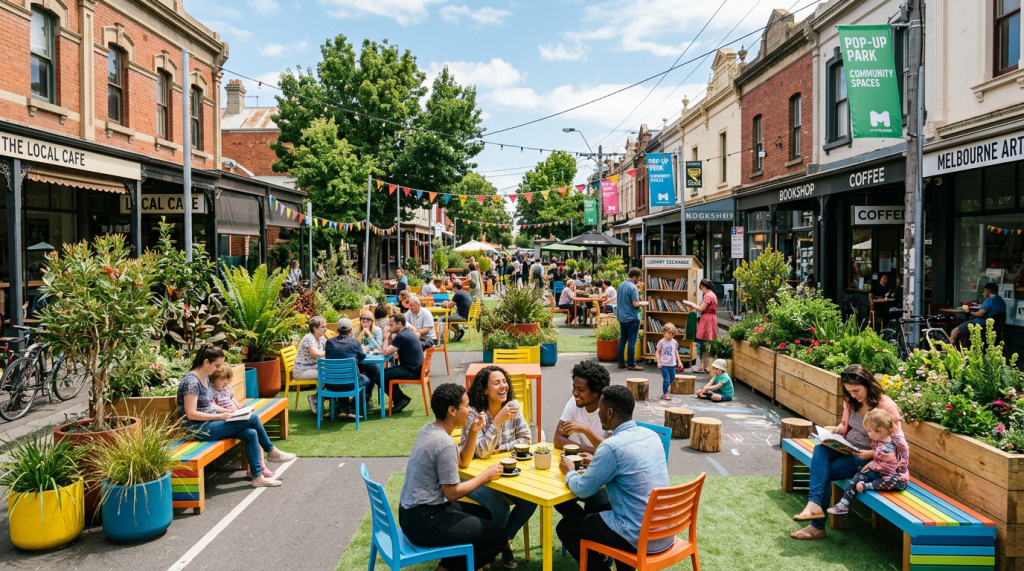
At its core, urban adaptive furniture refers to public seating, tables, shelters, and other street elements designed to respond to changing conditions. Unlike traditional fixed benches or bins, these pieces are modular, movable, multi-functional, or responsive to the environment. They might shift shape for different times of day, incorporate greenery for cooling, or use technology to charge devices and monitor air quality. Some are built to withstand floods or heatwaves, while others invite users to rearrange them on the spot.
The idea draws from nature-based solutions, circular design principles, and smart-city thinking. Materials are often durable yet repairable, and many pieces integrate plants, water storage, or solar power. In short, adaptive furniture is not static – it evolves with the needs of the space, the weather, and the community. This flexibility makes it a powerful tool for cities facing uncertainty.
The pressures facing future cities
By 2050, the United Nations estimates that 68 per cent of the world’s population – an extra 2.5 billion people – will live in cities. That growth brings challenges: overcrowded public spaces, extreme weather events, urban heat islands, and the need for more inclusive, resilient infrastructure. Traditional street furniture, bolted down and single-purpose, struggles to keep up. A bench that works perfectly on a sunny morning might become unusable during a heatwave or flood. Fixed layouts cannot easily accommodate pop-up markets, social distancing, or changing community events.
Climate change adds another layer. Heatwaves are more frequent, rainfall patterns are shifting, and biodiversity is declining even in urban areas. At the same time, people want spaces that feel personal and welcoming – places to work, socialise, rest, or play. Adaptive furniture addresses these pressures by turning public areas into dynamic, responsive environments rather than rigid ones.
Episode 417R on the What is The Future for Cities? podcast investigates different opportunities on addressing urban challenges, comparing traditional and adaptive furniture from the top-down and bottom-up perspectives:
How adaptive furniture supports resilient and liveable cities
The benefits go far beyond comfort. First, adaptability improves space utilisation. Modular pieces can transform a quiet plaza into an event venue in minutes, then return to everyday seating. This maximises limited urban land and reduces the need for permanent structures.
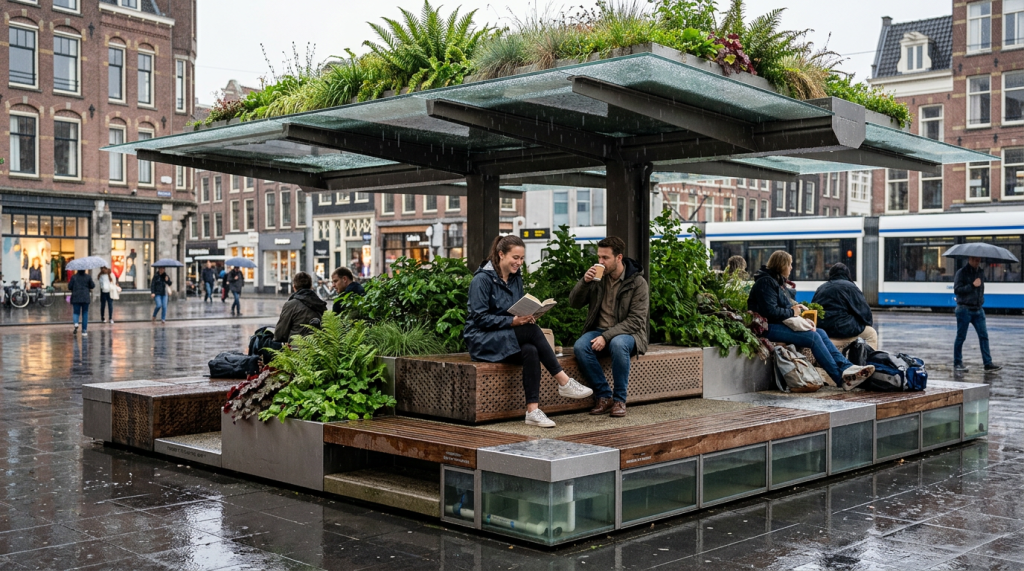
Second, it enhances climate resilience. Furniture with integrated planters, green roofs, or rainwater reservoirs helps manage stormwater, lower temperatures, and support pollinators. Studies show that such interventions can reduce surface temperatures by up to 19 degrees Celsius and air temperatures by 3–5 degrees Celsius in the immediate area. That makes a real difference for vulnerable residents during heatwaves.
Third, it promotes social connection and inclusion. Movable chairs let people choose where and how they sit, encouraging interaction. Designs that accommodate wheelchairs, prams, or different cultural preferences make spaces truly public. Many adaptive pieces also incorporate smart features – USB ports, Wi-Fi hotspots, or sensors – that support remote workers and digital equity.
Finally, it delivers economic and environmental value. Modular systems are easier to repair, upgrade, or recycle, cutting long-term costs and waste. Pilot installations can test ideas cheaply before scaling up, helping councils learn what works in their specific context.
Cities on every continent are already putting adaptive furniture into practice, proving the concept works at scale.
In Australia, the City of Yarra (just outside Melbourne) launched a pop-up park on Charlotte Street in early 2024 as a pilot. Bright, modular furniture from Streetlife Australia allowed quick reconfiguration for community events, then relocation once the trial ended. The project showed how temporary, movable pieces can activate underused spaces without permanent investment. Closer to the city centre, Melbourne’s Social Spaces initiative tested multi-functional chairs in Carlton and Drummond Street. These timber-and-steel designs support sitting, eating, working, or even performing, and usage jumped fourfold thanks to their versatility.
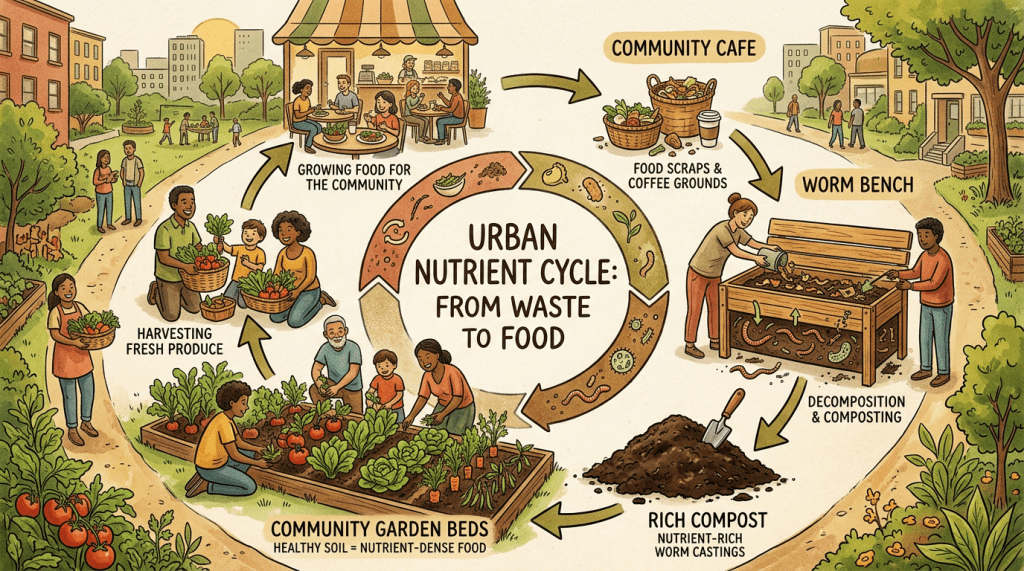
Zoe Wang, a landscape architect and urban designer, is working with the City of Melbourne on a worm bench which addresses the opportunities – a multipurpose furniture, which decreases waste and involves the community – and she talked about her solution in episode 418 on the What is The Future for Cities? podcast:
Across Europe, climate-adaptive designs stand out. Utrecht in the Netherlands equipped 316 bus stops with green roofs planted in sedum succulents. These “bee bus stops” capture dust, retain rainwater, cool the air, and create habitats for pollinators – while some include solar panels and bamboo benches. The project blends everyday infrastructure with nature-based solutions.
In Barcelona, the MACBA plaza features fully removable sliding bleachers that serve as daytime seating and nighttime performance spaces. Installation and removal take less than 20 minutes, freeing the square for other uses. Similar temporary, modular setups have appeared in Getafe and Benicàssim in Spain, where residents can rearrange furniture to suit their needs.
Paris and London have long embraced movable chairs in parks such as the Luxembourg Gardens and many London squares. Inspired by William H. Whyte’s observations in New York, these simple pieces let users personalise their environment, boosting social life and dwell time. In the United States, Totem design firm used modular outdoor furniture in New York City during the pandemic to create safe, reconfigurable dining and gathering zones.
Innovative prototypes continue to emerge. Germany’s Green City Solutions produces the CityTree – a moss-covered panel with an integrated bench that filters air as effectively as 275 trees while providing seating and local cooling. Installations in Berlin, Paris, Amsterdam, and London demonstrate how furniture can actively improve air quality. Another standout is Topotek 1’s “Sit Together” prototype, exhibited in Milan. It combines European bench design with a Persian wind-tower concept for passive cooling through misting, offering dual-sided seating that adapts to seasonal temperatures.
These examples span continents and climates, showing that adaptive furniture is not a luxury but a practical response to real urban needs.
Innovations driving the next generation
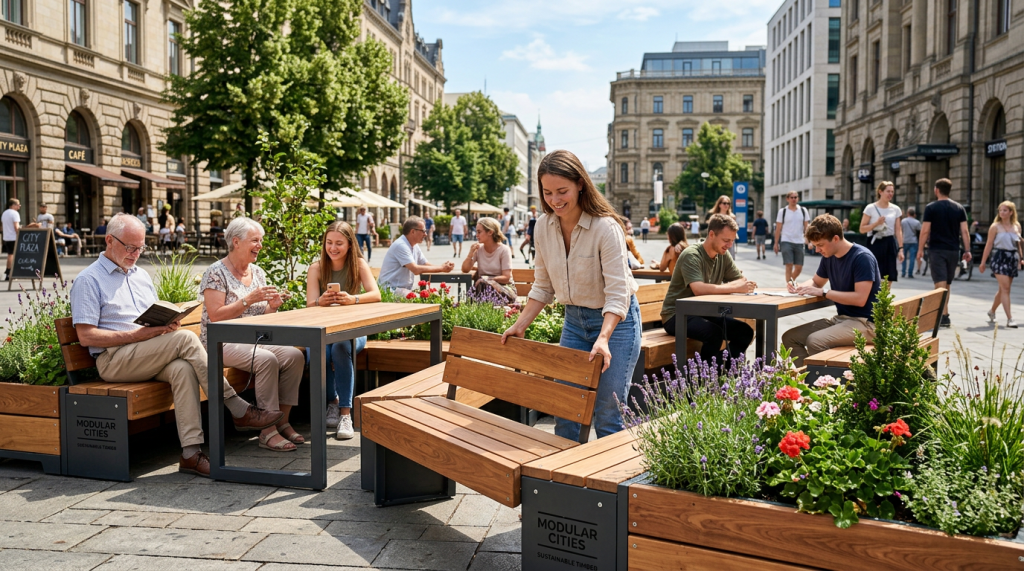
Technology is accelerating progress. Smart benches now harvest solar energy for phone charging and free Wi-Fi while collecting usage data to help planners optimise layouts. Modular systems like Vestre’s UNITY in Europe or Australia’s HYVE range allow designers to create endless configurations using standardised components. Climate-responsive materials – porous concrete that stores rainwater or fabrics that reflect or absorb heat – are becoming standard.
Participatory design is another growing trend. Cities invite residents to test prototypes, ensuring furniture meets diverse needs. Circular economy principles guide many projects: pieces are designed for disassembly, repair, and material recovery, aligning with net-zero goals.
Of course, challenges remain. Adaptive furniture can cost 20 to 40 per cent more upfront than standard pieces, though lifecycle savings often offset this. Maintenance requires new skills, and cities must plan for vandalism, weather extremes, and equitable access across neighbourhoods. Data privacy is also important when sensors are involved. Success depends on strong policy support, cross-department collaboration, and community buy-in.
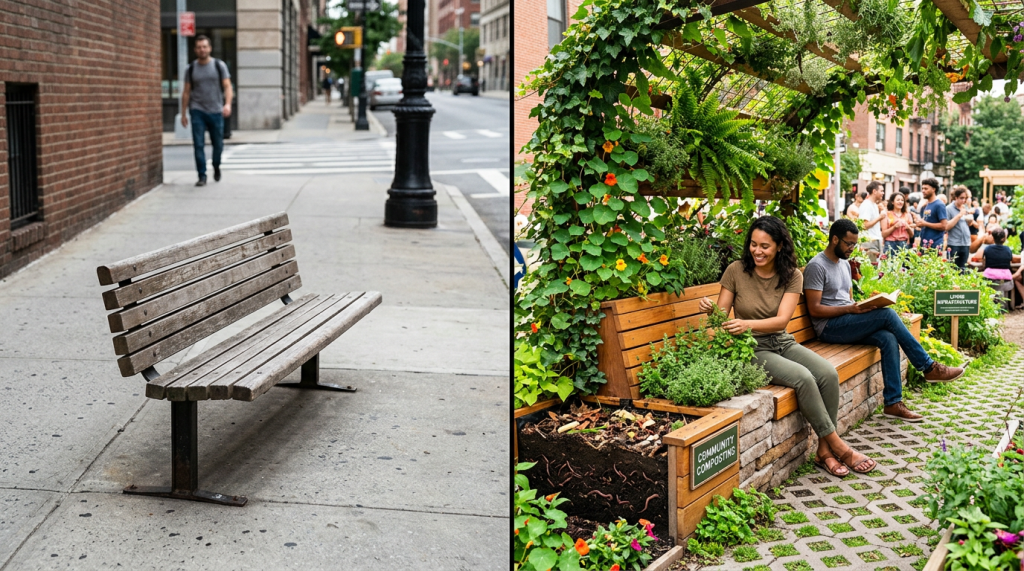
Urban adaptive furniture is more than a design trend – it is a strategic investment in the liveability, sustainability, and equity of our cities. By embracing modularity, climate responsiveness, and user-centred flexibility, cities can create public spaces that thrive amid uncertainty. From Melbourne’s pop-up parks to Utrecht’s green bus stops and Barcelona’s transformable plazas, the evidence is clear: small, intelligent interventions deliver outsized benefits for people and the planet.
The future of cities will not be built with rigid concrete alone. It will be shaped by furniture – and infrastructure – that adapts with us. Now is the time to act.
What urban adaptive furniture would you like to see in your city?
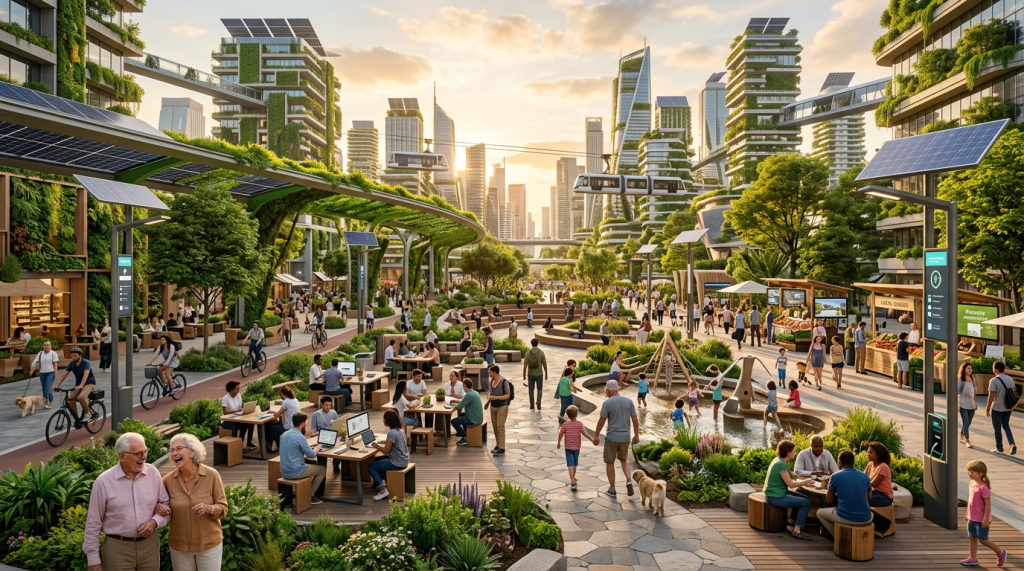
Next week, we are investigating how green tech is helping the development of better urban futures!
Ready to build a better tomorrow for our cities? I’d love to hear your thoughts, ideas, or even explore ways we can collaborate. Connect with me at info@fannimelles.com or find me on Twitter/X at @fannimelles – let’s make urban innovation a reality together!
 Vitruvian Solutions
Leave a comment