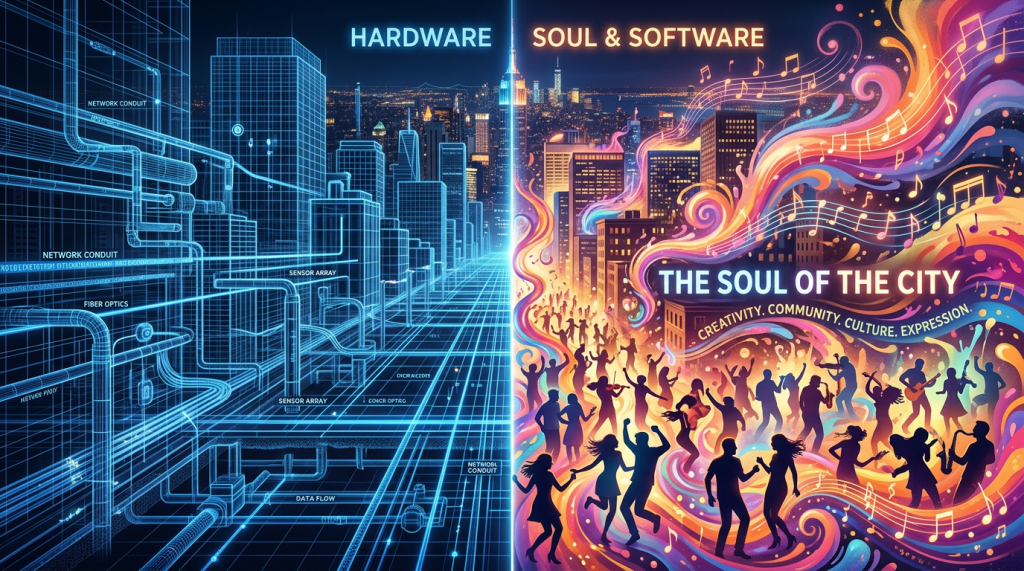
As we navigate 2026, it is becoming clear that efficiency is only half the battle for the future of cities. A city can have the most advanced technology in the world, but if it lacks a sense of place, it struggles to retain the very people it was built to serve. The future of urban life is a complex tapestry woven from many threads: antifragile systems, housing affordability, green infrastructure, and digital governance. Within this mix, the business of arts and culture is emerging as a critical, though not solitary, engine for economic resilience and urban identity. It is the “software” that runs on the city’s “hardware.”
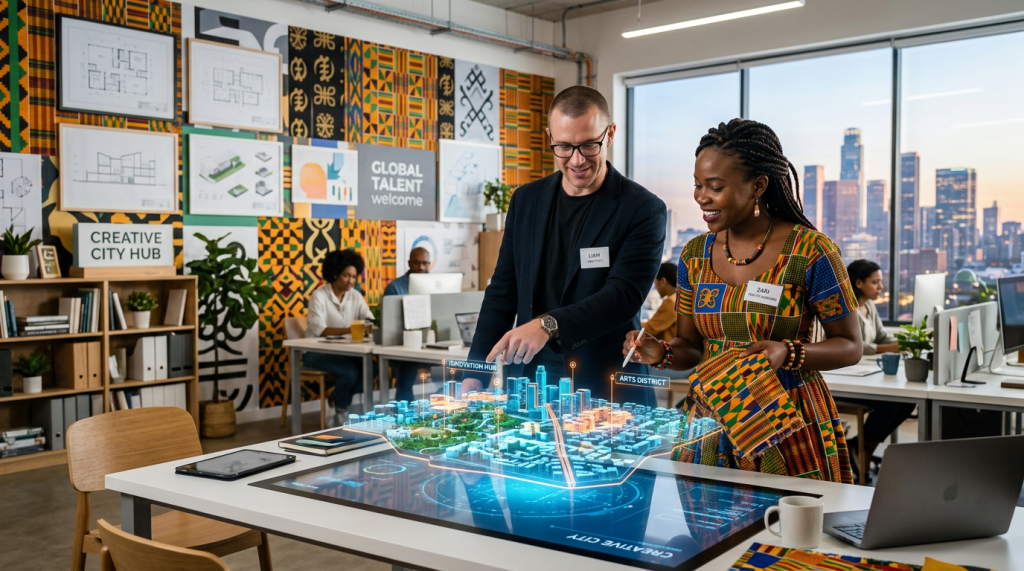
From “creative class” to integrated ecosystems
In the early 2000s, urban theory suggested that attracting a “creative class” of workers would naturally lead to prosperity. Today, we view this through a more balanced lens. Culture is no longer an isolated sector; it is being integrated into the broader urban ecosystem alongside manufacturing, tech, and logistics.
Modern cities are beginning to treat cultural infrastructure—galleries, rehearsal spaces, and community workshops—as part of a diversified economic portfolio. The business side of this integration is evident in several key areas:
- The diversification of retail: As traditional department stores face challenges, developers are increasingly looking to “experiential anchors.” By partnering with local arts organizations to fill ground-floor spaces, property owners are finding that they can stabilize foot traffic for the surrounding commercial tenants.
- The 15-minute neighbourhood: The global shift toward hyper-locality means that culture is moving out of centralized “Museum Districts” and into residential hubs. When a neighbourhood has a small performance space or a community craft centre, it supports a cluster of secondary businesses—cafes, printers, and supply shops—creating a micro-economy that is less dependent on daily commuters.
Entrepreneur Raoul Rugamba explains how Rwanda is building these missing links by moving from informal creative activities to structured, tech-enabled business ecosystems in episode 416 on the What is The Future for Cities? podcast:
The ROI of “wellbeing-led” urban design
While transit and safety are the foundations of urban health, the “business of experience” is gaining ground as a metric for success. Recent research in 2025 indicated that accessible public art and cultural programming correlate with lower rates of urban stress and social isolation. This has tangible economic implications. City governments and private health providers are exploring “social prescribing,” where cultural engagement is used as a tool to mitigate the high costs of mental health crises in dense urban environments. This shifts the perception of arts funding from a “charitable gift” to a “preventative health investment.” When culture improves the general wellbeing of a population, the city benefits from a more productive workforce and reduced strain on public services.
Episode 415R on the What is The Future for Cities? podcast debated how creative intermediaries in Accra are already functioning as essential social infrastructure:
The tech-culture synthesis: Enhancing the city
Technology in cities is evolving to be more than just a collection of sensors; it is becoming a platform for storytelling. In this context, arts and culture act as the interface between complex technology and the average citizen.
- Responsive public spaces: Data-driven urban planning is now incorporating “responsive art.” Installations that change based on environmental data—like air quality or noise levels—serve a dual purpose: they beautify the city while educating the public on urban health metrics in an intuitive way.
- Predictive curation for small venues: In 2026, smaller cultural venues are utilizing AI and data analytics to survive in a competitive market. By better understanding the niche interests of their specific neighborhoods, these businesses can tailor their programming to ensure financial viability, preventing the “boom and bust” cycle that often leads to gentrification and displacement.
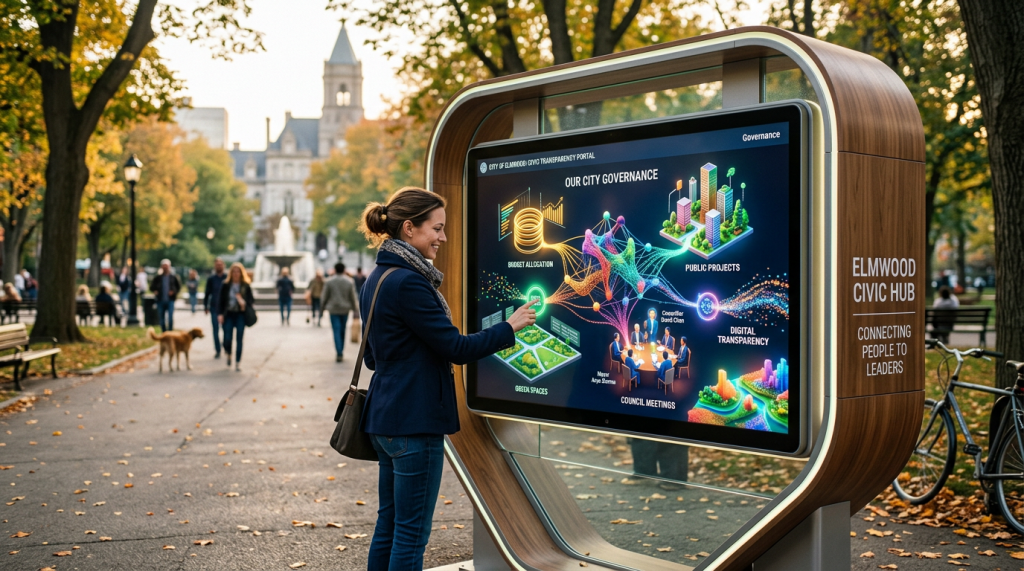
The challenge of balance: Avoiding the “scenius” trap
There is a risk in over-emphasizing culture as a business driver. When arts are used solely to “rebrand” a neighborhood, it often leads to cultural homogenization—where every city begins to look like a curated, Instagram-friendly version of itself.
The most resilient cities of the future will be those that balance cultural growth with other essential pillars of urban life:
- Housing and workspaces: No amount of public art can save a city where the artists (and the service workers who support the city) cannot afford to live. The business of culture must be tied to adaptive reuse policies that prioritize affordable living and working spaces.
- Infrastructure and transit: Culture cannot thrive if people cannot get to it. Integrating cultural hubs with transit networks ensures that the benefits of the “cultural economy” are accessible to all residents, not just those in affluent pockets.
| Urban Pillar | Primary Goal | Cultural Connection |
| Antifragility | Gaining strength from stressors | Diverse cultural scenes adapt to crises better than monocultures |
| Connectivity | Seamless mobility | Cultural hubs as transit “anchors” |
| Affordability | Socio-economic diversity | Adaptive reuse of buildings for studios |
| Governance | Digital transparency | Using creative media to simplify civic data |
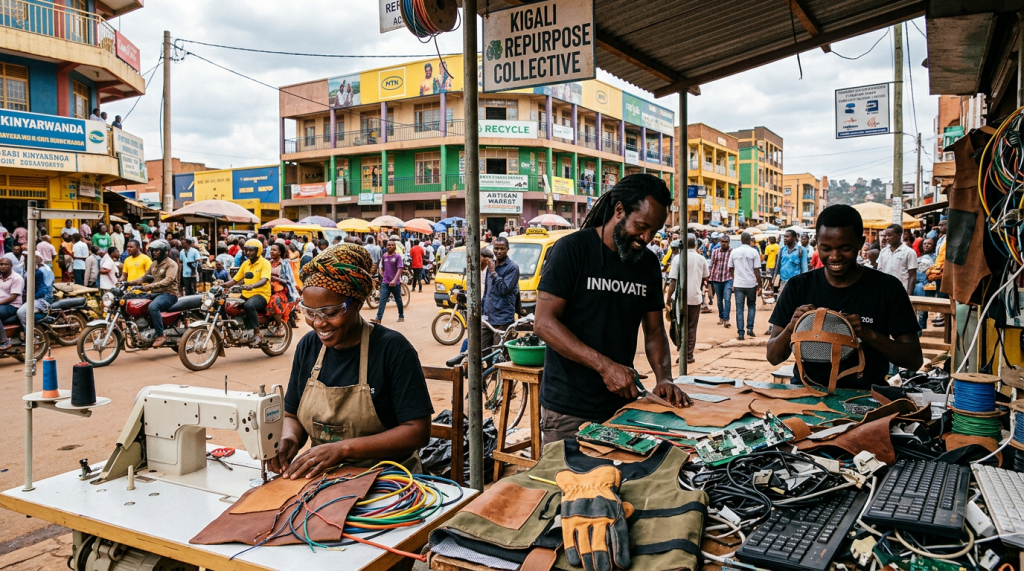
The connection between arts, culture, and the business of cities is a significant factor in the future of urbanism, but it is not the only one. A city is a living organism that requires a healthy balance of commerce, technology, antifragility, and human expression.
As we look toward the 2030s, the cities that thrive will be those that don’t view culture as a luxury for the elite, but as a functional part of a holistic urban strategy. It is the element that provides the “vibe” and the “belonging,” acting as the glue that holds the more technical aspects of city life together. The future city is a collaboration between the engineer, the policymaker, the entrepreneur, and the artist—each playing a vital role in building a space that is not only efficient but worth living in.
Next week, we are investigating use of urban furniture for resilience and antifragility in the future of cities!
Ready to build a better tomorrow for our cities? I’d love to hear your thoughts, ideas, or even explore ways we can collaborate. Connect with me at info@fannimelles.com or find me on Twitter/X at @fannimelles – let’s make urban innovation a reality together!
 Vitruvian Solutions
Leave a comment