As the global population becomes increasingly urbanized, the future of humanity is intrinsically tied to the economic vitality of our cities. For urban centers to thrive, adapt, and compete on a global scale, economic growth is not just a metric – it is a functional imperative. In an urban context, economic growth signifies an increase in a city’s capacity to produce goods and services, attract capital, and generate wealth. This expansion is the primary mechanism that generates the necessary revenue to build physical infrastructure, deploy new technologies, and maintain a city’s competitive edge in the global market.
Understanding why this growth is vital – and the logistical hurdles of managing it – requires examining the structural dynamics of urban economies.
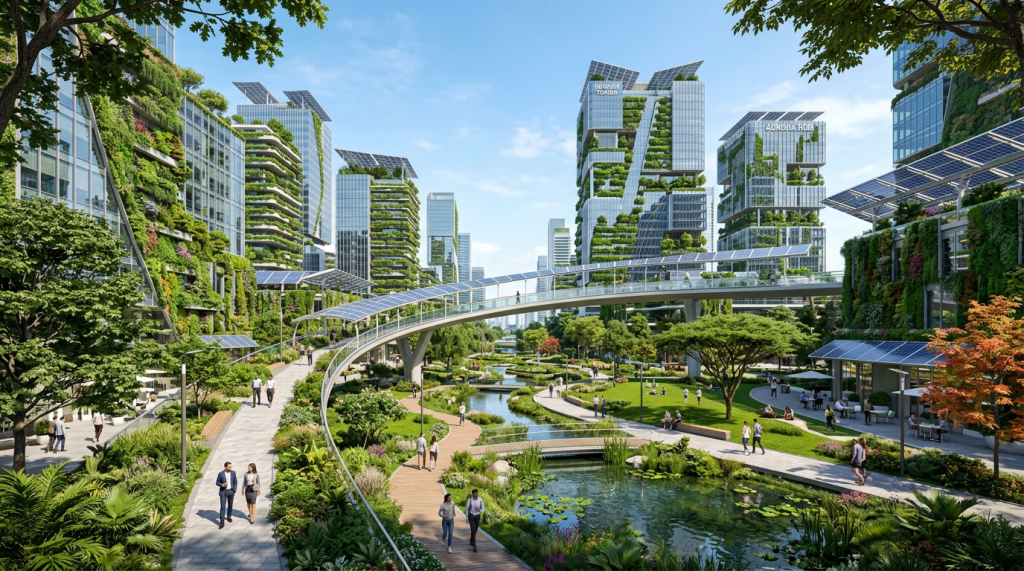
The advantages: Why cities need to grow
Cities are highly complex, expensive systems to operate. Economic growth acts as the financial engine that makes urban modernization and maintenance possible.
- Infrastructure Expansion and Modernization: Growing economies generate the capital and tax bases required to build and upgrade essential physical infrastructure. This includes high-capacity transit networks, modernized power grids, and advanced telecommunications systems necessary for a functional metropolis.
- Technological Innovation: A booming city attracts venture capital and private research investment. This financial influx is crucial for funding “smart city” technologies, such as AI-driven traffic management, automated waste logistics, and optimized energy grids.
- Talent Magnetism: Economic expansion creates a diverse and dynamic job market. This attracts highly skilled workers, entrepreneurs, and specialized professionals, creating a compounding effect where human capital drives further corporate investment.
- Global Competitiveness: In a globalized economy, cities compete with one another for corporate headquarters, foreign direct investment, and trade routes. Steady economic growth signals stability and opportunity, ensuring a city remains a central node in international commerce.
Casey Handmer, founder of Terraform Industries, also advocated for continuous economic growth for prosperity and better future for cities in episode 410 on the What is The Future for Cities? podcast:
The disadvantages: The frictions of rapid expansion
While growth provides the resources for development, scaling a city’s economy rapidly introduces significant logistical, environmental, and structural frictions.
- Infrastructure Lag: When economic and population growth drastically outpaces urban planning, cities suffer from severe logistical bottlenecks. This manifests as gridlocked traffic, overcrowded transit systems, and failing public utilities that cannot handle the increased load.
- Cost Inflation and Market Squeeze: Rapid wealth generation drives up the cost of commercial real estate, land, and labor. Paradoxically, if these costs rise too quickly, they can stifle further innovation by pricing out startups, small businesses, and essential service workers.
- Environmental Degradation: Industrial expansion and rapid construction require massive energy inputs and resource extraction. Without strict management, economic booms often result in severe air and water pollution, loss of surrounding green spaces, and a surge in industrial waste.
- Economic Volatility: Cities that experience explosive growth driven by a single sector (such as technology, oil, or finance) become highly vulnerable to macro-economic shocks. A downturn in that specific industry can lead to sudden revenue collapse and urban stagnation.
Episode 409R on the What is The Future for Cities? podcast debated Professor Lant Pritchett‘s article, The case for economic growth as the path to better human wellbeing, and investigated the advantages and disadvantages of this economic imperative:
Real-World Examples: Managing the Boom
Looking at real cities illustrates the mechanical complexities of managing economic expansion.
Strategic Expansion: Tokyo, Japan Tokyo is a prime example of managing massive economic growth through meticulous structural planning. As the city became a global financial and tech powerhouse, it avoided many of the crippling bottlenecks seen in other megacities through highly efficient, decentralized zoning and relentless investment in its world-class rail infrastructure. This allowed the city’s economy to scale smoothly without suffocating under its own weight.
The Pains of Rapid Scaling: Lagos, Nigeria Lagos represents the profound logistical challenges of an economic boom. As one of the fastest-growing economic hubs in Africa, it attracts massive commercial investment and millions of new workers. However, this hyper-growth has historically outpaced the city’s ability to build roads, power grids, and sanitation networks, resulting in severe infrastructure deficits that challenge its long-term operational efficiency.
Ultimately, economic growth is a structural imperative for the future of cities. Stagnant urban economies simply cannot generate the capital required to upgrade aging infrastructure, integrate next-generation technologies, or withstand global market shifts.
However, raw growth is only beneficial if a city can physically and logistically digest it. The future belongs to cities that pursue managed and strategic growth. This means pairing economic incentives with proactive urban planning, ensuring that infrastructure development stays ahead of corporate expansion, and diversifying the local economy to withstand market volatility. A resilient future for cities relies on building an economic engine that is not only powerful but structurally sound.
Next week, we are comparing grey and green infrastructure for the better future for cities!
Ready to build a better tomorrow for our cities? I’d love to hear your thoughts, ideas, or even explore ways we can collaborate. Connect with me at info@fannimelles.com or find me on Twitter/X at @fannimelles – let’s make urban innovation a reality together!
 Vitruvian Solutions
Leave a comment