Can sustainability spark innovation and actually boost profits?
Many business leaders today ask themselves a simple question: does committing to sustainability just add costs, or can it unlock new ideas and stronger financial results? The answer is not straightforward. While plenty of evidence shows sustainable practices driving real innovation and profit gains, there are clear limitations too. This article explores both sides, drawing on recent studies and real company examples, before looking at why some experts argue we need to move beyond traditional sustainability altogether.
The case for sustainability as an innovation engine
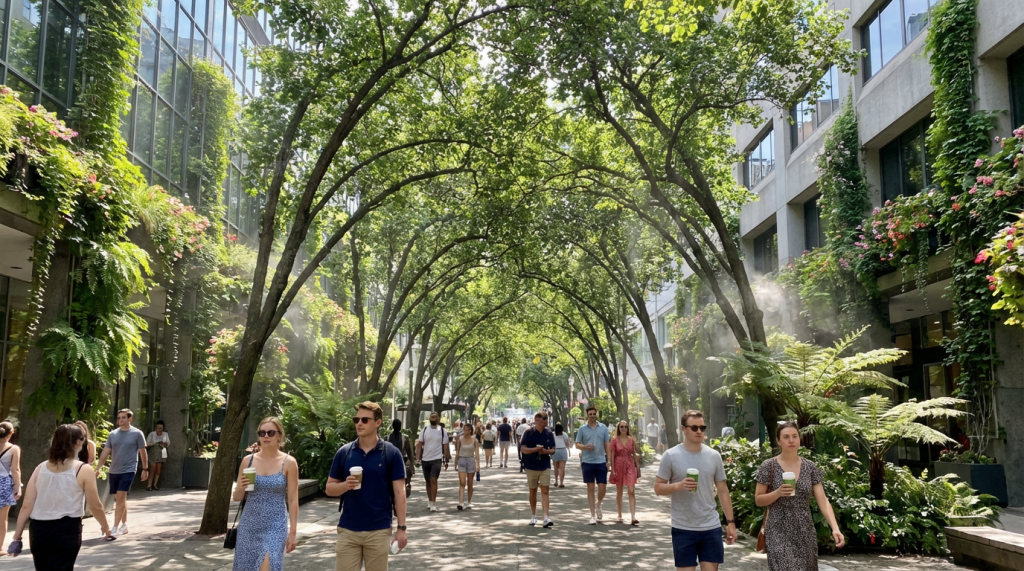
Sustainability pushes organisations to rethink how they operate. Instead of sticking with old methods, companies must find smarter ways to use resources, cut waste and meet changing customer expectations. This necessity often leads to breakthroughs that would not happen otherwise.
Research from the Boston Consulting Group highlights that businesses embedding sustainability into their strategies are 1.4 times more likely to achieve innovation breakthroughs. These breakthroughs appear in everything from new product designs to more efficient supply chains. For instance, shifting to circular economy models – where materials are reused rather than discarded – creates fresh revenue streams while reducing environmental impact.
The Harvard Business Review notes that pioneering companies treat sustainability goals the same way they approach any major innovation challenge. They redesign business models, invest in new technologies and build teams focused on long-term value. The result? Products and services that stand out in crowded markets and appeal to conscious consumers.
Take renewable energy or eco-friendly packaging. These are not side projects anymore; they become core offerings that open doors to new markets. The 2025 World Economic Forum analysis points out that sustainability now drives growth by helping firms meet both consumer demands and stricter regulations. Far from being a burden, it acts as a catalyst for creative problem-solving across industries.
Jasper Steinhausen is a huge proponent of sustainability as a platform for innovation and advocates for sustainability to be integrated into business strategy for businesses, and talked about his approach in episode 408 on the What is The Future for Cities? podcast:
Real profits from sustainable business practices
The financial upside is backed by solid numbers. Companies that lead on sustainability often see higher margins, better employee performance and stronger investor interest.
Unilever provides a striking example. Its Sustainable Living brands now generate 69 percent of total revenue. These lines – including Dove and Hellmann’s with their eco-friendly packaging – grow faster than the rest of the business and deliver higher profits. IKEA reports annual energy savings of €100 million through its circular strategies, while also lifting brand trust and sales.
Broader data reinforces the pattern. Gallup research shows organisations with strong environmental, social and governance scores enjoy 13 percent higher employee productivity. A Harvard Business Review study found that top performers can lower their cost of debt by up to 3 percent. Deloitte’s latest survey reveals 85 percent of companies increased sustainability investments last year, with 92 percent believing they can grow while cutting emissions.
Investors are paying attention too. The global green economy reached a market capitalisation of USD 7.9 trillion in 2024, making it one of the fastest-growing sectors worldwide. Sustainable funds continue to attract inflows, and executives report clear returns on investment.
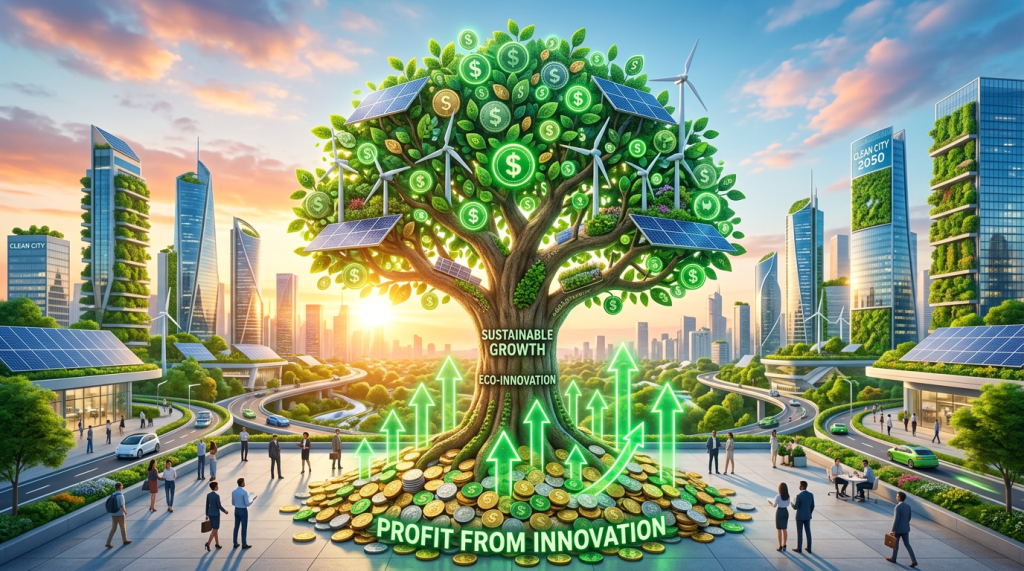
These gains come from multiple angles: lower operating costs, access to new markets, improved reputation and reduced risk from regulatory changes. Sustainability, when done well, is not a cost centre – it becomes a profit driver.
Making Sustainability Profitability, the book by Jasper Steinhausen, discusses this and episode 407R debates the ideas of the book on the What is The Future for Cities? podcast:
The limitations: why sustainability alone may fall short
For all its benefits, sustainability has notable downsides that deserve honest discussion. There are many experts who argue the concept itself is limited in today’s volatile world, and we already addressed this previously.
Sustainability is often vague and its practical application feels murky. Rooted in the word “sustain,” it focuses on meeting present needs without compromising future generations – a noble aim, but one that essentially means maintaining the status quo. The previous Vitruvian blogpost quotes the well-known Brundtland Report definition and then challenges it directly:
“I do not want to necessarily sustain systems because we can improve them… and I do not want people to be sustained – a.k.a. just allowed to survive – because I want us to thrive.”
This maintenance mindset leaves systems vulnerable when shocks hit. A city or business that is merely sustainable can keep going under normal conditions, but it does not necessarily get stronger. Sustainability has become stretched thin and is now susceptible to greenwashing – where superficial actions get the label without real change. What started as a bold vision has sometimes turned into a superficial marketing tool.
In unpredictable environments – whether climate events, supply chain disruptions or economic shifts – simply sustaining is no longer enough. We need approaches that go further: healing damaged systems and building the ability to improve from adversity.
Moving up the scale: regeneration and antifragility
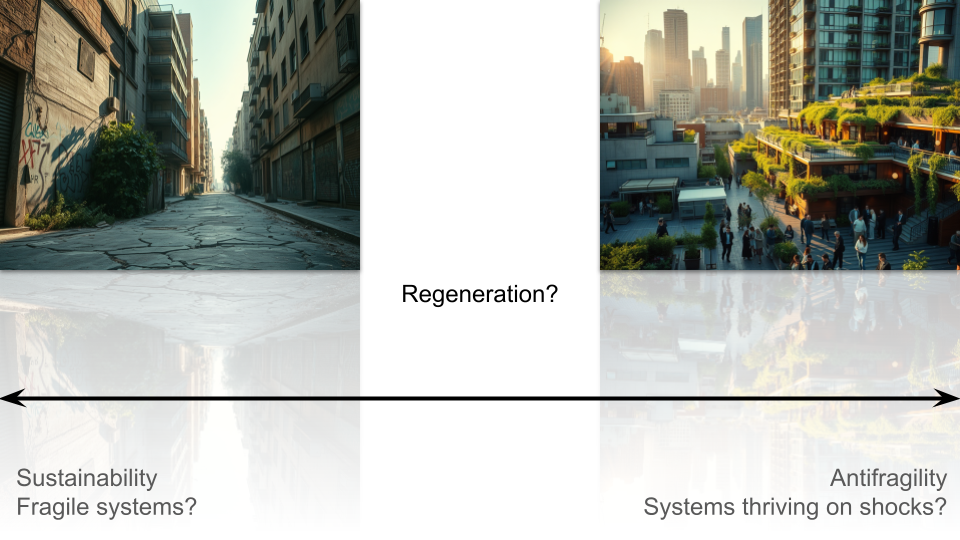
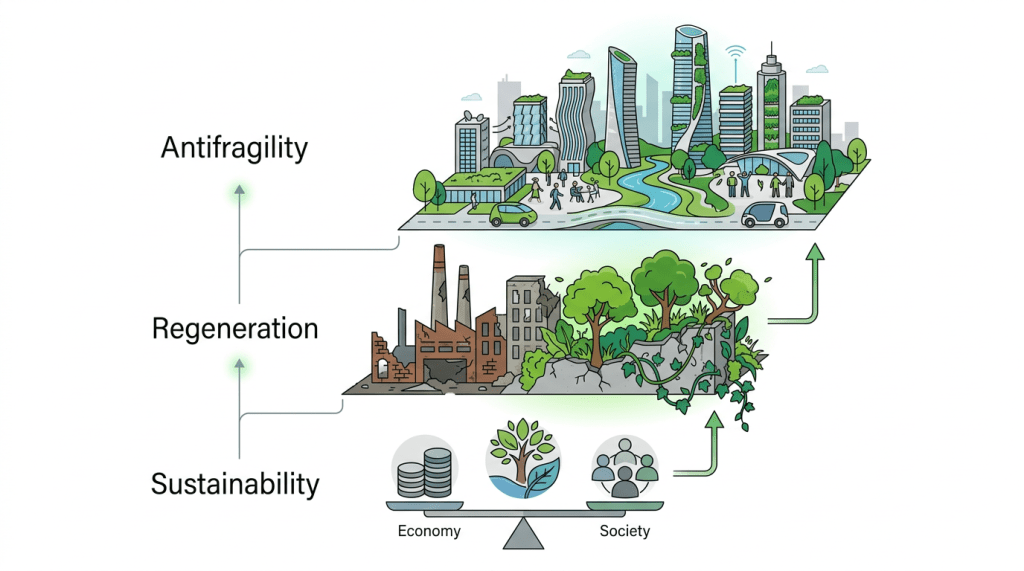
The Vitruvian article proposes a helpful progression: sustainability sits at the base as the foundation for balance across economic, environmental and social factors. Above it comes regeneration – actively restoring and renewing systems to create new opportunities for growth and innovation. At the top is antifragility, a concept from Nassim Nicholas Taleb, where systems actually benefit and grow stronger when exposed to stress. Examples include turning abandoned industrial zones into vibrant mixed-use areas (regeneration) or designing public spaces that double as emergency shelters during crises (antifragility). These steps move beyond preserving what exists to actively making things better.
For businesses, this means treating sustainability as a starting point rather than the end goal. Companies can begin with efficiency measures and compliance, then progress to regenerative practices such as restoring ecosystems in their supply chains or designing products that improve community wellbeing. The ultimate aim is antifragile operations that turn challenges – like rising material costs or stricter rules – into competitive advantages.
So, can sustainability serve as a platform for innovation and drive profit? The evidence says yes – when implemented thoughtfully. Leading companies are already proving that sustainable strategies deliver measurable financial returns and spark genuine creativity. At the same time, recognising its limitations helps avoid complacency or greenwashing traps.
The most forward-thinking organisations are using sustainability as the launchpad for higher ambitions: regeneration and antifragility. They do not stop at maintaining balance; they actively heal, adapt and grow stronger through change.
For business leaders reading this, the message is clear. Start with practical sustainability steps that cut costs and open new markets. Then ask the bigger question: how can we move beyond sustaining to truly thriving? Those who do will not only protect the planet and society – they will build more resilient, innovative and profitable enterprises for the future.
The choice is yours. Sustainability can be far more than a compliance exercise. With the right mindset, it becomes a powerful engine for innovation and profit – and a stepping stone to something even greater.
Next week, we are investigating whether economic growth is really crucial for urban and human prosperity!
Ready to build a better tomorrow for our cities? I’d love to hear your thoughts, ideas, or even explore ways we can collaborate. Connect with me at info@fannimelles.com or find me on Twitter/X at @fannimelles – let’s make urban innovation a reality together!
 Vitruvian Solutions
Leave a comment