In an era of intensifying climate hazards, urban resilience has emerged as more than a defensive measure – it is a powerful economic driver. Cities that prioritise the ability to withstand shocks, adapt quickly, and recover efficiently are seeing tangible benefits in asset values, market liquidity, and long-term competitiveness. Resilience is no longer framed as a cost; it is an investment that delivers measurable returns for property owners, businesses, and entire metropolitan economies. Recent analysis shows private capital could find a $1 trillion opportunity by 2030 in technologies that support climate adaptation and resilience. This capital is flowing towards solutions that protect lives, infrastructure, and economic productivity from increasingly frequent disruptions.
Resilience premiums in property markets
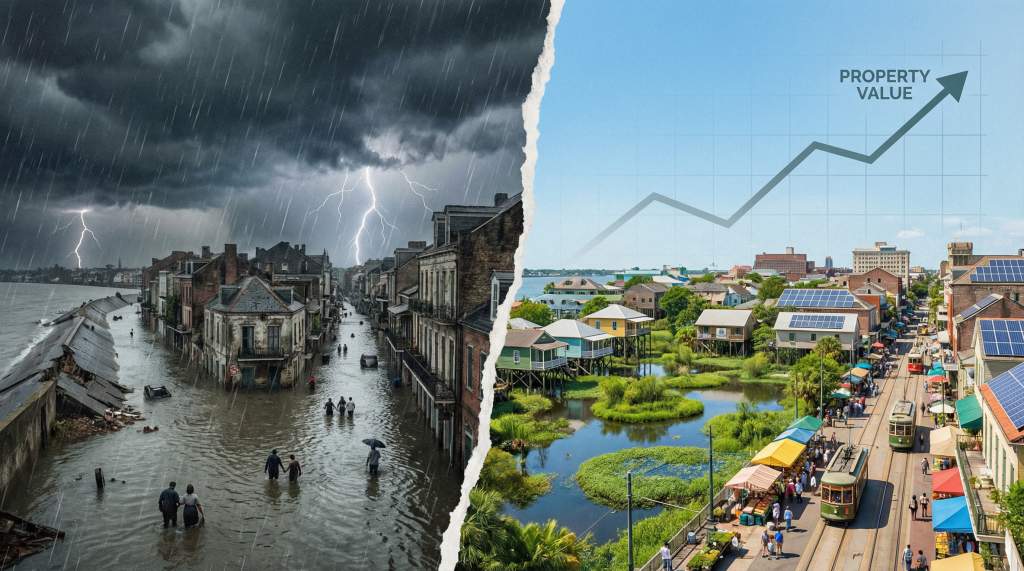
Real estate markets are already pricing resilience into transactions. High-net-worth buyers are prioritising locations and properties that demonstrate proven ability to maintain value through volatility. In the luxury segment, this shift is particularly clear. Extreme weather events are reshaping buyer preferences, with climate-resilient features becoming a key differentiator in prime markets. Homes equipped with resilient technologies, such as solar panels and battery storage, command significant premiums. Recent data indicates that owned solar systems can increase home values by up to 10%, with every $1 saved annually on energy bills adding around $20 to resale value. These features also improve liquidity. Resilient homes tend to sell faster in competitive markets, providing a clear edge when buyers have multiple options. As intergenerational wealth transfers accelerate, younger heirs are favouring properties designed for long-term adaptability, further reinforcing the premium on resilient design.
Ben Gilliland works on how to make resilience personal to introduce adaptation infrastructure to individual homes, because “denial is not a plan” – as he described in episode 402 on the What is The Future of Cities? podcast:
The growing role of insurance in valuing risk
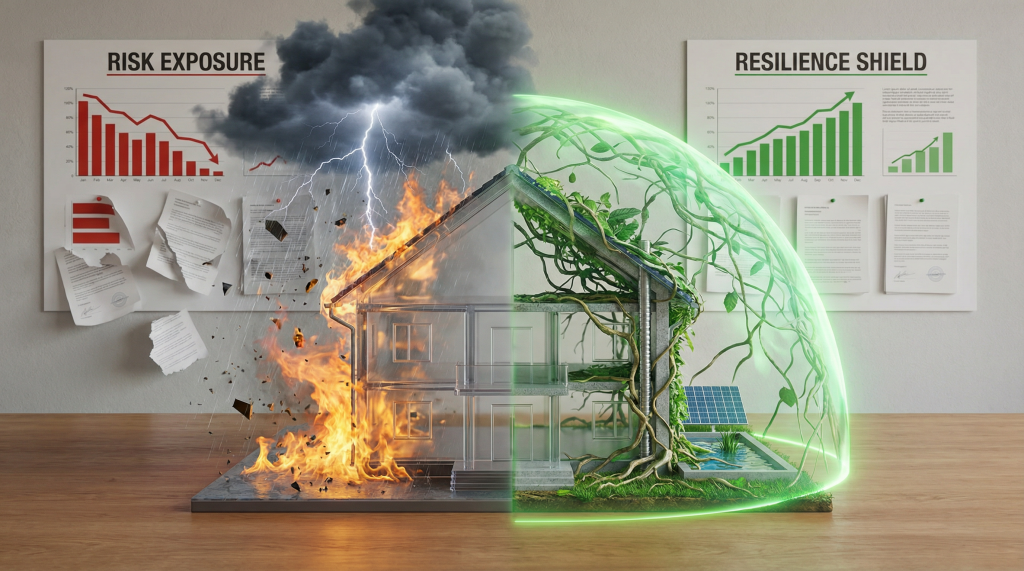
Property insurance has become one of the sharpest financial signals of climate exposure. In high-risk regions across the United States, rising premiums and retreating insurers are directly affecting market stability. Home insurance costs are climbing nationwide as insurers respond to extreme weather losses, with some areas seeing policies become unaffordable or unavailable. When major carriers exit markets – as has happened in wildfire-prone and flood-exposed states – the buyer pool shrinks to cash purchasers only, leading to downward pressure on prices. Conversely, properties that incorporate mitigation measures, such as fire-resistant materials or elevated structures, can secure better coverage and lower premiums. These “hardening” investments preserve insurability and protect long-term value, turning what was once seen as an expense into a strategic asset protection tool.
City-scale investments and their returns
At the metropolitan level, resilient infrastructure delivers multiplier effects that extend far beyond avoided damage. A landmark World Bank study found that investing in more resilient infrastructure in low- and middle-income countries yields a net benefit of $4.2 trillion over the asset lifetime, with $4 in benefits for every $1 spent. In higher-income settings, similar ratios apply. Research from the U.S. Chamber of Commerce shows that every $1 invested in disaster preparedness saves $13 in total economic impact through reduced damage, faster recovery, and preserved productivity. These savings include protected jobs, maintained tax bases, and prevented population outflow after events. Reliable power, water, and transport systems keep economies functioning during shocks. When disruptions are minimised, businesses stay open, supply chains remain intact, and cities retain their appeal to residents and investors.
Global examples of resilience paying off
Cities worldwide are demonstrating how proactive resilience creates economic value.
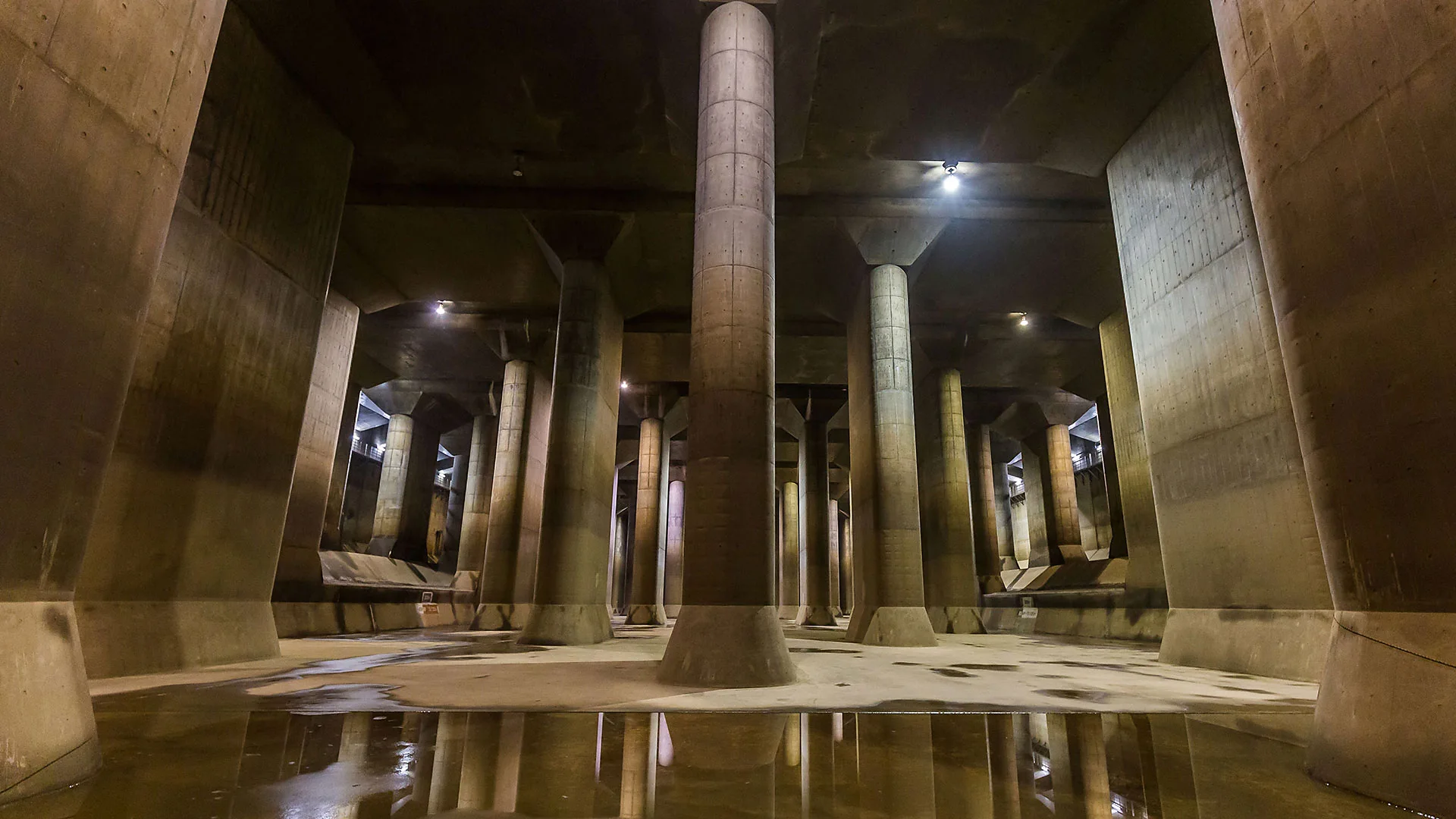
Tokyo’s G-Cans system, the world’s largest underground flood diversion facility, has dramatically reduced flooding impacts since completion. The massive tunnels and reservoirs protect vast urban areas, preserving property values and enabling continued development in historically flood-prone zones.
Singapore has taken a long-term approach to sea-level rise, committing billions to coastal protection and drainage upgrades. Studies show that clear government adaptation commitments significantly reduce property value discounts in vulnerable areas, with announced measures attenuating price drops linked to flood risk.
China’s sponge city initiative uses permeable surfaces, wetlands, and green infrastructure to absorb stormwater. Research in pilot cities like Wuhan indicates that proximity to sponge features positively influences property prices, with residents willing to pay premiums for reduced flood risk and improved amenity.
Miami-Dade county, which is an area highly prone to flooding and sea level rise due to climate change, established adaptation infrastructure which influenced property values – the effects and benefits of such investment in public infrastructure was debated in episode 401 on the What is The Future for Cities? podcast:
These examples share a common thread: transparent, large-scale resilience planning stabilises markets and unlocks development potential that would otherwise remain constrained by risk.
Financing the future: Tools and mechanisms
Scaling resilience requires innovative financing approaches. Traditional models often struggle with the long timelines and diffuse benefits of adaptation projects. Land value capture is gaining traction, allowing governments to recover part of the value uplift created by public resilience investments through development charges or special assessments. This creates a virtuous circle: public spending reduces risk, private values rise, and captured funds finance further improvements. Municipal bonds remain critical, and rating agencies are increasingly incorporating climate risk into assessments. Cities with strong resilience profiles can achieve lower borrowing costs, creating direct fiscal incentives for proactive planning. Public-private partnerships are also accelerating deployment of resilient technologies, blending government coordination with private sector innovation and capital.

The evidence is clear: resilience delivers a measurable dividend in the form of protected asset values, stable insurance markets, and robust economic growth. Cities that treat resilience as a core component of urban strategy are positioning themselves to thrive amid growing volatility.
As climate hazards intensify, the gap between resilient and vulnerable urban areas will widen. Those that invest strategically today – in soft and hard infrastructure, adaptive technologies, and transparent planning – will attract capital, talent, and population tomorrow.
In the future of cities, resilience is not just about survival; it is about building prosperity that lasts.
Next week, we are investigating how behavioural science can influence the future of cities!
Ready to build a better tomorrow for our cities? I’d love to hear your thoughts, ideas, or even explore ways we can collaborate. Connect with me at info@fannimelles.com or find me on Twitter/X at @fannimelles – let’s make urban innovation a reality together!
 Vitruvian Solutions
Leave a comment