Imagine a young software engineer named Maya, fresh out of university in a mid-sized European city. She has a brilliant idea for an AI-driven app that optimises urban waste collection. Her home town offers little funding, few mentors, and endless bureaucratic hurdles. Frustrated, she considers her options – and then moves to Zurich, recently ranked the world’s smartest city in 2025. Within months, she secures seed funding, joins a vibrant network of innovators, and watches her startup grow amid a city that feels alive, adaptive, and full of opportunity. Maya’s story is one possible path. When cities create the right conditions, entrepreneurial capitalism can unlock this kind of transformation, turning ideas into reality and reshaping urban life for the better.
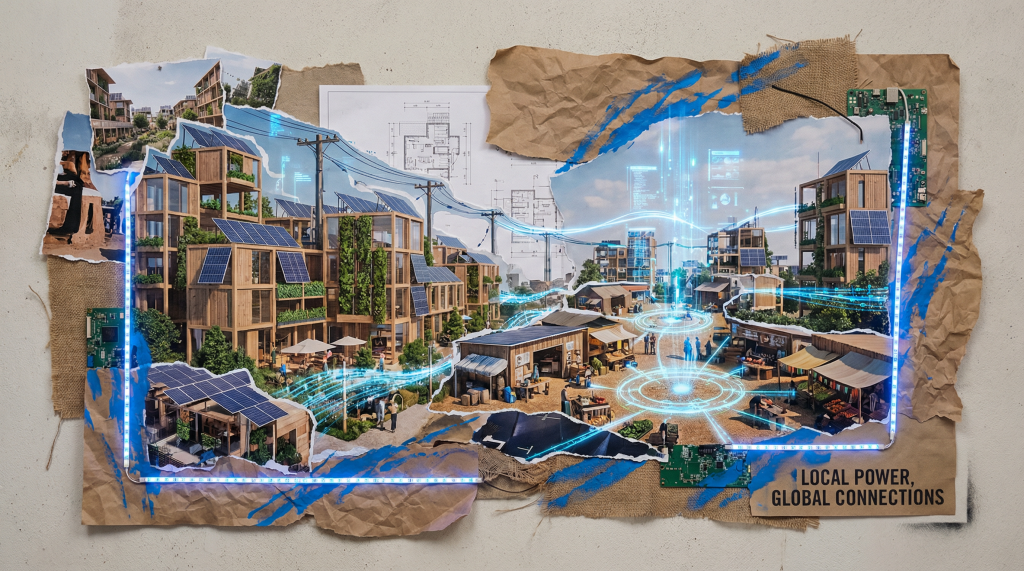
The potential of innovation-led urban growth
Cities have always evolved, but entrepreneurial capitalism offers a powerful pathway forward – one driven by technological disruption and private investment rather than relying solely on top-down state planning. Economists have shown that long-term prosperity can come from innovation, not just accumulating capital. This “creative destruction” has the potential to replace outdated industries with dynamic new ones, encouraging constant adaptation. In urban terms, cities that enable startups to challenge incumbents can tap into remarkable vitality. Historical evidence suggests innovation has repeatedly broken cycles of stagnation, allowing populations to grow while living standards rise. Cities that choose to embrace this churn – by welcoming risk-taking and rapid experimentation – open the door to pulling ahead.
A recent What is The Future for Cities? podcast debate (397R) explores this exact interdependence, questioning whether entrepreneurial capitalism is truly the indispensable driver of urban development or whether strong governance is needed to manage its limitations:
Venture capital as a potential lifeblood of city success
Venture capital tends to cluster intensely, even in an era of remote tools. Innovation often thrives when it remains deeply local. In 2025 rankings, hubs like San Francisco-San Jose, Shenzhen-Hong Kong-Guangzhou, and Tokyo-Yokohama lead global startup ecosystems. A single breakout success can trigger a cascade: investors follow winners, opening offices and creating self-reinforcing networks of talent and capital. For cities willing to cultivate these conditions, attracting even a satellite office from a top firm could transform economic fortunes more effectively than local subsidies alone. Emerging hubs like Atlanta are demonstrating this by building smart infrastructure and tech job markets.
Reforming planning for more flexible, market-driven cities
Traditional urban planning, with its mid-20th-century rules, can stifle growth through endless approvals and rigid zoning. Market-oriented approaches offer an alternative, treating development as “permitted as of right” when it meets clear, stable criteria. This has the potential to reduce delays, lower costs, and allow cities to adapt quickly to new demands – such as converting offices to homes or integrating small commercial spaces into neighbourhoods. Cities that adopt streamlined zoning and nuisance-based standards could become more “metabolic” – capable of reshaping themselves as economies shift.
Smart technologies creating more responsive urban ecosystems
Cities that weave Internet of Things (IoT), AI, and data into their fabric can become highly responsive. Zurich, Oslo, and Singapore top global smart city rankings, using sensors and analytics to optimise traffic, energy use, and more. Picture a parent in Oslo dropping kids at school: real-time data could reroute buses, predictive maintenance might prevent water leaks, and smart lighting could cut energy bills. When supported by entrepreneurial investment, these systems have the potential to make cities feel intuitive and resilient.
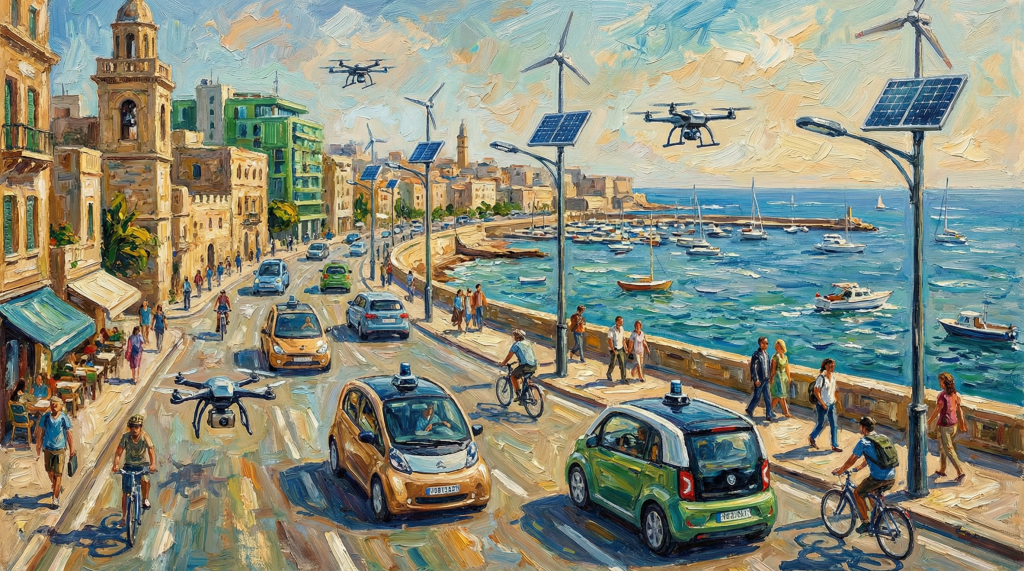
Mobility and last-mile delivery in potential transformation
Transportation stands on the cusp of its biggest shake-up in decades. Autonomous ride-sharing fleets are expanding, with the robotaxi market projected to grow from $400 million to $45.7 billion by 2030. Companies like Waymo already operate driverless services in multiple cities, showing the potential for sharp reductions in accidents and congestion. Last-mile delivery is another area ripe for change. Drones and ground robots are taking over urban parcels, driven by e-commerce growth and labour challenges. The autonomous last-mile market is poised for striking expansion, with Europe alone growing at over 25% CAGR. In cities that welcome these innovations, packages could arrive via quiet robots on Singapore sidewalks – faster, cheaper, and greener.
Regulatory sandboxes as potential catalysts for experimentation
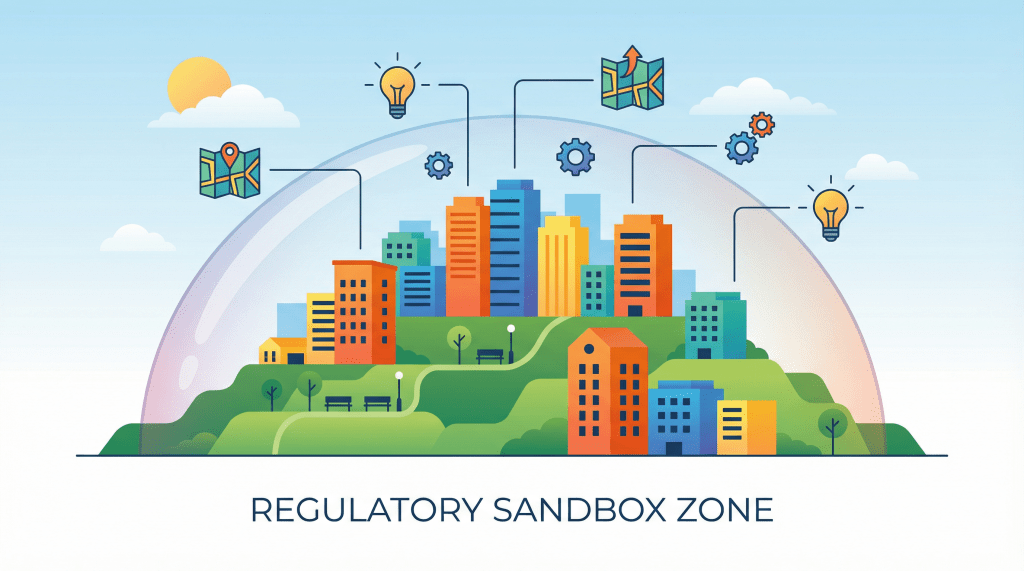
To attract innovators, cities can create “sandboxes” – controlled environments where new ideas test without full regulatory burdens. The UK’s financial sandbox boosted funding probability by 50% for participants, and cities worldwide could achieve similar results for mobility, health tech, and logistics. These zones can signal to entrepreneurs: here, you might move fast and iterate. Places like Detroit for autonomous vehicles or Dubai for drones demonstrate how such frameworks could become magnets for talent and capital.
Entrepreneur and investor Bradford Cross envisions a future of thousands of city-states powered by entrepreneurial governance and crypto infrastructure, arguing this could unlock ambition in both developing and established regions in episode 398I on the What is The Future for Cities? podcast:
Decentralisation and the potential spread of knowledge work
While mega-hubs dominate headlines, a counter-trend offers promise: decentralisation. Remote tools and quality-of-life preferences can disperse knowledge workers to smaller cities and towns. Medium-sized places with good connectivity have the opportunity to gain ground, offering affordability and community without sacrificing access to opportunity. This does not spell the end of big cities – they can remain cultural and event centres – but could create diverse settlement patterns where more places thrive.
Smart microgrids powering potentially resilient energy futures
As AI and electrification strain grids, cities can turn to smart microgrids – localised, intelligent energy networks that integrate renewables and enhance resilience. These systems have shown they can reduce peak loads, prevent blackouts, and support urban autonomy. In cities hit by extreme weather, microgrids have kept lights on when main grids failed. They represent a frontier where energy could become a decentralised, market-responsive asset class.
Cities have choices. Those that treat themselves as metabolic organisms – capable of regenerating through innovation, private investment, and adaptive rules – can facilitate churn, attract capital, modernise planning, embrace smart infrastructure, and experiment boldly. The result could be not just economic growth, but urban environments that are efficient, resilient, and genuinely exciting to live in.
Entrepreneurial capitalism is not a universal fix – it can exacerbate inequality if not paired with inclusive policies – but when cities deliberately align incentives toward innovation and opportunity, it offers one of the most powerful engines for building better urban futures. The cities that thrive through 2030 and beyond will be those that seize this potential.
Next week, we are investigating the changing discourse about climate change!
Ready to build a better tomorrow for our cities? I’d love to hear your thoughts, ideas, or even explore ways we can collaborate. Connect with me at info@fannimelles.com or find me on Twitter/X at @fannimelles – let’s make urban innovation a reality together!
 Vitruvian Solutions
Leave a comment