Imagine it’s a Tuesday morning. You need to renew your driver’s licence, register a new business, and perhaps file a noise complaint about the construction down the street. In the traditional world – let’s call it “City A” – this involves a half-day taken off work, standing in a fluorescent-lit queue at a council office, filling out three paper forms that ask for the same information, and waiting six weeks for a letter in the mail.
Now, imagine “City B.” You wake up, open an app on your phone, and verify your identity with a thumbprint. You tap “Renew Licence” – done instantly. You click “Start Business,” choose a pre-packaged regulatory framework that suits your tech startup, and sign the incorporation documents digitally. The noise complaint? You log it on a real-time map, and a smart contract automatically triggers a review based on decibel sensors on your street.
City A treats you like a subject: you are there because you were born there (or moved there for a job), and you get what you get. City B treats you like a customer: it knows you have options, and it wants to keep you.
This isn’t science fiction. It is the dawning reality of service-based governance. As we move deeper into the 21st century, the old model – where governance was inextricably linked to the dirt under your feet – is being dismantled. In its place, a new paradigm is emerging where cities compete for residents just as companies compete for customers.
Let’s explore why this shift from “social contract” to “service agreement” might just be the upgrade our urban lives need.

The great unbundling: why now?
For centuries, if you were unhappy with your local government, your options were limited. As the sociologist Albert O. Hirschman famously theorised in his treatise Exit, Voice, and Loyalty, you had two choices: Voice (complain, protest, or vote to fix it) or Exit (leave). But leaving was hard. It meant finding a new job, uprooting your family, and navigating complex visas. Consequently, cities acted like monopolies. San Francisco, for instance, could suffer from poor governance and high costs, but people stayed because that’s where the high-paying tech jobs were. This is what economists call “agglomeration effects”.
Then, the digital revolution – accelerated by the pandemic – changed everything. Remote work “unbundled” employment from geography. Suddenly, a software engineer could work for a Silicon Valley firm while living in Lisbon, Bali, or the Gold Coast. This drastically lowered the “switching costs” of moving. When you can take your income with you, the Tiebout Model – an economic theory from the 1950s – suddenly becomes highly predictive. Charles Tiebout sought to solve the problem of public goods provision, proposing a non-political solution: if a system consists of numerous local jurisdictions, each offering a distinct “basket” of services at a specific “price” (tax rate), individuals will sort themselves by moving to the community that best maximizes their personal utility. Historically, this model was criticised because moving was expensive. But in the remote work era, the friction is gone. We are seeing the start of a “Techsodus,” where mobile talent leaves high-friction jurisdictions for places that actively treat them like valued customers. This competition forces cities to stop resting on their laurels and start innovating.
Erick A. Brimen discussed the philosophy behind separating a city’s ‘hardware’ from its ‘software’ directly with Próspera in Episode 294 of the What is The Future for Cities? podcast, why he believes focusing on just three core services – rules, justice, and security – matters more than building physical infrastructure
The reformist path: teaching old cities new tricks
You don’t have to build a new city from scratch to see the benefits of this mindset. Many traditional cities are adopting “City as a Service” (CaaS) frameworks to modernise their administration. This “reformist” approach seeks to improve the efficiency and responsiveness of the state without challenging its fundamental sovereignty.
Espoo, Finland: The city as a partner
Take Espoo, Finland. Rather than just viewing citizens as passive consumers of water and roads, Espoo sees the city as a “platform” for value co-creation. They have institutionalised this concept by establishing a dedicated CaaS unit, situated right in the Mayor’s office rather than buried in IT. In Espoo’s model, the city opens its infrastructure, data, and premises to companies and residents, creating a “testbed” for innovation. It’s a collaborative approach that aims to bypass bureaucratic inertia, proving that competition can drive public sector innovation without dismantling the safety net.
Estonia: The nation as a SaaS product
On a national scale, Estonia has pioneered the concept of “Government as a Service.” Through their e-Residency programme, they have unbundled residency from physical presence entirely. You can be a citizen of Australia, live in Thailand, but run your business through Estonia’s digital jurisdiction. Why would you? Because their user experience (UX) is superior. You get 24/7 access to government services, the ability to sign documents digitally, and a competitive tax regime where you pay 0% corporate tax on retained earnings. Estonia is effectively competing for “virtual” citizens, generating revenue from state fees and business activity rather than traditional income tax on residents. This is the Tiebout model applied to the digital sphere: a nation competing on the quality of its dashboard.
Specific tools traditional cities can use to break through resistance to change – concepts like ‘futuring’ and ‘urban obduracy’ – were discussed in the research summary in Episode 293R of the What is The Future for Cities? podcast, how infrastructure can actually be used to drive social transformation:
The radical paths: Special jurisdictions, startup cities, cloud polities, and private cities
While reformists try to digitise the existing state, others argue that legacy systems are too ossified to fix. They advocate for Special Jurisdictions – autonomous zones with their own rules, designed to fast-track economic growth. This represents a more aggressive form of competition, where the “basket of goods” offered includes the legal system itself.
Special jurisdictions
The most controversial example is Próspera in Honduras. Established under ZEDE (Zones for Employment and Economic Development) legislation, Próspera allows businesses to choose their regulatory framework – a concept known as “regulatory arbitrage”. It’s a city run by a private company, with a low-tax regime and private arbitration for disputes. However, Próspera illustrates the risks of this model. It faces a “Sovereignty Trap.” When the Honduran government changed, the new administration repealed the ZEDE law, declaring it a violation of sovereignty. This led Próspera to launch a massive $10.7 billion ISDS claim. It turns out that building a private city in an adversarial political environment is incredibly risky.
Contrast this with the Dubai International Financial Centre (DIFC). Like Próspera, it is a “jurisdiction within a jurisdiction,” operating under English Common Law rather than UAE civil law. But unlike Próspera, it is fully aligned with the state’s goals. It serves as a “port of entry” for global capital, offering the stability of Western legal frameworks in the Middle East. It proves that special jurisdictions work best when they are “state-aligned” rather than state-challenging.
A newer, promising model is Itana in Nigeria. Positioned as a “Digital Free Zone” in Lagos, it targets the digital economy rather than manufacturing. Tech companies can register there to enjoy tax incentives and easy capital repatriation without needing a physical HQ. Developed in partnership with the Nigerian government, Itana acts as a sandbox for progressive regulations, aiming to reverse the “brain drain” of African talent.
Episode 385R of the What is The Future for Cities? podcast dissects the specific legal battles and the ‘legitimacy deficit’ that threatens these zones, teaching you the complex constitutional reality behind the ZEDE law:
Cloud polities: when the community comes first
What if a city didn’t start with land at all? What if it started with a community online? This is the vision of the Network State, popularised by Balaji Srinivasan in his book The Network State. The idea is to gather people around a shared value or moral innovation – “One Commandment” – online, build a digital economy, and then crowd-fund physical nodes (apartments, campuses) around the world. We saw a glimpse of this with Zuzalu in 2023. Initiated by Ethereum founder Vitalik Buterin, it was a “pop-up city” in Montenegro for 200 people focused on crypto, longevity, and biotech. For two months, residents lived, worked, and debated governance in a high-trust environment. It experimented with “plurality governance” and created a “collective effervescence” that bonded the community. While full-blown Network States are still theoretical, they challenge the very sequence of nation-building. Instead of “here is the land, who wants to live here?”, it asks “here are the people, where shall we go?”. Other projects like Praxis Society are attempting to execute this roadmap, focusing heavily on “national consciousness” and aesthetics to create a committed citizenry before securing land.
Episode 380 on the What is The Future for Cities? podcast with Vít Jedlička of Liberland expresses how a ‘shareholder state’ model uses blockchain to replace bureaucrats and make paying taxes entirely voluntary:
Living as a product: the private city experience
Bringing it back to the physical world, we are seeing the rise of “proprietary communities” that sell a specific lifestyle as a product. Consider Culdesac Tempe in Arizona. It is the first car-free neighbourhood built from scratch in the US. Residents sign a contract agreeing not to park cars within the community. In exchange, they get a walkable urban oasis with discounted shared mobility services, e-bikes, and curated retail. This is “governance as a service” applied to urban design. The developer enforces the rules (no cars) to deliver a specific experience (quiet, safe streets) that municipal zoning often makes illegal in standard cities. It transforms the resident from a passive voter into an active consumer of a lifestyle product.
Why this competition matters
So, why is this shift beneficial? Why should we want our cities to compete?
1. Innovation through experimentation
Traditional governments are risk-averse. Implementing a radical new policy across an entire nation is dangerous if it fails. Special jurisdictions and charter cities act as “sandboxes.” We can test new approaches to healthcare regulation, crypto-finance, or drug policy in a limited zone like Itana or Próspera. If it works, the successful “code” can be ported back to the legacy state. This reflects the theory of economist Paul Romer, who argued that “rules” are the primary determinant of economic growth.
2. The “customer service” mindset
When cities know you can leave, they treat you better. The “Exit” threat forces administrators to optimise their service-to-tax ratios. We see this in the “Techsodus” to places like Miami or Dubai – regions that are actively marketing their governance efficiency to attract talent. It pushes even traditional bureaucracies to adopt user-friendly digital tools, as seen in Espoo and Estonia.
3. Solving the “free rider” problem
The Tiebout Model suggests that when many jurisdictions offer different “baskets” of goods and taxes, people can find the one that maximizes their personal utility. Young singles might prefer a city with high nightlife investment and low property taxes; families might prefer the opposite. Specialisation allows for better fit than a one-size-fits-all model.
Niklas Anzinger, a venture capitalist building in Próspera, expands on this in Episode 386I on the What is The Future for Cities? podcast, explaining how cities can function as ‘economic actors’ that compete for talent, and what you specifically can gain by ‘voting with your feet’ to find the jurisdiction that treats you best:
The elephant in the room: is this fair?
Of course, this shiny future has a shadow. Critics warn that treating governance as a product inevitably leads to exclusion.
If the wealthy “exit” the public system to live in private enclaves like Próspera or Culdesac, they take their tax revenue and civic voice with them, potentially leaving the surrounding areas to rot. This risks creating “citadels” of wealth amidst hinterlands of decline. Furthermore, private cities can be selective – excluding the poor or the elderly because they aren’t “profitable” residents.
There is also the fear of “neocameralism” – the idea that cities should run like corporations with a CEO, where residents have no democratic voice, only the right to leave. This “dictatorship of the contract” erodes the fundamental rights we associate with citizenship. In a Free Private City, rights are limited to what you signed on the dotted line.
However, the future isn’t a binary choice between the stagnation of the old state and the ruthlessness of the private city. The most successful models will likely be hybrids.
We are heading toward a future of “State-Aligned Zones” – places like Itana or the DIFC that use the efficiency of private management to advance the strategic interests of the host nation. They create a “two-way portal” for talent and investment, rather than an adversarial fortress.
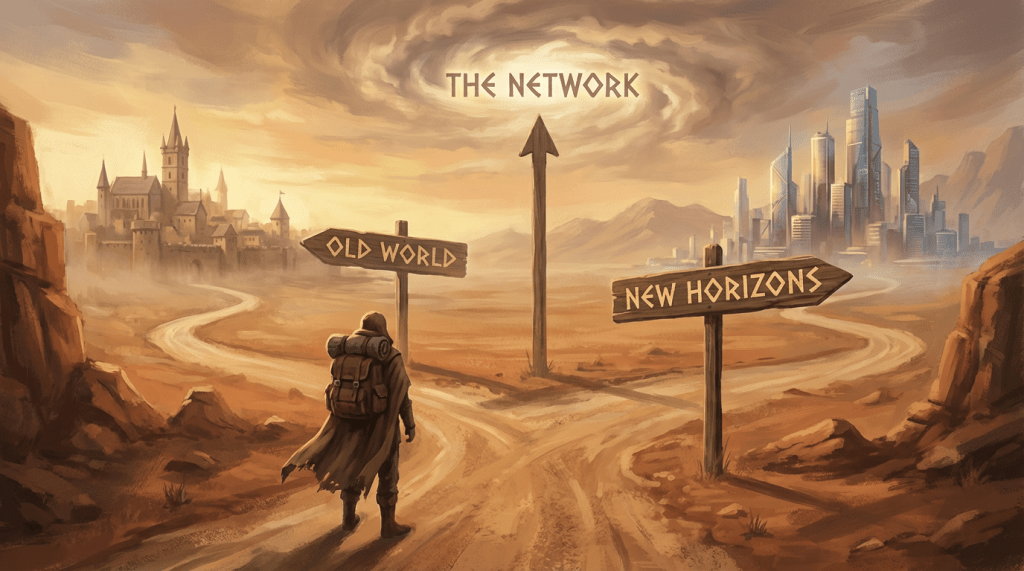
The city as a platform?
The city of the future is not just a place on a map; it is a platform. Just as we choose between iOS and Android based on the ecosystem and user experience, we will increasingly choose our jurisdictions based on the “governance product” they offer.
Whether it’s the digital ease of Estonia, the collaborative culture of Espoo, or the car-free utopia of Culdesac, the unbundling of sovereignty is underway. This competition creates a powerful incentive for better governance. It challenges the complacency of monopolies and empowers the individual.
The risks of segregation and democratic deficit are real and must be managed. But the potential – a world where governance is responsive, efficient, and tailored to human needs – is too significant to ignore.
We are moving from a world where we are born into a contract, to one where we sign up for the service that serves us best.

Next week, we are celebrating Christmas, so no post – enjoy your holidays and have a marvellous time!
Ready to build a better tomorrow for our cities? I’d love to hear your thoughts, ideas, or even explore ways we can collaborate. Connect with me at info@fannimelles.com or find me on Twitter/X at @fannimelles – let’s make urban innovation a reality together!
 Vitruvian Solutions
Leave a comment