Imagine standing on a bustling street corner in a city you’ve never visited, but one that feels strangely familiar. The air is crisp, filled with the hum of electric vehicles gliding past, and green spaces weave through towering buildings like threads in a tapestry. People from all walks of life gather in communal hubs, sharing ideas over coffee while children play in parks that double as flood defences. This isn’t a scene from a science fiction novel – it’s a glimpse into what a well-visioned urban future could look like. But how do we get there? It starts with visioning, a process that turns dreams into blueprints for better cities. In this article, we’ll explore what visioning means, how it links to strategies and tactics through a self-reinforcing loop, its advantages and challenges, real-world examples, and what the future holds. By the end, you’ll see why embracing this approach is key to building thriving urban environments.
What is visioning?
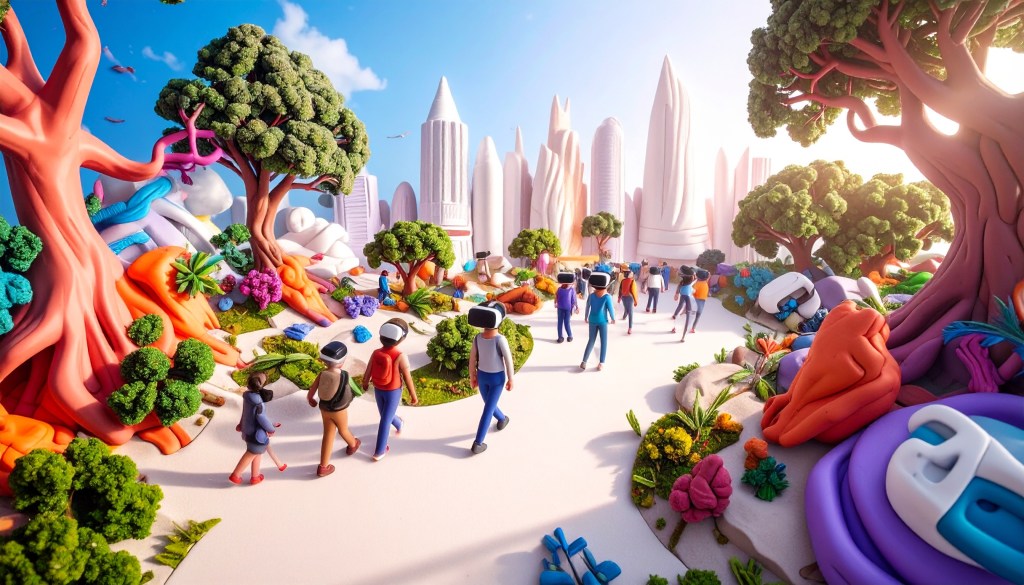
Visioning is the process of imagining and defining a desired future for a community or city. It’s about creating a shared picture of urban life years ahead, tackling issues like overcrowding or climate pressures. Stakeholders – residents, businesses, officials, and experts – come together in workshops, forums, or meetings to build this. Tools like sketches, simulations, or virtual reality help visualise ideas. For example, locals might picture pedestrian streets with rooftop gardens supplying fresh food. This sets inspiring goals that reflect values such as resilience.
Visioning connects to strategies and tactics by forming a guiding framework where the vision provides the ‘why‘, strategies the ‘how‘, and tactics the ‘what‘. Strategies are broader plans that prioritise resources to achieve the vision, while tactics are specific actions that implement those plans. The key is the feedback loop: results from tactics inform and refine strategies, which in turn sharpen the vision.
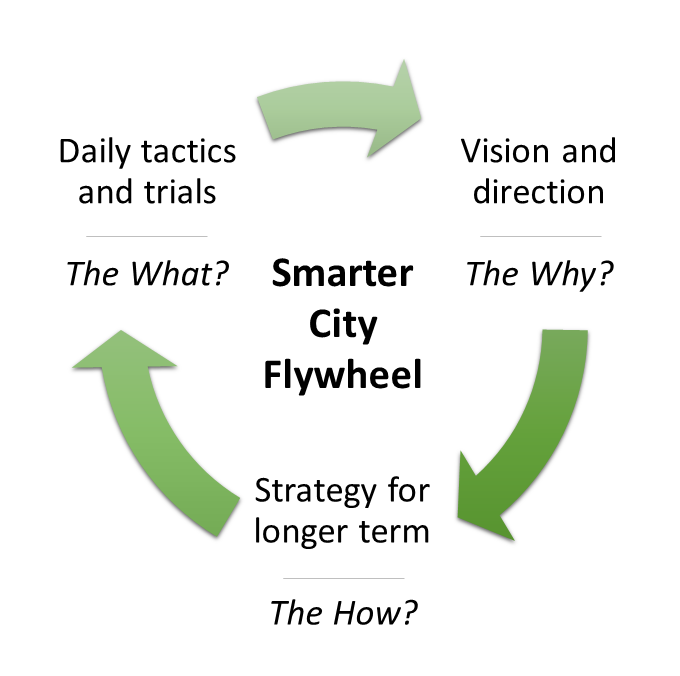
One example of this connection in action is the ‘Smarter City Flywheel’ concept – a self-reinforcing loop like a heavy wheel that builds momentum once spinning. Here, the vision sets the initial direction, guiding long-term strategies and day-to-day tactics or trials. As these are rolled out, they generate feedback that adapts the vision, evolving tactics and accelerating progress toward the city’s goals. This iterative cycle ensures continuous improvement, with no fixed end point.
Visioning can take different forms: ambition-based, where bold, transformative goals drive big leaps forward, or iteration-based, focusing on gradual refinements through ongoing feedback and small adjustments. Ambition-based visioning suits radical overhauls, like reimagining entire transport systems, while iteration-based works for adaptive scenarios, such as responding to emerging tech. This tension between bold aspirations and practical grounding is explored in episode 375R of the What is The Future for Cities? podcast revealing how positive visions counter dystopian fears and drive systemic urban change:
What can visioning offer us?
Visioning offers several compelling advantages that can drive meaningful urban progress, but it also comes with notable challenges that require careful navigation. Let’s unpack these in more detail to understand its full potential and pitfalls.
On the advantages side, one major strength is its capacity to foster unity and motivation. By bringing together a wide range of voices in collaborative sessions, visioning creates a sense of shared ownership. This isn’t just about agreement – it’s about energising people to commit to the long haul. For instance, when a community visualises a transformed waterfront from industrial relic to recreational haven, residents become advocates, volunteering for clean-ups or lobbying for funding, which sustains momentum even through setbacks.
Another key advantage is sparking innovation. Visioning pushes beyond conventional thinking, encouraging creative solutions to entrenched problems. In a world of rapid change, this long-term perspective helps cities anticipate shifts like technological advancements or environmental demands. The flywheel effect enhances this: as tactics yield small wins, like a successful bike-share trial, they loop back to inspire bolder strategies, compounding innovation over time.
Additionally, visioning provides clarity and direction in complex urban systems. Without it, efforts can scatter, but a clear vision aligns resources efficiently, reducing waste and focusing on high-impact areas. Studies show that cities with strong visioning processes achieve better outcomes in infrastructure projects, as the shared goals streamline decision-making.

What we need to be conscious of?
However, visioning isn’t without challenges. It demands significant time and resources, from organising inclusive workshops to analysing feedback. Not every city has the expertise or funding for skilled facilitators, leading to uneven participation or rushed processes that undermine results. In smaller communities, this can mean visioning efforts fizzle out before gaining traction.
A related challenge is the risk of ‘vision fatigue’. If sessions produce grand ideas without quick follow-through, enthusiasm wanes. People might attend initial meetings full of hope, only to disengage when tactics lag, eroding trust in the process.
Unrealistic expectations pose another hurdle. Visions can soar into idealism, overlooking practical constraints like tight budgets, regulatory hurdles, or political shifts. This disconnect might lead to disillusionment when ambitious plans hit roadblocks, stalling the flywheel before it spins.
Finally, without strong leadership, visions can remain abstract exercises. Effective visioning needs champions to bridge the gap to implementation, ensuring feedback loops function. In its absence, the process risks becoming a box-ticking activity rather than a transformative tool.
Overall, while the advantages – unity, innovation, clarity – can outweigh the challenges when managed well, success hinges on realistic scoping, robust facilitation, and commitment to action. Balancing bold ambitions with iterative adjustments helps mitigate downsides, keeping the process dynamic and effective.

Examples of visioning in action
Stories from around the world highlight visioning’s power. In Copenhagen during the 1970s, traffic and pollution dominated. Citizen visioning dreamed of people-first spaces. The flywheel started: vision of bike-friendly streets guided strategies like expanding lanes, with tactics such as street closures and cycling incentives. Feedback from usage refined approaches. Now, over 60% commute by bike. Picture cycling Strøget, Europe’s longest pedestrian street, in car-free ease – that’s the flywheel in motion. In Melbourne, the 2008 ‘Future Melbourne’ plan collected over 1,000 resident ideas for a 2026 vision of a connected, vibrant city with green spaces. The flywheel turned: vision shaped urban renewal strategies in Docklands, tactics like art installations and gardens. Outcomes looped back, adapting plans. Federation Square stands as a symbol. Detroit‘s post-2008 revival used community sessions to envision farms and maker spaces in blighted areas. Vision drove economic strategies; tactics included entrepreneur grants. Feedback revitalised spots like Eastern Market. Some falter, like certain Indian smart city plans where implementation lagged, stressing grounded tactics to maintain flywheel momentum. These cases show transformation when the loop reinforces itself.
An Australian perspective on using visions to build resilience, belonging, and leadership through clear narratives and accountability comes from episode 376I of the What is The Future for Cities? podcast, interviewing Jocelyn Chiew – it shows how storytelling turns ideas into actionable urban hope:
Outlook for visioning in urban futures
Visioning will advance with tech and challenges. AI simulations and virtual reality make sessions immersive and reachable. Picture VR walks through future cities, adjusting with global input in real-time. With urban populations hitting 68% globally by 2050, visioning tackles pressures. Data integration blends creativity with precision, keeping the flywheel agile. Challenges include fast changes outrunning visions. Stay optimistic by adapting: flexible processes that revisit regularly. Democratisation via online platforms ensures diverse visions, sustaining the flywheel for evolving cities.

Visioning powers urban change through concepts like the smarter city flywheel – a self-reinforcing loop where vision directs strategies and tactics, while their results refine the vision anew. It unites, innovates, and prepares long-term, though it requires care against delays or unrealism. Copenhagen’s cycles, Melbourne’s hubs, and Detroit’s renewals demonstrate closing the gap to ideal cities. Facing tomorrow’s unknowns, visioning is vital.
Your move?
Kickstart the flywheel locally: attend a workshop, post ideas online, or sketch your neighbourhood dream.
Urge leaders to adopt this loop, act on collective visions, and recall – every thriving city spun from a turning flywheel.
Let’s propel the urban futures we envision, step by reinforcing step.
Next week, we are investigating the effects of positive visioning on improving urban futures!
Ready to build a better tomorrow for our cities? I’d love to hear your thoughts, ideas, or even explore ways we can collaborate. Connect with me at info@fannimelles.com or find me on Twitter/X at @fannimelles – let’s make urban innovation a reality together!
 Vitruvian Solutions
Leave a comment