In an era where more than half the world’s population calls cities home, housing stands as the unspoken backbone of urban life. From the bustling streets of Tokyo to the historic districts of Vienna, affordable and accessible homes are not just shelters – they are the threads that weave together economic vitality, social cohesion and resilience. Yet, as urban populations swell, a global housing crisis threatens to unravel this fabric. By 2030, the United Nations estimates that 3 billion people will require adequate housing, demanding the construction of 96,000 affordable units each day. This article explores why housing is indispensable for the future of cities and spotlights innovative solutions emerging from diverse corners of the globe. Drawing on policies that prioritise ingenuity, alongside advances in design and construction, it argues that with bold action, cities can transform housing from a point of contention into a cornerstone of prosperity, resilience and antifragility.

The indispensable role of housing in urban futures
Cities are engines of opportunity, drawing migrants, innovators and dreamers in search of better lives. But without stable housing, this promise falters. Housing influences every facet of urban existence, from economic productivity to public health, making it a linchpin for resilient development.
Economically, housing underpins growth by enabling workforce stability. When residents spend less than 30 per cent of their income on rent – a benchmark for affordability – they free up resources for education, entrepreneurship and consumption, fuelling local economies. In contrast, high housing costs stifle mobility; workers trapped in unaffordable suburbs face longer commutes, reducing productivity and exacerbating divisions. Research from the OECD highlights how national housing policies that promote compact urban forms can enhance affordability while curbing sprawl, preserving arable land and reducing infrastructure costs. In the United States, for instance, housing access determines proximity to job-rich areas, public transport and high-speed internet, directly impacting career advancement and innovation.
Socially, housing fosters community. Adequate homes prevent homelessness and family separations, while developments that attract a variety of people bring diverse skills and perspectives, making communities more adaptable and capable of withstanding challenges than homogenous ones. The UN-Habitat framework redefines housing not merely as shelter but as a socio-cultural system that integrates environmental, social and economic dimensions to build prosperous neighbourhoods. In cities like New York, integrating public housing with new infill developments has created connected public spaces – streets, parks and squares – that bridge isolation and promote social interaction. This is vital for mental health; studies link housing instability to higher rates of anxiety and depression, particularly among low-income families and migrants. Redefining social housing as economic infrastructure strengthens this virtuous cycle by quantifying long-term societal costs and private-sector pathways, as outlined in episode 263R of the What is The Future for Cities? Podcast:
Environmentally, housing shapes cities’ ability to withstand shocks. Compact, energy-efficient homes reduce reliance on cars and energy grids, aligning with global goals for resilience against climate events. Designs with better insulation and renewable integrations can cut operational energy use by up to 50 per cent, while also enhancing antifragility to floods and heatwaves. As urbanisation accelerates – projected to reach 68 per cent globally by 2050 – housing policies must prioritise adaptive building to avert ecological collapse.
In essence, housing is infrastructure for human flourishing. As one analysis puts it, it is so essential to individual and collective life that it qualifies as a human right, demanding investment akin to roads or railways. Neglect it, and cities risk becoming divided fortresses of wealth amid sprawling slums. Antifragility, as defined by Nassim Taleb, goes beyond resilience by enabling systems to improve from stressors, offering a framework for urban housing that thrives on uncertainty and evolves through adaptation.
Beyond immediate shelter, housing serves as foundational infrastructure that frees individuals from survival concerns, enabling long-term planning and innovation. When people no longer worry about housing – or where their next meal comes from – they can shift focus from mere daily survival to broader horizons. This mental bandwidth fosters personal growth, entrepreneurial ventures and community contributions, all crucial for cities’ advancement. Stable homes allow families to invest in education, skills development and future-oriented decisions, such as saving for retirement or starting businesses. In antifragile terms, this creates a virtuous cycle: resilient individuals build stronger communities that adapt and improve amid economic shifts or crises. Cities like those pioneering modular builds demonstrate how affordable, reliable housing unlocks human potential, driving prosperity through collective visioning rather than short-term scrambling.
This unlocking of potential mirrors Robert Pradolin’s view of housing as economic infrastructure, where private-sector innovation stabilises communities for long-term prosperity, as explored in episode 264 of the What is The Future for Cities? Podcast:
Navigating the global housing crisis
The scale of the challenge is daunting. Across continents, housing affordability has plummeted; in major cities, the price-to-income ratio has risen steadily, with many residents now dedicating over 40 per cent of earnings to rent or mortgages. The Demographia International Housing Affordability Report for 2023 rated markets in eight nations, revealing severe unaffordability in places like Sydney and Vancouver, where ratios exceed 9 – meaning a typical home costs nine years’ income.
Supply shortages drive this crisis. In developing cities, rapid migration outpaces construction, leading to informal settlements that house one billion people today and could double by 2030. Even in affluent nations, zoning restrictions and speculative investment inflate prices. In the US, for example, underbuilding since the 2008 financial crash has left a 4-5 million unit deficit. Demand-side pressures compound this: low interest rates once spurred buying, but rising rates now lock out first-time buyers, while short-term rentals like Airbnb reduce long-term stock.
The repercussions ripple outward. Homelessness surges – Finland’s pre-policy rates were Europe’s highest, at 18,000 in 1987 – and delays in life milestones hinder progress, as young people postpone family formation. Environmentally, sprawl erodes biodiversity, while energy-inefficient homes heighten vulnerability to global disruptions. Politically, housing fuels unrest; protests in Barcelona and Dublin underscore public frustration.Kohler (2024)
Yet, this crisis is not inevitable. A holistic response – balancing supply increases with demand regulation, and incorporating design and construction innovations – offers a path forward, as evidenced by cities worldwide. By embracing antifragility, urban systems can gain from disorder, evolving stronger through shocks like pandemics or economic shifts. Such holistic responses require rethinking affordability norms, a shift examined in episode 289R of the What is The Future for Cities? Podcast, which reframes housing costs within evolving urban economic and policy contexts:
Solutions from around the world: Lessons in innovation
Cities are laboratories for housing reform, blending policy, technology and community action. From Asia’s density pioneers to Europe’s models, these prove that targeted interventions can restore balance. Governance-led approaches have set foundations, but complementary advances in the built environment – from modular assembly to adaptive repurposing – accelerate delivery and enhance resilience. Antifragile planning embraces uncertainty, fostering self-organisation and adaptability that allow housing systems to improve under stress.
Solutions from the governance side
Vienna, Austria: Social housing as a right
Vienna’s approach exemplifies public ownership at scale. Since the ‘Red Vienna’ era of the 1920s, the city has built over 220,000 municipal units, housing 30 per cent of residents at rents capped at 20-25 per cent of income, funded by a 1 per cent income-based housing tax plus employer contributions. Gemeindebauten – communal buildings – require no deposit and include amenities like playgrounds and gardens, with partnerships ensuring rent controls persist. This model integrates high-quality design: energy-efficient facades and green spaces reduce utility bills by 30 per cent, yielding top global livability rankings and low homelessness. Such systems build antifragility by allowing housing to evolve through inhabitant actions and historical adaptations.
This emphasis on self-organisation aligns with Manfred Schrenk’s approach to urban planning, where existing city fabric is repurposed to enhance resilience, as discussed in episode 374 of the What is The Future for Cities? Podcast:
Singapore: High-density harmony
Singapore houses 82 per cent of its 5.6 million residents in public flats managed by the Housing Development Board (HDB), established in 1960 to combat post-colonial slums, with subsidised sales under 99-year leases financed via the Central Provident Fund and a five-year resale minimum curbing speculation. Developments up to 50 storeys incorporate vertical gardens and skyways, creating self-contained hubs with schools and shops within walking distance, at costs like S$300,000 for a three-room flat – half the private market price. This has slashed homelessness to near zero and boosted ownership to 92 per cent, with upgrades addressing aging estates, offering lessons for megacities on planning. The approach enhances antifragility by embedding redundancies and plasticity, allowing structures to adapt to population fluxes.
Tokyo, Japan: Zoning for abundance
Tokyo defies the crisis through permissive zoning: just 12 categories based on nuisance levels allow flexible density, enabling rebuilds of older homes into taller structures, with property taxes declining over time to incentivise new builds and earthquake-resistant designs prioritising efficiency. Rents for a one-bedroom apartment in central wards sit at roughly ¥80,000 ($500 USD) monthly, with a 2025 policy targeting middle-income and single-parent households for 10,000 low-cost rentals annually near transit. Results include average home sizes of 95 square metres, ample supply and stable prices amid population decline, suggesting Western cities ease height limits and tax vacant properties. This flexibility promotes antifragility, as urban forms evolve through duplications and exaptations in response to demographic stressors.
Market-driven solutions: Letting supply respond freely
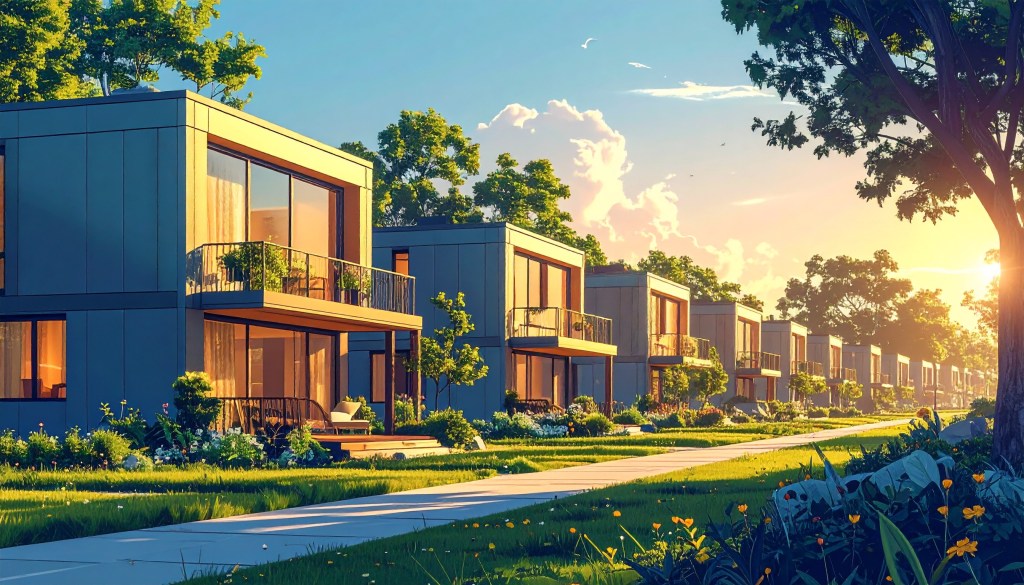
To avoid over-reliance on governance, market-driven approaches reduce barriers, allowing supply to balance demand organically. Houston, Texas, exemplifies this with no traditional zoning, fostering a decentralised regulatory climate that enables flexible development and keeps housing relatively affordable despite growth. Developers respond quickly to market signals, building diverse housing types from townhomes to apartments, resulting in lower price-to-income ratios than zoned peers like Dallas – where average home prices are about 14 per cent higher. While this means occasional proximity to industrial sites, it proves cities can thrive without rigid controls, promoting antifragility through adaptive private initiatives. Denmark’s mortgage market, free of government-backed enterprises, offers prepayable fixed-rate loans at lower costs, showing private finance can stabilise housing without subsidies.
Built environment innovations: Design and construction revolutions
Beyond frameworks, breakthroughs in materials, assembly and repurposing slash costs and timelines while embedding resilience. These treat the built environment as an active partner, delivering homes quicker to erect, cheaper to maintain and able to thrive under stressors. Antifragility in buildings arises from “shearing layers” that allow differential rates of change, enabling evolution through unpredictability. The shearing layers concept builds on a broader evolution of building adaptability, critically reviewed in episode 373R of the What is The Future for Cities? Podcast, which traces how design strategies have shifted toward long-term structural resilience:
In Minneapolis, modular construction erects affordable units in weeks, with factory-built modules stacked on-site, cutting labour costs by 20 per cent and addressing shortages while minimising urban disruption. Similar in Halifax for flood-prone areas. In South Africa, 14Trees’ 3D-printed homes form walls in 24 hours at $4,000 per unit, expandable for growing families. India’s Chennai prototypes withstand monsoons with local materials; Texas’ ICON builds 100-home communities with solar integrations. These foster antifragility through redundancy and flux. Passive standards in the UK slash heating by 90 per cent via insulation; Manchester delivers units 15 per cent cheaper. Thailand’s Bangkok prototypes use ventilation for humidity; Japan’s Kobe post-quake rebuilds are quake-proof. Passive buffers energy shocks. Adaptive reuse in New York converts offices to 950 residences; California‘s schools to 200 units; Barcelona’s factories to co-living, reusing materials. Old buildings enable experimentation, aging gracefully for antifragile evolution.
These innovations complement by amplifying output, potentially meeting half the world’s need through efficiencies.
Broader innovations: From trusts to tech
Globally, community land trusts (CLTs) lock affordability in perpetuity. Boston’s Dudley Neighbors protects 30 acres for 228 units plus farms and playgrounds. Public-private partnerships (PPPs) thrive in Sydney‘s $2.2 billion Ivanhoe redevelopment, yielding 950 social homes.
Technological leaps accelerate supply. India’s GFRG panels cut costs 20-30 per cent, tackling a 34 million unit gap. In Texas, 3D-printed communities build 100 homes in days at 20 per cent savings. Demand curbs, like Barcelona’s rent index for legal challenges, empower tenants. New Zealand‘s infrastructure funding and foreign buyer bans have unlocked supply, though zoning reversals highlight political hurdles.
These solutions underscore a truth: no one-size-fits-all, but common threads – subsidies, land control, anti-speculation measures and design efficiencies – yield results.

Charting a housed horizon
Housing is not peripheral to cities’ futures; it is their pulse. By embracing Vienna’s scale, Singapore’s density, Tokyo’s flexibility, Helsinki’s priority, Houston’s market freedom – alongside modular in Minneapolis, printed in Chennai and passive in Manchester – leaders can forge prosperous, resilient metropolises. As pressures mount, the choice is clear: build or risk collapse.
With will, cities ensure every resident has a stake in tomorrow, thriving through antifragility.
Next week, we are investigating the effects of positive visioning on improving urban futures!
Ready to build a better tomorrow for our cities? I’d love to hear your thoughts, ideas, or even explore ways we can collaborate. Connect with me at info@fannimelles.com or find me on Twitter/X at @fannimelles – let’s make urban innovation a reality together!
 Vitruvian Solutions
Leave a comment