
What if the cities of the future could be built not just to house us, but to heal the planet? As urban populations swell—projected to reach 68% of the global total by 2050—the way we construct our buildings will define the sustainability of tomorrow’s metropolises. Beyond the energy they consume, buildings carry a hidden carbon footprint: embodied carbon, the emissions locked into materials before a structure even opens its doors. We’ll explore how carbon emissions, particularly embodied carbon, will influence urban futures, exploring Scope 1, 2, and 3 classifications, sector-specific impacts, and the challenges and opportunities ahead. From residential towers to industrial hubs, we’ll uncover why this often-overlooked factor is key to designing cities that thrive sustainably.
Picture a skyline where every building’s carbon story is as transparent as its glass facades. We’ll break down the science, spotlight why embodied carbon is a game-changer for urban planning, and offer actionable steps to turn cityscapes into climate solutions.

What are carbon emissions and the Scopes?
Carbon emissions in the building sector are categorized into three scopes under the GHG Protocol, providing a framework to measure and mitigate urban environmental impact. Scope 1 covers direct emissions from sources a city or building owner controls, like gas burned in municipal heating systems or construction equipment. These are the visible plumes rising from urban sites, tangible and immediate.
Scope 2 includes indirect emissions from purchased energy, such as the electricity powering a city’s streetlights or office buildings. While the emissions occur off-site at power plants, they’re tied to urban energy demands, making them a critical piece of the carbon puzzle. Scope 3, however, is the broadest and most complex, encompassing all other indirect emissions across the value chain—like the production of concrete for a new subway line or steel for a skyscraper. This is where embodied carbon lives, often dwarfing Scope 1 and 2 in scale, with estimates suggesting it could represent up to 90% of a building’s total emissions in some cases (Deloitte UK).
Understanding these scopes is vital for cities aiming to hit net-zero targets. While Scope 1 and 2 are manageable through energy efficiency and renewables, Scope 3—and embodied carbon within it—demands a deeper look at supply chains and material choices, challenging urban planners to rethink how cities grow. Alan Pears talks about Scope 1-2-3 emissions on the What is The Future for Cities? podcast‘s 196 episode.
Why embodied carbon matters for the future of cities?
Embodied carbon is the silent giant in urban development, representing emissions from a building’s material lifecycle before it’s even occupied. As cities decarbonize operations with solar panels and efficient HVAC systems, operational carbon shrinks, but embodied carbon’s share grows—projected to account for nearly half of new construction emissions by 2050 (CarbonCure). For future cities, where billions of square meters will rise to accommodate urban migration, ignoring this could derail climate goals. (If you want to learn more about the HVAC situation, check out episode 202 with Sam Ringwaldt on the What is The Future for Cities? podcast – he talks about modular systems!)
Cities are the heartbeat of global economies, yet they contribute 70% of energy-related CO2 emissions (World Green Building Council). Embodied carbon ties directly to urban resilience—choosing low-carbon materials today means less environmental debt tomorrow, ensuring cities remain livable amid rising temperatures and resource scarcity. It’s a chance to build not just structures, but legacies of sustainability.
In the latest interview (episode 306) on the WTF podcast, Tom Petty talks about how embodied carbon is the new kid on the block and why it is currently the Wild West in the building industry:
Sector-specific embodied carbon
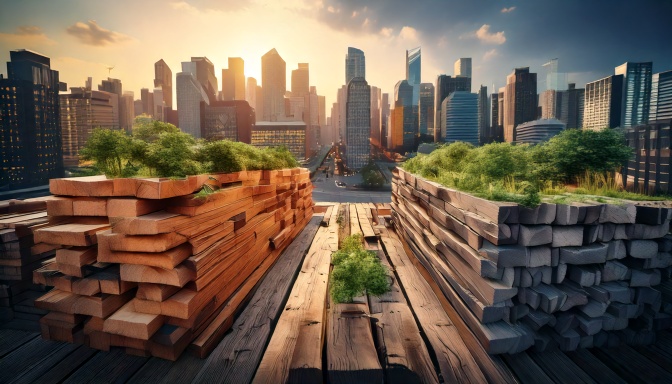
The embodied carbon footprint varies across urban sectors, reflecting their unique material demands. Residential buildings—think apartments and homes—often use wood, concrete, and brick, yielding a moderate embodied carbon range of 400-600 kg CO2e per square meter (Share Your Green Design). Cities like Vancouver showcase this with mass timber projects, cutting emissions through sustainable sourcing.
Commercial zones, packed with offices and retail spaces, lean on concrete, steel, and glass, pushing embodied carbon to 600-1000 kg CO2e/m² (GSA Sustainable Facilities Tool). Industrial districts, home to factories and warehouses, likely exceed this, with heavy concrete and steel use driving emissions well above 1000 kg CO2e/m². Educational facilities—schools and universities—mirror commercial patterns, averaging 600-1000 kg CO2e/m², though innovative designs, like those in Portland’s low-carbon initiatives, show progress (New Buildings Institute).
These differences highlight a tailored challenge: residential areas can lead with timber, while industrial and commercial sectors need breakthroughs in low-carbon concrete and steel to transform urban carbon profiles.
Challenges for embodied carbon
Tackling embodied carbon in cities isn’t straightforward. The supply chain is a tangled web—materials like cement (responsible for 7% of global CO2) and steel are carbon-intensive, and alternatives are often costlier or less available (CarbonCure). Urban planners face data gaps too; life cycle assessments (LCAs) are complex and not yet standard, leaving many projects blind to their full carbon cost.
Retrofitting existing cities adds another layer. Older buildings weren’t designed with embodied carbon in mind, and replacing them risks releasing stored emissions while new construction piles on more. Balancing growth with decarbonization—especially under tight budgets and timelines—puts cities in a bind, demanding innovation without slowing progress.
Opportunities with embodied carbon
Yet, embodied carbon offers a frontier of opportunity. Low-carbon materials like mass timber or carbon-negative concrete (e.g., CarbiCrete’s CO2-absorbing blocks) can slash emissions while boosting urban aesthetics and resilience (Carbon Credits). Cities can also tap circular economy principles, reusing materials from demolished structures to cut waste and emissions.
Policy is a powerful lever—initiatives like Buy Clean California set material carbon limits, nudging markets toward sustainability (New Buildings Institute). Technology, from AI-driven design optimization to LCA tools like One Click LCA, empowers cities to plan smarter, turning embodied carbon into a catalyst for greener urban futures (One Click LCA).
What action can we take?
Cities can act now to harness embodied carbon’s potential. Start with mandating LCAs for all major projects, giving planners clear data to minimize emissions. Incentivize low-carbon materials through tax breaks or subsidies—imagine timber-framed towers becoming the norm. Partnerships with industry can scale innovations, like carbon-sequestering concrete, while public procurement policies can prioritize suppliers with lower embodied carbon footprints.
Engage communities too—educate developers and residents on material choices, fostering demand for sustainable buildings. Pilot projects, like Vancouver’s Green Buildings Policy, can test and refine these strategies, setting blueprints for global urban centers (New Buildings Institute). Action today builds cities that endure tomorrow.
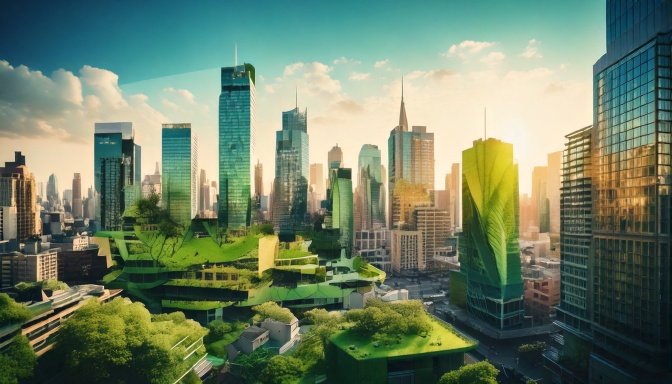
Embodied carbon is poised to redefine urban development as cities race toward net-zero. From Scope 1’s direct emissions to Scope 3’s sprawling value chain, it’s clear that materials matter as much as energy use. Residential, commercial, industrial, and educational sectors each carry unique carbon loads, with industrial zones posing the steepest challenge. While supply chain complexity and retrofitting hurdles loom, opportunities in low-carbon materials, policy innovation, and tech-driven design offer a path forward. The future of cities hinges on turning embodied carbon from a liability into an asset.
Let’s build the cities of tomorrow today.
Urban leaders, architects, and citizens—demand transparency in embodied carbon through LCAs and push for policies that reward sustainable materials. Start small: advocate for a pilot project in your city or choose a low-carbon option for your next build.
Together, we can craft urban landscapes that don’t just stand tall, but stand for a healthier planet.
 Vitruvian Solutions
Leave a comment