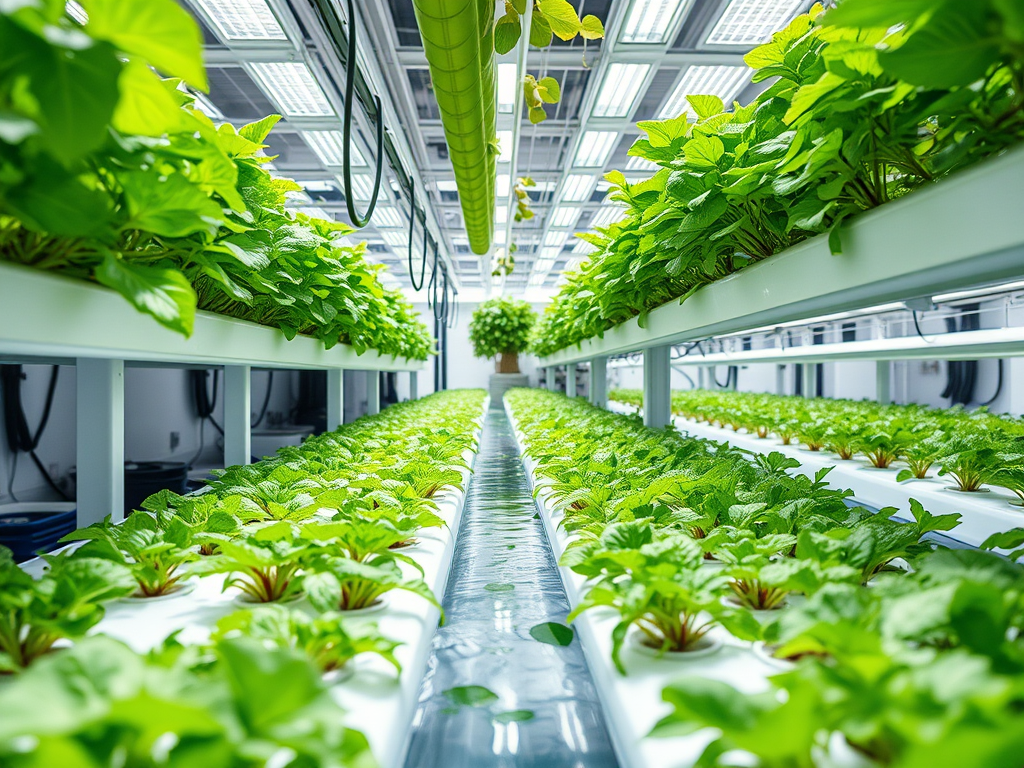
Can we grow fresh produce within urban spaces without depleting precious natural resources?
Vertical farming offers compelling answers to these questions. By rethinking how and where we grow food, it holds the promise of producing high-quality crops in densely populated urban centres while using less land, water, and energy. But to truly appreciate its potential, we must first understand its history and how today’s technologies are shaping its path forward.
What is Vertical Farming? A Brief History
The concept of vertical farming dates back to the early 20th century, when American geologist Gilbert Ellis Bailey introduced the idea of “vertical farming” in his 1915 book Vertical Farming. However, it was not until 1999 that Dickson Despommier, a professor of public health at Columbia University, popularised the modern concept. His vision proposed high-rise farms within cities to grow crops closer to consumers while minimising resource use.
Today, vertical farming is defined as the practice of cultivating crops in stacked layers or vertically inclined surfaces, often in controlled indoor environments. It combines agricultural innovation with cutting-edge technology to produce food more efficiently and locally. Nadun Hennayaka of Gaia Project Australia talked about the opportunities with vertical farming creating at least a percentage of the required ‘food ball’ on the What is The Future for Cities? Podcast‘s 278th episode:
As urban populations grow, cities must address the challenges of food supply, resource management, and carbon reduction. Vertical farming offers a solution, producing fresh, nutrient-rich food locally while cutting transport emissions and ensuring faster, higher-quality delivery. Traditional farming requires roughly 2,000–3,000 square metres per person annually, while vertical farming can reduce this to just 30–50 square metres (and can be stacked vertically – hence the name), freeing valuable urban space. With climate change increasing supply chain risks, vertical farming’s controlled environments provide reliable, year-round production, enhancing food security and sustainability while paving the way for resilient, self-sufficient cities.
Vertical farming’s promise is clear: fresh produce grown year-round in urban settings with minimal environmental impact. Yet, turning this vision into reality depends on the integration of several advanced technologies. Some of these, like controlled environment agriculture (CEA), are already well-developed, while others, such as fully automated robotics or renewable-powered farms, are still evolving. Adam Dorr from RethinkX talked about the emerging clean technologies that transform not just vertical farming but food production in general (ep 222 on the What is The Future for Cities? Podcast):
So, what technologies underpin vertical farming, and how close are we to widespread adoption? Let’s start with CEA, the beating heart of every vertical farm.
Controlled Environment Agriculture (CEA): The Foundation of Vertical Farming
The backbone of vertical farming is controlled environment agriculture (CEA), which creates optimal growing conditions indoors, regardless of external climate or geography. Here’s how it works and where we stand with its adoption.
1. Climate Control Systems
CEA uses advanced systems to regulate temperature, humidity, and carbon dioxide levels, enabling year-round production. Current technologies are reliable and widely implemented in vertical farms. For instance, Singapore’s Sustenir Agriculture grows kale and strawberries in tropical heat, thanks to precise climate control. However, high energy costs for cooling remain a challenge. Integrating renewable energy sources could mitigate this, but solutions are still in early stages of adoption.
2. LED Lighting
Modern vertical farms depend on energy-efficient LEDs to provide the specific light spectra (e.g., red and blue) that plants need. LEDs have become cheaper and more efficient over the years, making them widely accessible. Still, the energy footprint of constant lighting is substantial, and farms are increasingly exploring solar power integration or smart light-timing systems to reduce costs.
3. Soilless Farming Systems
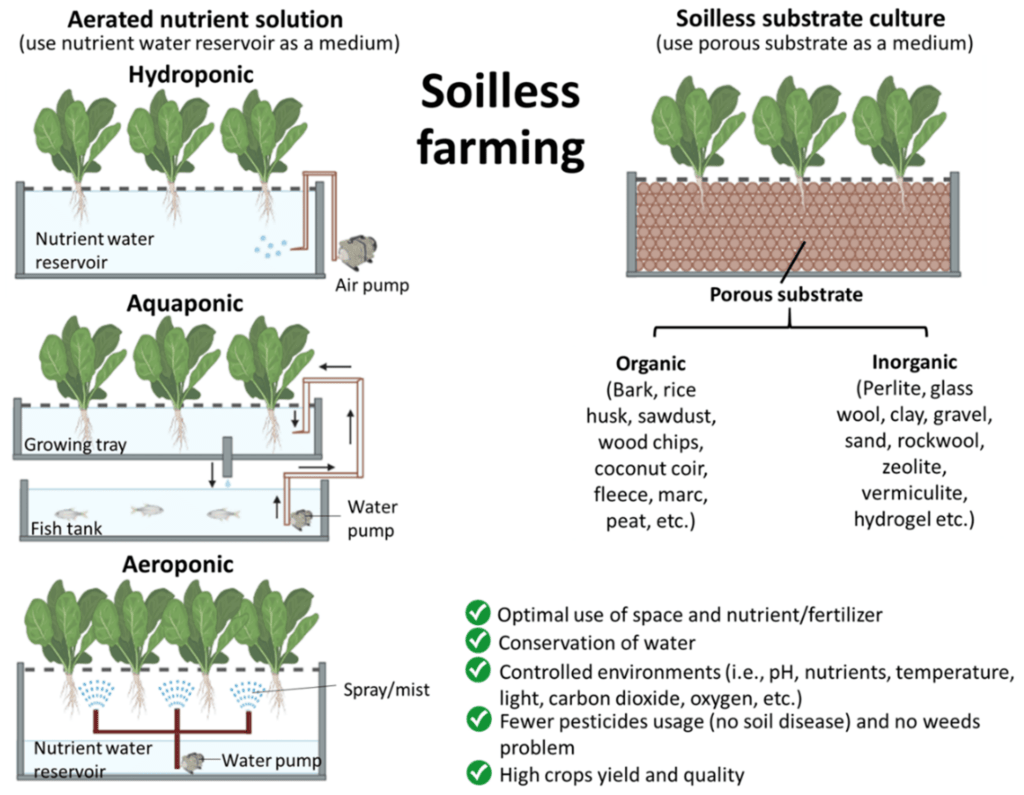
Soilless systems—hydroponics, aeroponics, and aquaponics—are central to vertical farming’s success. They significantly reduce water and nutrient waste. Hydroponics is widely used and commercially viable, while aeroponics, though more efficient, requires higher technical expertise. Aquaponics remains niche due to its complexity but offers exciting opportunities for symbiotic ecosystems.
Despite these advances, scalability is an issue. Small-scale operations thrive, but large-scale deployment requires substantial investment and expertise, often limiting accessibility to wealthier nations.
Controlled environment agriculture (CEA) lays the groundwork for vertical farming by creating optimal conditions for crop growth, but its success hinges on more than just controlled climates and efficient lighting. To truly realise the potential of vertical farming, a robust ecosystem of supporting technologies is essential. These innovations, including automation, IoT, artificial intelligence, and renewable energy, enable farms to operate at scale, minimise resource use, and adapt to changing demands. Together, they transform vertical farming from a promising concept into a sustainable and practical solution for urban food production. Let’s examine these complementary technologies and assess their readiness to power the cities of tomorrow.
Automation and robotics: the future of labour efficiency
Automation is transforming agriculture, and vertical farming is no exception. Robotics now manage planting, harvesting, and monitoring tasks with impressive precision. Farms like Plenty in California rely heavily on automation to maintain efficiency. However, the cost of robotic systems remains prohibitive for smaller ventures. As these technologies become cheaper and more accessible, they could revolutionise farming at all scales.
Sensors and IoT: the data revolution in farming
The Internet of Things (IoT) connects sensors that monitor temperature, humidity, light, and pH levels in real-time, enabling farmers to make data-driven decisions. These systems are widely available and have been adopted in farms across Europe and Asia. However, data management and cybersecurity are emerging concerns, particularly as farms grow more dependent on interconnected systems.
AI and predictive analytics: smarter decisions for better yields
Artificial intelligence (AI) analyses sensor data to optimise farm operations. AI-driven algorithms adjust light schedules, nutrient delivery, and watering cycles, ensuring maximum efficiency. Farms like the Netherlands’ PlantLab are already leveraging AI to achieve remarkable yields. While the technology is advanced, it often requires significant training and infrastructure to deploy effectively, making it less accessible to smaller farms.
Water management
Vertical farming uses up to 95% less water than traditional agriculture by employing recirculating water systems. These systems are highly efficient but require advanced filtration technology to remove impurities. Countries like Israel, known for their water conservation innovations, are leading in this area, but less developed regions may struggle with access to such systems.
Renewable energy integration: powering the future
The high energy demands of vertical farms have driven interest in renewable energy sources. Solar panels and wind turbines are increasingly being integrated, particularly in regions with favourable climates. However, adoption remains inconsistent due to upfront costs and technical challenges.
[Editorial note: nuclear power??]
Urban integration: farms in the city
Vertical farming is especially appealing in urban settings, where space is limited, and food needs are high. Many farms repurpose abandoned warehouses or even design farms into new buildings. For instance, Infarm has established in-store farming units in supermarkets across Europe. While this concept has seen growing interest, zoning regulations and high property costs can be barriers. Square Roots is an urban farming company that uses modular indoor farms, often in refurbished shipping containers, to grow fresh, pesticide-free produce year-round, delivering locally grown food directly to urban communities while minimising food miles.

The Promise and Challenges of Vertical Farming
Vertical farming offers a glimpse into a sustainable future where cities grow their own food, reducing reliance on traditional supply chains. It addresses critical issues such as land scarcity, water conservation, and climate change. However, it is not without challenges. High energy costs, the complexity of scaling, and accessibility issues remain significant hurdles.
Despite these barriers, the potential is immense. Technologies like climate control, soilless farming, and automation are mature and ready for wider adoption, while advances in AI, IoT, and renewable energy promise even greater efficiency. To fully realise this vision, we must focus on reducing costs, increasing accessibility, and integrating vertical farming into urban policies.
Next Steps: Building the Future of Food
- Innovate Further: Focus on reducing energy consumption and integrating renewable sources.
- Improve Accessibility: Develop scalable solutions for small and medium-sized operations.
- Policy Support: Governments must incentivise urban agriculture through subsidies and relaxed zoning laws.
- Collaboration: Build partnerships between technology providers, researchers, and urban planners to advance the field.
What role do you think vertical farming should play in solving global food challenges? Should cities prioritise investing in this technology, or are there better solutions for urban agriculture? Share your thoughts and let’s explore the future of food together.
 Vitruvian Solutions
Leave a comment