As urbanisation accelerates across the globe, cities are becoming the epicentres of human activity, innovation, and economic growth. By 2050, an estimated 68 per cent of the world’s population will reside in urban areas, up from 57 per cent today. This rapid shift, while offering immense opportunities, places unprecedented pressure on critical resources such as water, energy, land, and materials. Effective resource management is no longer optional – it is a cornerstone for ensuring cities remain liveable, equitable, and resilient. Moreover, adopting a holistic approach to resource management, one that integrates systems and prioritises long-term outcomes, can deliver transformative benefits not only for urban environments but for humanity as a whole. This post explores why resource management is vital for the future of cities and how holistic strategies can pave the way for a more resilient and equitable world, drawing on global examples and practical insights.

The urban resource challenge
Cities are remarkable in their efficiency, housing over half the global population on less than 3 per cent of the Earth’s land surface. Yet, this density comes with significant challenges. Urban areas account for approximately 75 per cent of global energy consumption and a similar share of greenhouse gas emissions. As urban populations grow, the demand for resources intensifies, often outstripping local supplies and straining global systems.
Water scarcity is a pressing issue in many cities. Rapid urban growth, particularly in developing regions, leads to over-extraction of groundwater and pollution of surface water sources. For example, Jakarta faces severe land subsidence due to excessive groundwater use, exacerbating flood risks and complicating water supply management. Energy demands are equally critical, with many cities still reliant on fossil fuels, contributing to air pollution and climate change impacts like heatwaves and storms that disrupt infrastructure and supply chains. Waste management presents another hurdle. Urban populations generate vast amounts of solid waste, wastewater, and emissions, often overwhelming existing systems. In cities like Shanghai, the mismatch between food demand and available arable land underscores broader resource imbalances. Additionally, urban expansion often encroaches on agricultural or natural areas, reducing biodiversity and ecosystem services essential for food security and climate regulation.
These challenges are compounded by global competition for resources. Cities rely heavily on imports, which can lead to environmental degradation elsewhere, such as deforestation or mining impacts. Without strategic management, these pressures risk resource shortages, economic instability, and social inequities, threatening the long-term viability of urban life.
Addressing the complex challenges of urban resource strain requires tailored strategies that account for local socio-economic and environmental conditions, as discussed in episode 265R of the What is The Future for Cities? Podcast:
Why resource management matters
Resource management involves the strategic planning, allocation, and monitoring of resources to meet current needs while preserving future availability. In urban contexts, this is critical because city systems are deeply interconnected. Decisions in one area – such as energy provision – ripple across others, like water use or waste generation.
Effective water management, for instance, can prevent shortages through conservation, recycling, and efficient distribution. Cities in arid regions, such as those in Australia, have invested in rainwater harvesting and desalination to secure supplies during droughts. Energy management, through renewable sources like solar or wind, reduces reliance on imports and lowers emissions, improving air quality and cutting costs. Waste management transforms liabilities into assets: recycling reduces the need for virgin materials, while composting supports urban agriculture. Land management ensures balanced use, preserving green spaces that offer cooling, flood control, and mental health benefits.
The benefits are multifaceted. Economically, efficient resource use minimises losses from outdated infrastructure or supply disruptions. Socially, equitable management ensures all residents have access to clean water, energy, and safe environments, reducing disparities. Environmentally, it mitigates degradation, protecting ecosystems that cities depend on. In essence, robust resource management is the foundation for resilient, thriving cities capable of supporting growing populations without collapsing under their own weight.
Effective resource management hinges on holistic frameworks that integrate ecological and social regeneration, a topic explored in episode 355R of the What is The Future for Cities? Podcast:
The power of holistic management
Holistic management takes resource management a step further by viewing cities as interconnected systems where social, economic, and environmental factors interact. Rather than addressing resources in isolation, it integrates water, energy, waste, and land into cohesive strategies. This approach, inspired by frameworks like those used in regenerative agriculture, emphasises multifunctionality, stakeholder collaboration, and adaptive planning [Sustainability, 2024].
For example, instead of treating stormwater as waste, holistic management incorporates it into water supply systems or green infrastructure like rain gardens. Urban metabolism assessments, which map resource flows, help identify inefficiencies and opportunities for circularity – where outputs from one process become inputs for another. Key principles include involving communities, businesses, and governments in decision-making; adapting plans based on new data or challenges; and designing systems that serve multiple purposes, such as parks that provide recreation, flood mitigation, and carbon sequestration.
Holistic management draws from regenerative agriculture principles to create integrated urban systems, offering a framework for managing complex resource interactions through collaborative and adaptive strategies, as explored in episode 356I of the What is The Future for Cities? Podcast with Allan Savory from the Savory Institute:
Benefits for cities and humanity
Holistic management offers significant advantages. Environmentally, it enhances efficiency by minimising waste and emissions. For instance, integrating recycling and reuse into urban systems reduces the need for raw material extraction, preserving natural ecosystems. Economically, it lowers costs through optimised infrastructure: cities that coordinate energy and water systems save on maintenance and imports. Socially, it improves quality of life by ensuring access to resources and creating green spaces that boost mental health and community cohesion.
For humanity, these benefits extend beyond city limits. Healthier, more efficient cities reduce pressure on global resources, easing burdens on rural areas and supporting global food and water security. Holistic approaches also enhance climate resilience, critical as extreme weather events become more frequent. By closing resource loops – such as turning waste into energy or reusing water – cities can operate more like ecosystems, fostering long-term viability.
Regenerative placemaking reimagines cities as vibrant, interconnected ecosystems that prioritise ecological and social benefits, a concept further discussed in episode 312I of the What is The Future for Cities? Podcast with Gilbert Rochecouste from Village Well:
Real-world examples
Several cities demonstrate the power of holistic management. In Alberta, Canada, municipalities like Calgary are adopting circular economy models. By mapping resource flows and engaging communities, Calgary has reduced landfill use and created jobs through waste reduction and material reuse initiatives. This approach integrates economic, social, and environmental goals, showing how holistic strategies can scale.
Singapore offers a compelling case in water management. Unlike Hong Kong, which relies heavily on conventional drainage systems, Singapore uses holistic methods like bioswales and permeable pavements to manage stormwater. Life cycle assessments reveal that these nature-based solutions are more efficient and deliver environmental co-benefits, such as enhanced biodiversity and urban cooling.
Amsterdam’s Rainproof Programme is another standout. By incorporating green roofs, rain gardens, and permeable surfaces, the city manages urban runoff, reducing flood risks and improving resilience. This integrated approach delivers economic savings, strengthens community ties, and supports ecological health.
In Germany, the RES:Z initiative optimises resources at the neighbourhood level. By designing multifunctional spaces – such as green areas that also generate energy – these projects resolve land-use conflicts and enhance efficiency, offering a model for urban districts worldwide.
Similarly, collaborative urban transformation efforts that integrate community engagement and systemic change, such as those led by Regen Melbourne to make rivers swimmable and enhance local ecosystems, demonstrate the power of place-based holistic strategies, as explored in episode 266I of the What is The Future for Cities? Podcast with Alison Whitten from Regen Melbourne:
How to implement holistic management
To adopt holistic management, cities should begin with comprehensive assessments of resource flows to identify inefficiencies. Policies must align across government levels, with incentives to encourage innovation, such as subsidies for renewable energy or green infrastructure. Community engagement is critical to ensure buy-in and address local needs. Technologies like smart sensors and data analytics can monitor usage and inform decisions, while public-private partnerships provide funding for implementation.
Challenges remain, including institutional silos and knowledge gaps. Starting with small-scale pilot projects, such as neighbourhood-level green initiatives, can build momentum and demonstrate benefits [Sustainability, 2024]. Education and awareness campaigns further support adoption by highlighting the value of integrated approaches.
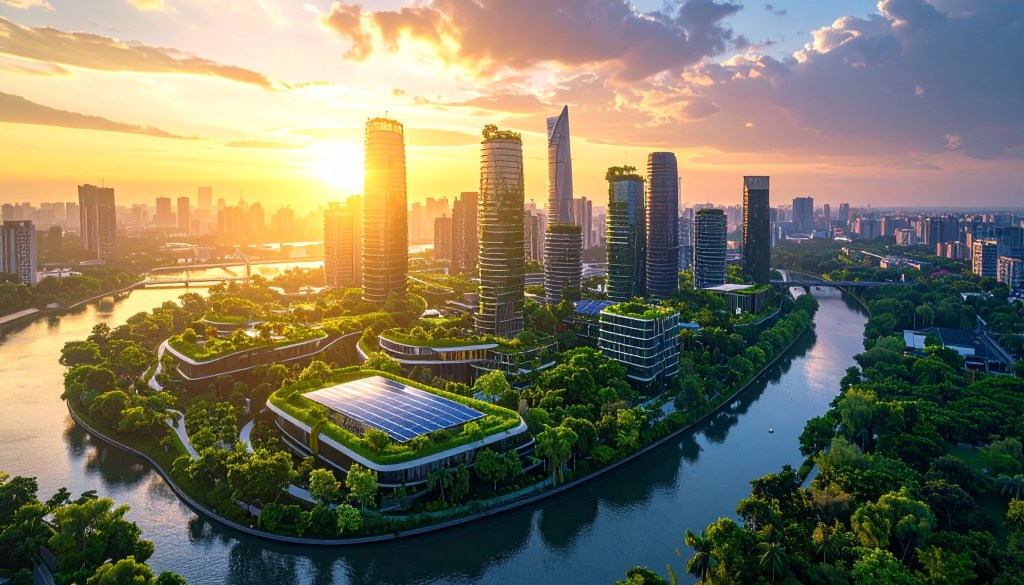
The future of cities hinges on our ability to manage resources effectively. As urban populations grow, the strain on water, energy, land, and materials will only increase. Holistic management offers a path forward by integrating systems, engaging communities, and prioritising long-term resilience. By learning from examples like Alberta, Singapore, and Amsterdam, cities can build a future that is not only liveable but thriving – benefiting both urban residents and humanity as a whole.
The time to act is now: let’s embrace holistic resource management to shape cities that work for everyone.
Next week, we celebrating the last year’s learning on the What is The Future for Cities? podcast as it reaches its 4th birthday!
Ready to build a better tomorrow for our cities? I’d love to hear your thoughts, ideas, or even explore ways we can collaborate. Connect with me at info@fannimelles.com or find me on Twitter/X at @fannimelles – let’s make urban innovation a reality together!
 Vitruvian Solutions
Leave a comment