The future of cities is a complex web of uncertainty, with rapid advancements like artificial intelligence (AI) reshaping urban life at an unprecedented pace. From autonomous vehicles streamlining transport to AI-driven waste management systems optimising resources, these trends offer immense potential but also pose significant challenges. The unpredictability of these shifts, combined with climate change, demographic changes, and economic volatility, demands a rethink of urban planning. Traditional approaches, often rigid and reactive, struggle to keep up with the dynamic nature of modern cities. Strategic foresight offers a solution, empowering planners and communities to navigate uncertainty by envisioning multiple possible futures and preparing proactively. By adopting foresight, cities can build antifragility, resilience and adaptability, ensuring they thrive amid change.
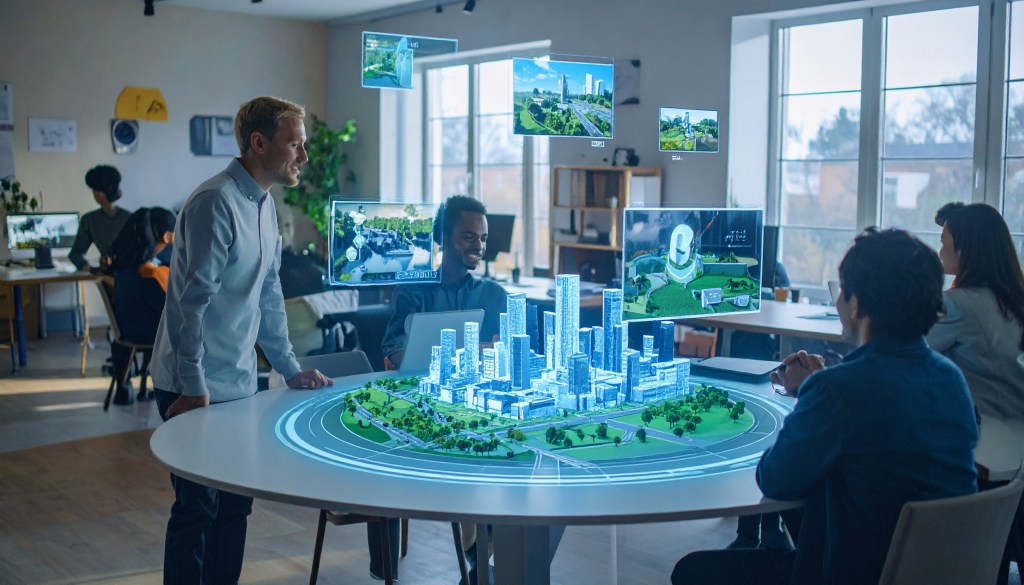
The need for foresight in urban planning
Traditional urban planning often assumes a predictable, “frozen” future, relying on linear projections from current data. This approach assumes trends like population growth or economic stability will follow a steady path, but it falters when disruptions occur. For example, the COVID-19 pandemic revealed the vulnerabilities of urban systems unprepared for sudden shifts like remote work surges or supply chain breakdowns. Similarly, rapid urbanisation and climate impacts have exposed the limitations of static plans, with cities like Jakarta facing sinking land due to over-extraction of groundwater.
Strategic foresight counters these limitations by encouraging planners to think across multiple timeframes. Short-term horizons (up to five years) address immediate needs, such as deploying smart traffic systems to ease congestion. Medium-term planning (five to 20 years) focuses on structural shifts, like retrofitting buildings for energy efficiency. Long-term perspectives (beyond 20 years) tackle transformative challenges, such as adapting to ageing populations or achieving carbon neutrality. These timeframes balance urgent priorities with visionary goals, ensuring cities remain agile.
The core value of foresight is its ability to foster antifragility – the capacity to not only withstand shocks but to grow stronger from them, as outlined by Nassim Nicholas Taleb. Unlike resilience, which focuses on recovery, antifragility leverages disruption for improvement. Cities must anticipate shifts across transport, housing, public health, and equity. For instance, planning for climate change might involve not just flood barriers but also green spaces that serve as water retention systems and community hubs, enhancing both environmental and social outcomes.
Petra Hurtado, on the What is The Future for Cities? podcast, advocates for planners to embrace multiple plausible futures to create urban strategies that adapt to disruptions rather than relying on static projections in episode 352:
Scenario planning in action
Scenario planning, rooted in military and corporate strategy, is a cornerstone of strategic foresight. It involves crafting plausible future narratives based on key drivers like technology, climate, or social trends, then testing policies against them to ensure robust, inclusive decisions. Unlike traditional planning’s focus on a single outcome, scenario planning embraces uncertainty, encouraging stakeholders to ask “what if” and develop flexible solutions.
Real-world applications highlight its impact. In Copenhagen, Denmark, planners used scenario planning to design Enghaveparken, a climate park that mitigates flood risks while providing recreational space. By modelling future climate scenarios, the city created a multifunctional asset that addresses environmental and social needs. Similarly, Roskilde, Denmark, implemented stormwater systems that absorb excess water during storms and enhance urban greenery in dry periods, blending utility with aesthetics. In the United States, Colorado communities have used exploratory scenario planning to prepare for natural hazards, developing tools like early-warning systems through participatory workshops. In Singapore, scenario planning has informed long-term land use strategies, balancing population growth with green space preservation.
Scenario planning also strengthens community ties. By involving residents, businesses, and organisations in workshops, cities foster shared visions. Melbourne’s participatory scenario exercises, for example, have engaged diverse groups to tackle housing affordability and renewable energy adoption, building trust and collective ownership. These dialogues ensure policies reflect community needs, enhancing social cohesion.
The What is The Future for Cities? podcast explores the 2025 Trend Report for Planners in episode 351R, highlighting how trends like demographic shifts and fungi-based innovations can shape urban strategies through scenario planning:
Implications for urban professionals and citizens
Urban professionals – planners, architects, and policymakers – must integrate foresight timeframes into their work to create adaptable cities. For instance, updating zoning laws to accommodate diverse households, such as co-housing for multi-generational families or spaces for remote workers, addresses medium-term demographic shifts. Designing public spaces to counter digital fatigue, like tech-free zones or nature-integrated parks, prepares for long-term societal trends towards balanced living, as screen time continues to rise. Neutrality and evidence-based decision-making are critical, especially for controversial trends like space exploration. Cities like Adelaide, exploring spaceport development, must assess economic benefits and environmental risks without bias. A fact-based approach ensures equitable outcomes and maintains public trust.
Citizens are equally vital to foresight planning, offering local insights that complement professional expertise. They can engage through public consultations, citizen assemblies, or digital platforms, sharing perspectives on emerging trends. For example, community feedback has highlighted fungi-based materials as a sustainable construction option, potentially reducing urban waste and emissions. Citizen support is crucial for scaling such innovations.
In the What is The Future for Cities? podcast, Junaid Islam underscores the importance of citizens actively shaping urban futures by critically assessing technologies and advocating for policies that prioritise community needs in episode 286:
Practical steps include fostering collaboration to identify “weak signals” – early indicators of change, like shifts in commuting or urban farming. Workshops can uncover these signals, enabling cities to stay ahead of trends. For instance, fungi-based material pilots could test sustainable building solutions. Professionals and citizens should advocate for flexible policies to mitigate unintended consequences, such as allowing trialling and making errors for learning and conscious evolution. Feedback loops, like community forums or open-data platforms, ensure policies remain relevant. For example, modular housing projects could use resident input to improve designs for diverse groups.
Discussing urban futures on the What is The Future for Cities? podcast, Carina Gormley advocates for allowance for failure, systems thinking and community-driven solutions to empower citizens in shaping resilient cities in episode 298:
Strategic foresight empowers cities to shape their futures proactively, turning challenges into opportunities. By using tools like scenario planning and fostering collaboration across timeframes, urban areas can build antifragile systems that thrive in uncertainty. This approach ensures cities are inclusive, agile, and prepared for multiple futures.
Urban professionals must adopt flexible frameworks, engage diverse voices, and monitor trends. Citizens should join local initiatives, share insights, and advocate for adaptable policies.
Together, these efforts create vibrant cities ready for any challenge.
What trends are shaping your city?
Is it AI, climate change, or shifting work patterns?
How can foresight help you prepare?
By asking these questions and acting on the answers, we can build urban futures that are antifragile and thriving.
Next week, we will explore the emerging trends for urban futures!
Ready to build a better tomorrow for our cities? I’d love to hear your thoughts, ideas, or even explore ways we can collaborate. Connect with me at info@fannimelles.com or find me on Twitter/X at @fannimelles – let’s make urban innovation a reality together!
 Vitruvian Solutions
Leave a comment