Urban areas face growing threats from flooding, driven by climate shifts, rapid urbanisation, and the spread of hard surfaces that prevent water absorption. Recent events, such as severe floods in Europe and Asia, highlight the urgent need for smarter ways to manage water in cities. Sponge city designs, which draw on natural processes to soak up and handle rainwater, offer one path forward. When paired with digital twins – virtual copies of real-world systems – these designs can become even more effective. This blog post explores how blending these two ideas can strengthen urban flood resilience, drawing on examples, benefits, and challenges. We’ll also look at other nature-based solutions that pair well with digital tools, expanding the toolkit for city planners.
The concept of sponge cities started in China over a decade ago, but it’s gaining traction worldwide as cities seek adaptive responses to extreme weather. Digital twins, meanwhile, bring data-driven insights, allowing simulations that test ideas before they’re built. Together, they shift flood management from reactive fixes to proactive planning. By the end, you’ll see why this integration could reshape how we build resilient cities.
Understanding digital twins
Digital twins are virtual replicas of physical systems, powered by real-time data and advanced modelling. They began in industries like aviation, where engineers simulate aircraft performance, but have since moved into urban planning. In cities, a digital twin might model an entire neighbourhood, pulling in data from sensors, satellite imagery, and weather forecasts. Key to their function is the flow of information: sensors track things like rainfall or water levels, feeding data into the model for ongoing updates. This creates a “living” twin that mirrors the real world. For flood resilience, digital twins shine in simulating water behaviour – how it flows, pools, or seeps into the ground. Tools like 3D visualisation software let planners see potential flood paths in detail.
Imagine a city facing heavy rain; the twin could predict which streets flood first, based on topography and drainage. This isn’t just theory – cities like Singapore use digital twins for infrastructure planning, integrating IoT devices for live updates. As computing power grows, these models handle more variables, from soil moisture to traffic patterns during storms. Yet, building a reliable twin requires quality data and strong computing resources. Privacy issues around sensor data also need careful handling. Despite these, digital twins provide a foundation for testing nature-inspired designs, making them ideal partners for sponge cities.
What is The Future for Cities? podcast episode 344 features an interview with Mark Coates exploring digital transformation in infrastructure, highlighting how sponge city designs contribute to proactive urban planning against floods:
The sponge city approach
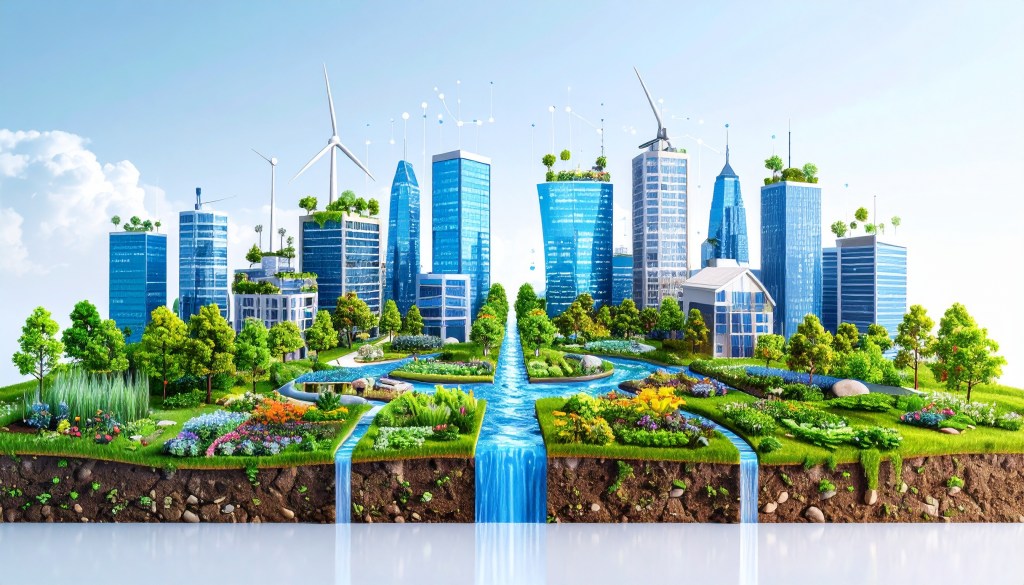
Sponge cities aim to make urban areas act like natural sponges, absorbing rainwater rather than letting it run off and cause floods. Instead of relying only on pipes and drains, they use features like permeable pavements, green roofs, and wetlands to store and filter water. This mimics how forests or meadows handle rain, reducing runoff while recharging groundwater. China leads here, with pilots in over 30 cities since 2013. In places like Wuhan, sponge features have cut flood risks by holding back water during storms. Benefits go beyond floods: these designs cool cities, clean water, and create green spaces for people. For instance, rain gardens – shallow depressions planted with native species – slow water flow and support wildlife.
Globally, similar ideas appear as “water-sensitive urban design” in Australia or “low-impact development” in the US. Melbourne has integrated permeable surfaces into its streets, showing how sponge principles adapt to different climates. Challenges include upfront costs and ongoing care, but long-term savings from avoided flood damage make it worthwhile. What makes sponge cities powerful is their flexibility. In dry areas, they focus on water storage; in wet ones, on quick absorption. When linked with digital twins, planners can fine-tune these elements for maximum impact.
This aligns with discussions on sponge cities in episode 343R of the What is The Future for Cities? podcast, which summarises the white paper “Creating sponge cities to tackle surface water flooding” by Mark Coates and Neal Edmondson, emphasising nature-based drainage systems to combat urban flooding:
Why urban flood resilience matters now
Floods are hitting cities harder and more often. With global warming, rainfall intensity could rise, turning routine storms into disasters. Urban growth seals soil with concrete, speeding up runoff and overwhelming old drainage systems. The costs are huge: damaged homes, lost businesses, and threats to lives, especially in vulnerable communities. Traditional defences like walls or pumps often fail against bigger events, sometimes worsening problems downstream. Resilience means building systems that bounce back, using adaptive strategies. International frameworks, like the UN’s disaster risk goals, push for integrated approaches that blend tech and nature. Here, sponge cities provide on-ground solutions, while digital twins add predictive power. This combo allows cities to test “what if” scenarios – like adding more green spaces – without real-world trials. As urban populations grow, this proactive stance is essential for protecting people and economies.
Strategies for integration
- Blending digital twins with sponge designs starts with data. Sensors in parks or streets monitor water levels, sending info to the twin for simulations. Hydrological models then predict how sponge features perform under rain.
- One method is scenario testing: adjust variables like pavement permeability and see flood outcomes. In 3D models, planners visualise water movement, spotting weak points. Augmented reality tools even let teams “walk through” virtual floods, aiding collaboration.
- Another is real-time control: during storms, the twin suggests actions, like opening retention ponds. Watershed-BIM, a new framework, links building details with broader landscapes for comprehensive views.
- Standards like open data formats ensure smooth integration. Cloud computing handles the heavy lifting, making it accessible. This turns static plans into dynamic tools, tailored to each city’s needs.
In episode 344, Mark Coates further elaborates on these approaches, discussing policy advancements that integrate sponge cities into broader infrastructure for enhanced flood control:
Benefits unlocked
- Integration brings clear gains. Predictions improve, with twins showing how sponge elements reduce flood depths by up to 50% in some models. This cuts risks and informs better investments.
- Economically, it saves money: optimised designs avoid costly errors, and prevented floods mean less repair bills. Environmentally, it boosts water quality and habitats. Socially, visual tools engage communities, building support for green changes.
- Operationally, maintenance gets smarter – sensors flag issues early. Overall, this approach fosters resilient, liveable cities.
Real-world case studies
Examples show the power in action:
- In Beirut’s Horsh Park, a digital twin simulated sponge features like bioswales, cutting runoff effectively.
- China’s Fengxi New Town built a flood forecasting system with 3D visuals, reducing water buildup through LID.
- In Dominica, post-hurricane twins used drone data to suggest permeable upgrades for resilience.rucore.libraries.rutgers.edu
- Porto’s H2Porto platform models drainage with real-time inputs, optimising green infrastructure.toposmagazine.com
- Nanjing’s geo-design assessed green features for better retention.
These cases prove the approach works across scales and regions.

Other nature-based solutions paired with digital tools
Beyond sponge cities, other nature-based solutions (NBS) integrate well with digital twins for flood resilience. These draw on ecosystems to manage water, enhanced by tech for better results:
- Constructed wetlands, for example, filter and store water. Digital twins model their performance, simulating plant uptake and flow. In Thailand’s Rangsit area, twins control NBS like wetlands in real time, adapting to floods.
- Mangrove restoration in coastal zones buffers storms. Twins predict wave impacts, guiding planting. Tools like NatureInsight identify optimal sites for mangroves, combining data on flooding and habitats.
- Urban forests absorb rain and cool areas. Digital models test tree placements for runoff reduction. In urban heat projects, twins integrate forests with other NBS for dual benefits.
- Riparian buffers along rivers slow erosion. Twins simulate sediment flow, optimising buffers. The VARCITIES project uses twins for greener cities, including buffers.
- Sandy solutions, like dune rebuilding, protect shores. Digital tools forecast erosion, aiding design.
These options expand choices, with twins enabling precise, data-backed implementation.
These nature-based solutions complement the formal model presented in episode 257R of the What is The Future for Cities? podcast, which summarises Luca Lezzerini’s article on measuring green urbanism in smart cities using KPIs for environmental integration
Challenges to overcome
Integration isn’t without hurdles. Data gaps can skew models, and high computing needs limit access in smaller cities. Technical skills for setup are scarce, and costs upfront deter adoption. Urban space constraints limit NBS placement. Stakeholder involvement is key but tricky; education helps. Validation shows models sometimes miss real-world nuances. Solutions include training programs and partnerships. With time, these barriers will lessen.
The outlook?
Future developments promise more. AI will sharpen twin accuracy, handling complex scenarios. Wider use in developing regions could equalise access. Links with smart cities will create adaptive networks. Projects like Destination Earth push global standards. This could lead to flood-resistant urban landscapes worldwide.
Advancements like these resonate with the forward-looking views in episode 258 of the What is The Future for Cities? podcast, where Matt Gijselman addresses adapting cities through green and blue infrastructure, including AI and data-driven enhancements for long-term resilience:
Merging digital twins with sponge city designs marks a step toward resilient urban futures. By simulating natural water management, cities can tackle floods head-on. Case studies and other NBS examples show the versatility. Though challenges remain, the potential for safer, greener cities is clear. As tech advances, this integration will play a central role in urban planning.
Ready to build a better tomorrow for our cities? I’d love to hear your thoughts, ideas, or even explore ways we can collaborate. Connect with me at info@fannimelles.com or find me on Twitter/X at @fannimelles – let’s make urban innovation a reality together!
 Vitruvian Solutions
Leave a comment