If you’ve ever wandered through a bustling city centre, marvelling at towering skyscrapers, or driven through endless suburbs stretching into the horizon, you’ve witnessed the two main ways cities grow: horizontally or vertically. Horizontal expansion, often dubbed urban sprawl, sees cities spreading outwards with low-density housing and developments. Vertical expansion, on the other hand, pushes upwards with high-rises and dense structures to fit more into less space. This isn’t just about aesthetics; it’s a tale of how we’ve shaped our living environments over time, the hurdles we’ve faced, and where we might head next. With the world’s urban population set to hit nearly 70% by 2050, understanding these patterns is crucial for building liveable cities. In this post, we’ll explore the histories, weigh the pros and cons, check out current trends, and ponder future possibilities.
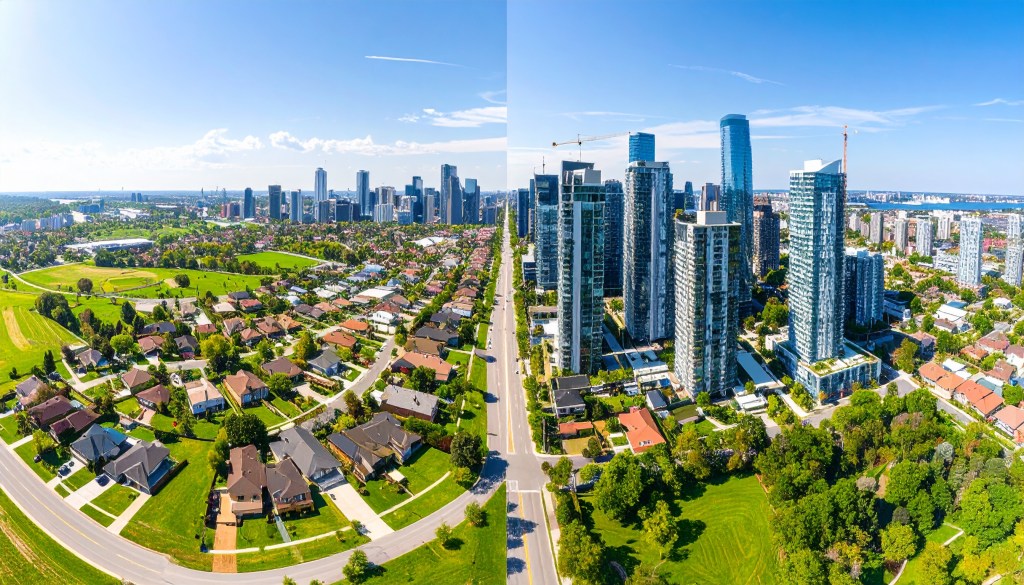
A look back at horizontal expansion
Horizontal urban expansion has deep roots, but it really kicked off during the Industrial Revolution. As folks flocked to cities for jobs, areas like London and Paris began stretching outwards to house everyone. Improved transport, such as railways, made it possible to live further out while still commuting to work. In the US, this trend exploded in the early 20th century. From 1920 to 2012, studies show American cities became less connected and more spread out, thanks to street networks that encouraged sprawl.
Post-World War II, policies like highway subsidies and home loans spurred suburban growth. People chased the dream of bigger homes and yards away from crowded cores, leading to single-use zoning that separated homes from shops and factories. By the 1950s, this became the norm, but it wasn’t just an American thing. Globally, in places like Lagos or Mumbai, informal settlements popped up on city edges as migration boomed. Between 1870 and 2100, projections reveal urban patches growing and merging into massive areas. In the US alone, urban land jumped by nearly 40% from 1982 to 1997.
Preferences for spacious living crossed cultures, but it often came at a cost – converting farmland and creating inefficient layouts. Some cities tried planning with greenbelts or satellite towns, yet the push outwards dominated, especially before vertical tech caught up. Historical maps from 1800 to 2000 highlight how 30 global cities first expanded sideways.

Weighing up horizontal expansion
Horizontal growth has its upsides, like affordability and lifestyle perks. Cheaper land on the edges means bigger, more accessible homes for families. It boosts economies by spreading jobs and developments, and can ease central congestion by diverting growth outwards.
But the downsides stack up. Longer commutes ramp up transport costs and pollution from car reliance. It chews through habitats and farmland, straining the environment. Extending services like water and roads hits budgets hard. Unplanned sprawl worsens traffic and service gaps.
| Aspect | Advantages | Disadvantages |
|---|---|---|
| Economic | Affordable housing, job dispersal | High infrastructure costs, segregation |
| Environmental | More personal green space | Habitat loss, higher emissions |
| Social | Roomy living | Isolation, extended commutes |
The rise of vertical expansion
Vertical growth tells a different story, sparked by late 19th-century innovations. The safety elevator in 1852 and steel frames let buildings soar beyond old limits. Chicago led the charge with the Home Insurance Building in 1885, a 10-storey pioneer using steel. New York followed, with structures like the Wainwright Building maximising space in tight commercial spots.
By the 1920s, icons like the Empire State Building symbolised progress, driven by economic booms and land values. Post-war, it went global. Asia and the Middle East built megatalls like the Burj Khalifa in 2010, reaching 828 metres. Advances in concrete and design software made taller, safer builds cheaper. High-rises shifted from offices to mixed uses, including homes.
In Europe, reconstruction after the war favoured towers for housing shortages, though rules capped heights in places like Paris. Groups like the Council on Tall Buildings, started in 1969, tracked this shift to multifunctional designs. Vertical expansion tackled land shortages head-on, contrasting sprawl’s land-hungry ways.

The good and bad of vertical expansion
Vertical growth shines in land efficiency, packing more people into smaller areas to curb sprawl. It revitalises centres, lifts property values, and supports public transport to cut traffic and emissions. Mixed-use towers build vibrant spots, blending work and life.
Challenges include steep building costs with fancy materials. High-rise living might affect mental health due to crowds and heights. Energy use can spike, though smart designs help. Too many towers can create shadows and wind issues on streets.
| Aspect | Advantages | Disadvantages |
|---|---|---|
| Economic | Boosted property values, efficient services | Expensive construction |
| Environmental | Reduced land use | Possible high energy demands |
| Social | Lively communities | Less privacy, health worries |
Density aids walkability but needs solid planning to avoid strain.
What’s happening now in urban growth
Trends show a move from outwards to upwards. Cities worldwide are growing vertically faster, especially in Asia. Since 2010, places like China have prioritised height over spread. But “vertical sprawl” – tall buildings without proper support – is a rising worry.
Horizontal persists where land is plentiful, often at lower densities on fringes.cisl. Many favour hybrids for balance. Boundaries and incentives nudge vertical in packed spots.
This global shift is vividly captured in episode 341 of the What is The Future for Cities? podcast, which summarises a 2024 study revealing a profound transition from horizontal sprawl to vertical building across three decades, with implications for resource use and urban living:
Looking ahead: potential paths for cities
The future of urban expansion could see a harmonious blend of horizontal and vertical strategies, driven by advancements in technology and urban planning. Vertical mixed-use buildings might become the norm, creating self-contained communities that integrate residential, commercial, and recreational spaces within towering structures. Smart cities could leverage data analytics and AI to optimise resource use in these high-rises, reducing energy consumption and enhancing liveability. Meanwhile, horizontal expansion may evolve to include eco-friendly corridors and low-impact developments, preserving natural areas while accommodating growth on city fringes. In regions like Mexico, policies pushing for compact vertical housing aim to address population density without sprawling outwards. Projections for places such as China suggest building volumes peaking at 4500-6500 km³ by 2050 before declining, highlighting a shift towards more efficient vertical models.
Innovative tools like 3D simulations could guide this balanced growth, allowing planners to model scenarios that combine upward density with controlled outward spread. Vertical approaches might dominate in efficiency-driven contexts, while horizontal layouts could suit needs like defence or community-focused designs. Overall, future cities may feature vertical cores surrounded by managed horizontal edges, fostering resilience against climate challenges and urban pressures. This integrated vision promises adaptable urban environments that prioritise human well-being alongside expansion demands.
Looking to the future, episode 342 of the What is The Future for Cities? podcast features architect Keller Easterling discussing spatial politics, solidarity through difference, and urban infrastructures as opportunities for reparations and resilient, information-rich city environments:
As urban populations continue to swell, the future of city growth lies in blending horizontal and vertical expansion for optimal outcomes. Vertical strategies, enhanced by smart tech and mixed-use designs, offer efficient space use in dense areas, while horizontal elements incorporate green spaces to mitigate environmental impacts.
Through simulations and policy shifts, cities can achieve balanced, resilient development that addresses both current challenges and long-term needs.
What do you think?

Next week, we will explore digital transformation and its role in the future of cities, and more!
Ready to build a better tomorrow for our cities? I’d love to hear your thoughts, ideas, or even explore ways we can collaborate. Connect with me at info@fannimelles.com or find me on Twitter/X at @fannimelles – let’s make urban innovation a reality together!
 Vitruvian Solutions
Leave a comment