
As the world grapples with rapid urbanization, strained infrastructure, and growing inequality, a bold idea is gaining traction: charter cities. These innovative urban zones, granted special autonomy to create their own governance and economic rules, promise to reshape how we think about cities and their role in humanity’s future. By fostering economic growth, pioneering governance reforms, and managing urban expansion, charter cities could offer a transformative model for urban development, particularly in developing regions like Africa. Yet, their success hinges on navigating complex political and social challenges. This blog explores the potential of charter cities to create better futures for cities and humanity, spotlighting real-world projects and their implications.

What are charter cities?
Imagine a city with the freedom to design its own laws, tax systems, and regulations, unencumbered by national bureaucracy. That’s the essence of a charter city—a special administrative zone created to accelerate economic development and test innovative governance models. The concept, championed by economist Paul Romer, draws inspiration from historical success stories like Hong Kong, Singapore, and Shenzhen, which transformed from modest beginnings into global economic powerhouses through autonomous, pro-business policies. Unlike traditional special economic zones, charter cities go beyond tax breaks, aiming to build entirely new urban ecosystems with modern infrastructure, resilient design, and tailored governance.
The appeal lies in their potential to address pressing global challenges. With over 2 billion people expected to move to cities in Africa and Asia by 2050, many governments struggle to manage this growth with limited resources. Charter cities offer a solution: new, well-planned urban centres that can absorb population surges, create jobs, and reduce poverty. By importing effective governance practices—much like technology is imported—they aim to leapfrog traditional development hurdles, offering a replicable model for low-income countries. In episode 317 of the What is The Future for Cities? podcast, hosts unpack a research paper by Eva Klaus and the Charter Cities Institute, emphasizing how charter cities can enhance urban resilience by strategically locating cities to avoid climate risks and building sustainable foundations from the start.
The promise of charter cities
Charter cities hold immense potential to reshape urban landscapes and improve lives. Here are their key benefits:
Economic dynamism
Charter cities create fertile ground for investment by offering streamlined regulations, low taxes, and strong property rights. Historical examples like Hong Kong, which saw its GDP per capita soar from $5,700 in 1980 to over $46,000 by 2018, illustrate how such environments can drive prosperity. These cities attract businesses, entrepreneurs, and skilled workers, generating jobs and boosting local economies. For developing nations, this influx of capital and opportunity can be a game-changer, lifting millions out of poverty.
Governance innovation
Free from national political constraints, charter cities can experiment with bold policies. Want to test a new education system, streamline permitting processes, or adopt cutting-edge urban planning? Charter cities provide a sandbox for such innovations, potentially setting new standards for urban governance. This flexibility allows local leaders to adopt global best practices, bypassing entrenched bureaucracies that often stifle reform at the national level. Mark Lutter, founder of the Charter Cities Institute, discusses this in episode 318 of the What is The Future for Cities? podcast, highlighting how charter cities could gain more autonomy, experimenting with governance to improve living conditions and drive economic growth.
Resilient urbanization
As urban populations swell, many cities face overcrowding, inadequate housing, and environmental degradation. Charter cities offer a proactive solution by building new urban centres from scratch, designed with sustainability in mind. Think green spaces, renewable energy, and smart infrastructure—elements that can mitigate climate change and improve quality of life. By planning for growth rather than reacting to it, these cities can prevent the slums and congestion that plague many urban areas.
Poverty reduction
Economic growth is one of the most effective tools for reducing poverty, and charter cities are designed to ignite it. By creating jobs and fostering entrepreneurship, they can provide pathways out of poverty for millions. Moreover, their focus on education and technology, as seen in projects like Zambia’s Nkwashi, ensures residents gain skills to thrive in a global economy.
Erick A. Brimen, CEO of Próspera, talks about and works with new city establishments. Honduras Próspera is one the leading projects of their renewed governance model to help civilization reach maximum prosperity, as he described in episode 294 on the What is The Future for Cities? podcast:
Global knowledge sharing
Charter cities act as living laboratories, testing policies that could be scaled nationally or adopted worldwide. A successful charter city could inspire similar projects elsewhere, creating a ripple effect of innovation and progress. This potential for global impact makes them a compelling focus for policymakers and philanthropists alike.
Real-world examples: Africa’s charter city pioneers
Africa, with its rapidly growing urban populations, is a hotspot for charter city experiments. Several projects illustrate how this model can be tailored to local needs:
- Itana, Nigeria: Dubbed Africa’s first digital free zone, Itana is carving out a niche in Lagos’ Lekki Free Zone. It allows businesses to operate online without a physical presence, offering digital residency and a tech-focused campus with co-working spaces and eco-friendly design. Backed by the Nigerian government and global partners, Itana aims to position Nigeria as a hub for digital services, with a $100 million first phase already underway. Its focus on the digital economy taps into Africa’s growing tech sector, promising jobs and innovation.
- Nkwashi, Zambia: Located 36 km from Lusaka, Nkwashi is a master-planned city for 100,000 residents, centered around a university and a business district. With over 9,460 residential properties, 3,000 already sold, it addresses Zambia’s housing shortage while fostering education and technology. Its partnership with the Zambia Development Agency enhances its economic zone status, making it a beacon for sustainable urban growth.
- Silicon Zanzibar, Tanzania: This public-private initiative aims to transform Zanzibar into a Pan-African tech hub. Centered in Fumba Town, a modern seaside community, it includes partnerships with institutions like the African School of Economics and India’s IIT Madras for a cutting-edge campus. By leveraging Zanzibar’s tourism appeal and historical trade hub status, Silicon Zanzibar seeks to attract tech firms and talent, creating a vibrant economic ecosystem.
These projects show how charter cities can align with local priorities—whether digital innovation, education, or tech development—while addressing broader urban challenges. Their early progress suggests a promising future, though each faces hurdles in execution and community engagement. In episode 318, Mark Lutter elaborates on these projects, noting their role in accelerating economic growth and reducing poverty in regions like Africa, where urban populations are expected to boom.
Challenges to overcome
Despite their potential, charter cities are not a panacea. Political opposition has derailed past efforts, as seen in Madagascar and Honduras, where government changes and corporate interests disrupted plans. Building a city from the ground up demands vast resources and coordination, a tall order for developing nations with strained budgets. There’s also the risk of inequality, where benefits skew toward wealthy investors or skilled workers, leaving ordinary citizens behind. Critics argue the model remains unproven, with many projects still in their infancy.
To succeed, charter cities must ensure affordable housing, accessible education, and broad economic opportunities. Strong public-private partnerships and transparent governance are critical to maintaining public trust. Learning from past failures, such as Honduras’ troubled ZEDE zones, will be essential to refining the model.

Looking ahead: A vision for humanity’s future
As cities strain under the weight of global population growth, charter cities offer a bold vision for sustainable urban development. They could ease migration pressures by creating opportunities closer to home, reducing the need for people to flock to overcrowded megacities or seek opportunities abroad. Their emphasis on green design and renewable energy aligns with the urgent need to combat climate change, setting a standard for future urban planning.
The stakes are high. If successful, charter cities could redefine what’s possible for urban life, offering a blueprint for prosperity, innovation, and resilience. Imagine a network of such cities across Africa, Asia, and beyond, each tailored to its context but united by a commitment to progress. This vision aligns with humanity’s broader aspirations—to build a world where communities thrive. Yet, success is not guaranteed. It will require visionary leadership, robust partnerships, and a commitment to the better outcomes. As these projects evolve, they’ll need to balance ambition with pragmatism, ensuring they deliver tangible benefits for all residents.
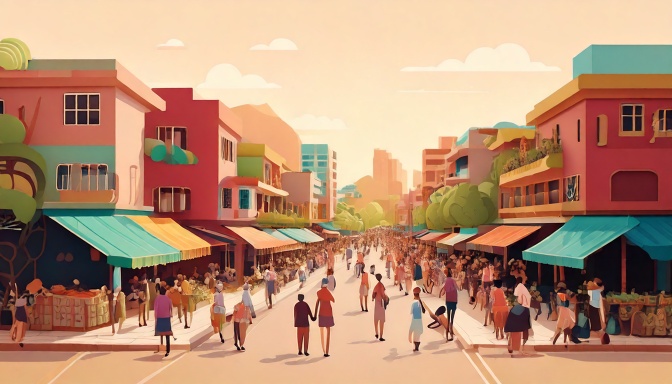
Charter cities are more than an urban experiment—they’re a bet on humanity’s ability to innovate its way to a better future. By harnessing economic growth, governance reform, and sustainable design, they offer a path to address the defining challenges of our time: urbanization, poverty, and climate change. Projects like Itana, Nkwashi, and Silicon Zanzibar are early test cases, lighting the way for what’s possible. While obstacles remain, their potential to transform cities—and, by extension, humanity—is undeniable.
As we stand at this urban crossroads, charter cities beckon as a bold step toward a brighter, more resilient tomorrow.
Ready to build a better tomorrow for our cities? I’d love to hear your thoughts, ideas, or even explore ways we can collaborate. Connect with me at info@fannimelles.com or find me on Twitter/X at @fannimelles—let’s make urban innovation a reality together!
 Vitruvian Solutions
Leave a comment