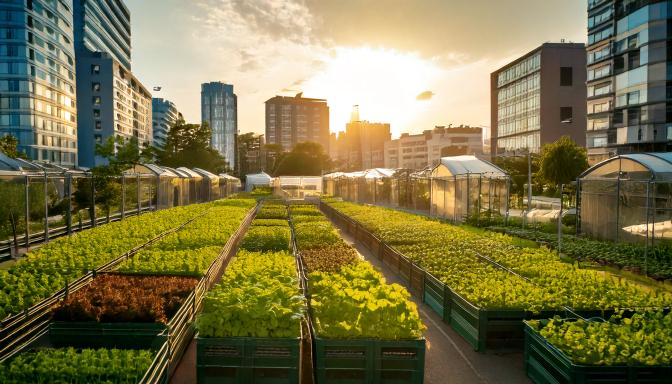
Feeding Cities Without Eating the Planet
Urban food production is evolving through advanced technologies like vertical farming, precision fermentation, and cellular agriculture. These innovations address critical challenges such as land scarcity, supply chain vulnerabilities, and resource inefficiency inherent in traditional agriculture. Vertical farming optimizes space and yield using controlled environments, while precision fermentation enables sustainable protein synthesis. Cellular agriculture offers animal-free meat production. However, high energy costs, regulatory hurdles, and scalability issues persist. The future hinges on integrating automation, renewable energy, and adaptive policies to create resilient urban food systems.
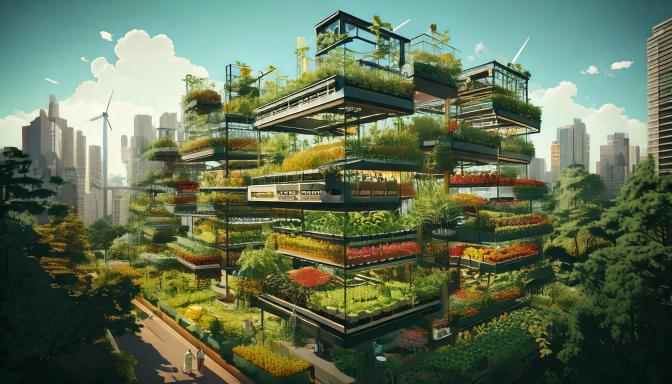
So picture this: cities where skyscrapers grow kale instead of housing cubicles, abandoned parking lots buzz with robot farmers, and your Friday night pizza features cheese made from microbes, not cows. Welcome to the wild world of urban food production—a revolution sprouting in back alleys, rooftops, and labs. Let’s dig into the tech turning cities into breadbaskets.
Existing Solutions: What’s Already Happening?
1. Vertical Farming: Efficiency through controlled environments
Imagine a 30-story greenhouse where arugula grows under neon pink LEDs. Companies like Plenty and Bowery Farming are doing just that, stacking crops like Lego blocks in abandoned warehouses.
Vertical farming involves cultivating crops in vertically stacked layers within controlled environments, such as warehouses or repurposed shipping containers. Using soilless techniques like hydroponics (water-based nutrient delivery), aeroponics (mist-based systems), or aquaponics (integration with aquaculture), these systems optimize space and resource efficiency. Companies like Plenty and Bowery Farming employ AI to automate lighting, temperature, and irrigation, achieving yields up to 350x higher per square foot compared to traditional farming.
Nadun Hennayaka explained the benefits and draw-backs of vertical farming in episode 278 on the WTF4Cities podcast:
- Cool Factor: These farms use 95% less water than dirt-based farming—think of it as a plant spa with misters and mood lighting.
- Catch: Running those futuristic LED suns guzzles energy. One vertical farm’s electric bill could power a small town (oops).
Real-World Applications:
- Singapore’s Sky Greens produces 1 ton of vegetables daily using rotating vertical tiers.
- Rotterdam’s DakAkker combines rooftop solar panels with crop cultivation, aligning with the City Region Food System (CRFS) principles discussed in What is The Future for Cities? Episode 299
Check out this post for even more details.
2. Precision Fermentation: Engineering proteins without livestock
Meet the mad scientists turning yeast into dairy. Precision fermentation engineers microorganisms (e.g., yeast, bacteria) to produce proteins, enzymes, or nutrients in bioreactors. For example, Perfect Day synthesizes dairy proteins without cows by inserting bovine DNA into yeast cells. The process involves three stages: genetic modification, fermentation (microbe growth in nutrient broth), and downstream purification.
- Cool Factor: Cuts land use by 99%. Your latte could save a cow!
- Catch: Regulators are slower than a snail on valium. Europe’s still side-eyeing these “Franken-foods.”
- Snackable Innovation: Motif FoodWorks adds fermented heme to plant-based burgers, making them bleed (tasty, not creepy).
3. Cellular Agriculture: Cultivating Meat Without Slaughter
Lab-grown meat is produced by culturing animal stem cells in bioreactors. Cells are nourished with serum-free media and scaffolded into structured tissues. Companies like UPSIDE Foods and Mosa Meat focus on beef and poultry, aiming to replicate the taste and texture of conventional meat. Paul Bevan, the founder of Magic Valley which specializes in cellular agriculture, talked about their solution that cultivates meat directly from animal cells without raising or slaughtering livestock, in episode 238 of the What is The Future of Cities? podcast.
- Cool Factor: Slashes emissions by 90% vs. beef. Even PETA’s intrigued.
- Catch: A single lab-grown burger costs more than a PS5. Scalability? Still a “bioreactor dream.”
- Taste Test: Singapore approved Eat Just’s cultured chicken.
Adam Dorr from RethinkX talked about precision fermentation with cellular agriculture in episode 300 of the What is The Future for Cities? podcast:
What’s Missing? Gaps in Urban Food Production
Despite these innovations, urban food systems need further improvements to be truly sustainable:
- Retrofitting Urban Spaces – Empty office buildings and underused parking lots could become urban farms.
- Better Energy Solutions – Renewable energy-powered farms can help offset high electricity costs.
- Stronger Policies & Incentives – Tax breaks and subsidies could encourage investment in urban agriculture.
- AI-Driven Automation – Smart irrigation and precision lighting can boost efficiency and reduce costs.
- Urban Beekeeping & Pollination Initiatives – Rooftop hives and wildflower corridors can enhance biodiversity and local food yields.
Simon Burt advocates for education on urban food production in episode 300 on the What is The Future for Cities? podcast:
Emerging Opportunities in Urban Food Production: Beyond Conventional Solutions
Urban food production is evolving rapidly, driven by technological innovation and resource constraints. While vertical farming and cellular agriculture dominate discussions, emerging opportunities offer transformative potential for cities.
- AI Farmers & Robot Gardeners: Smart sensors optimize water, nutrients, and light.
- Decentralized Food Networks – Modular bioreactors for local production.
- Waste = Lunch: Closing the loop, one aquaponic loop at a time.
- Algae – The New Kale : It’s 60% protein and eats CO₂ for breakfast.
- Gene Editing: CRISPR-engineered algae produce omega-3 fatty acids, offering sustainable alternatives to fish oil.
What is needed from cities to enhance urban food production?
- Zoning Reforms: Permit mixed-use agricultural zones (e.g., rooftop insect farms).
- Subsidies: Tax breaks for solar-integrated farms (Medellín model).
- Public-Private R&D: Grants for AI/robotics startups (Australia’s $100k Industry Growth Program).
The Future of Urban Food Production
The next two decades will likely see a shift in how food is grown, processed, and consumed in cities. Urban farming may become a standard feature of smart city designs, with hydroponic and aeroponic farms integrated into buildings. Self-sustaining urban communities could emerge, reducing reliance on global supply chains.
Technologies like AI-driven agriculture, automated harvesting, and solar- (or even nuclear-) powered food production facilities will play a key role in making urban food production more efficient and affordable. If paired with policy support and consumer awareness, these innovations could transform how we think about food in cities.
Additionally, emerging food production techniques, such as bioreactors for plant-based protein and edible algae farms, may further diversify urban food supply systems. Combined with initiatives like food forests and urban agroforestry, cities could see an unprecedented increase in local food security.
Why should you care about urban food production?
Cities will house 68% of us by 2050. Without urban farms, we’ll be trucking in lettuce from Mars. From cutting food miles to turning vacant lots into community gardens, this isn’t just dinner—it’s a survival toolkit. Urban food production isn’t just about technology—it’s about people, policies, and communities working together to create a more sustainable future. Cities that embrace these innovations will be better equipped to tackle food security, economic instability, and climate change.
So what can you do?
- Snack Local: Hit farmers’ markets. That basil? Probably grown in a subway tunnel.
- Grow Local: Try growing something on your balcony!
- Become a Policy Pest: Demand urban farm tax breaks.
- Geek Out: Try a lab-grown meatball. For science.
Cities aren’t just hungry—they’re starving for change. Let’s feed them.
 Vitruvian Solutions
Leave a comment